Historical-Fiction Sequels That Can Stand Alone

These three sequels are also very good as novels in their own right. In each case, I did not read the previous novel but caught on quickly.

Bloomsbury Girls     Natalie Jenner     (2022)  In 1950 London, World War II still looms large, and the patriarchy is in full swing. Three bright women who work in lowly jobs in a bookstore try to see their way forward, both in their careers and in their love lives. This fast read has weaving through it a satisfying mystery about a rare book, plus cameo appearances by real-life characters such as Samuel Beckett and Daphne du Maurier. The story is a sequel to the author’s popular The Jane Austen Society (2020).
The House of Fortune     Jessie Burton     (2022)  Burton transports us to 1705 Amsterdam, eighteen years after the time period of her award-winning novel The Miniaturist (2014). The backstory might be a little clearer if you’ve read The Miniaturist or at least seen the PBS series based on it, but The House of Fortune is nicely plotted and engrossing on its own. Thea, a young woman living in genteel poverty in a house straight out of a Dutch Masters painting, falls for a set painter at the city playhouse, but she’s pressed by her Aunt Nella to marry a wealthy lawyer. A touch of magic imbues the tale when exquisite miniature dolls and ornaments begin to appear.


The Air We Breathe     Andrea Barrett     (2007)  In a public tuberculosis sanatorium in rural New York during World War I, well-drawn patients and caregivers are involved in romance, learning, mystery, and vigilantism, leading to a dramatic climax. The author is renowned for her incorporation of science into her fiction—not to be confused with the genre of science fiction! Here she ranges widely, from archaeology to x-ray technology. This novel continues the stories of families portrayed in Ship Fever (1996), winner of the National Book Award.


Two Fiction + Two Nonfiction

First, two works of fiction, both about financiers:

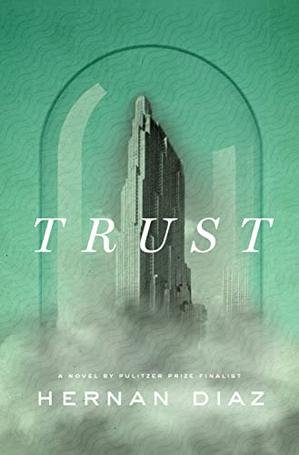
Trust     Hernan Diaz     (2022)  Diaz explores the trustworthiness of narrative through four different takes on the same story, about a fictional early-twentieth-century Wall Street financier. First, a novella captures the style of Edith Wharton, then an unfinished autobiography reveals its author’s vanity and arrogance. A memoir by the autobiography’s ghost writer gives another perspective, and finally the diary of the financier’s wife provides a new twist to the tale. Diaz navigates these disparate genres with stylistic ease, as he asks, Whom do you trust to tell you the truth?

The Magnolia Palace     Fiona Davis     (2022)  I reviewed Davis’s 2016 novel, The Dollhouse, on this blog in 2017, and The Magnolia Palace is the fifth novel that Davis has churned out since then. Her signature formula includes an actual iconic building in New York City as the setting and two fictional young women, living decades apart, who are involved in a complicated mystery. The Magnolia Palace is a lightweight, entertaining romp, set in the Frick Collection, a fine art museum that was formerly the home of Henry Clay Frick’s family. The two women are models, one in 1919 and one in 1966. Brush up on your art history!


Next, two collections of essays:

These Precious Days     Ann Patchett     (2022) Patchett provides plenty of  insights into her family background and her fiction-writing process in these essays. (See my reviews of her novels Commonwealth and The Dutch House.) The title piece, and the longest, starts with Patchett reading Tom Hanks’s short story collection, Uncommon Type. She admires the book (as did I; see my review) and, through a series of coincidences, gets to know the actor and his assistant, Sooki Raphael. Sooki ends up as a long-term houseguest of Patchett and her husband at the beginning of the pandemic. Patchett writes a moving account of their unexpected and rewarding friendship.

Happy-Go-Lucky     David Sedaris     (2022)  For fans of David Sedaris (count me in), every new collection of his essays means a couple of evenings of sure-fire good reading, unveiling the vagaries of family relationships. (See my previous commentary on his body of work.) Happy-Go-Lucky focuses quite a bit on the last years of David’s nonagenarian father, Lou, and on the impact of the COVID pandemic. The stories are honest, touching, sometimes heartbreaking, sometimes disturbing. There is simply no other essayist who is as irreverent and candid and downright funny as David Sedaris.


Sure It's [Fill in the Blank], But . . .

Sure it’s alternate history, but . . .

Rodham     Curtis Sittenfeld     (2020)  What if Hillary Rodham had not married Bill Clinton in 1975? This alternate version of Hillary’s life starts out hewing pretty closely to well-known facts—college at Wellesley, law school at Yale, where she meets Bill. But then it takes a different trajectory, with Hillary as an unmarried law professor and politician and Bill on another path also. Throughout, the portrayal of Hillary is, for me, totally believable, and the dialogue is especially realistic. Take a fun ride through the ”what ifs” with Rodham.

Sure, it’s time travel, but . . .

This Time Tomorrow     Emma Straub     (2022)  On the day that Alice turns forty, she’s reassessing her life goals—and getting very drunk. Unexpectedly, she’s transported back to her sixteenth birthday, in 1996. I don’t usually read time travel novels, but Alice is so endearing that I went with the premise. And Straub is writing a love letter to New York City as much as she’s exploring family bonds and the quandaries of aging.

Sure, it’s melodramatic, but . . .

When We Were Young     Richard Roper     (2021)  Two men who are turning thirty get together fourteen years after an acrimonious argument separated them. Joel is a successful TV comedy writer in London, with a glamorous actress as his girlfriend. Theo considers himself a failure, both in his career and in his relationships; he lives in a shed in his parents’ back yard. The melodrama and emotion are heavy here, but the insight into the hearts of these two young Brits is worth the read.


Sure, it’s got lots of tragedy, but . . .

Count the Ways     Joyce Maynard     (2021) 

The many sad and shocking events that punctuate Eleanor’s life are traced here from her childhood in the 1950s and 1960s up to nearly the present day. But I didn’t find this book depressing. Eleanor balances her career as an artist and children’s book author with her role as wife to her woodworker husband, Cam, and mother to their three children. Her musings on motherhood, in which she delights, touched me profoundly. The characters surrounding Eleanor are also deftly portrayed.


Fiction, Again

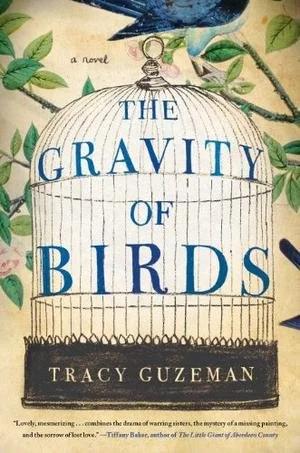
The Gravity of Birds     Tracy Guzeman     (2013)   An art history professor and an art authenticator in New York agree to search for missing works by a renowned painter and end up involved in a cross-country missing persons mystery. They discover that the two sisters depicted in the paintings had a troubled relationship with the painter thirty-five years in the past. I stayed up until 2 am to finish this poignant and complex novel.  Thanks to Cinda Hocking for the recommendation!

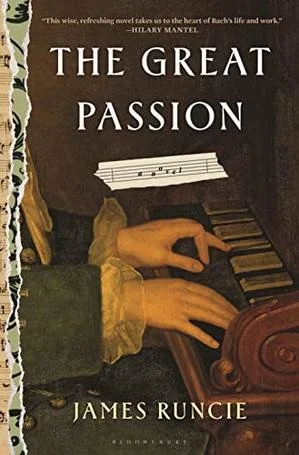
The Great Passion     James Runcie     (2022)   No, it’s not a love affair between two people but rather Johann Sebastian Bach’s “St Matthew Passion,” one of the greatest of all choral compositions, premiered in Leipzig in 1727. In this novel, the fictional Stefan Silbermann, as an adult, looks back on his year as a boy soprano and aspiring church organist studying with Bach. He narrates his experiences with the boisterous Bach household and with the brutal boarding school where he lives. Musicians should especially appreciate the details, but all fans of historical fiction should appreciate the portrayal of eighteenth-century Germany and of “The Big Guy,” JSB.

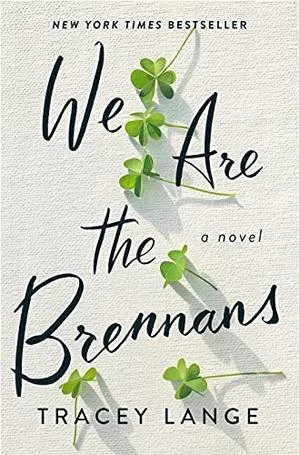
We Are the Brennans     Tracey Lange     (2021) Moving the plot along mostly through convincing dialog, Lange creates a vivid picture of the present-day Brennan family, pub owners in a town north of NYC. An estranged adult daughter comes home to recover after a serious car accident and gets retangled in family life, with some mystery and some romance enlivening things. The character names are odd, but the story is a winner. 


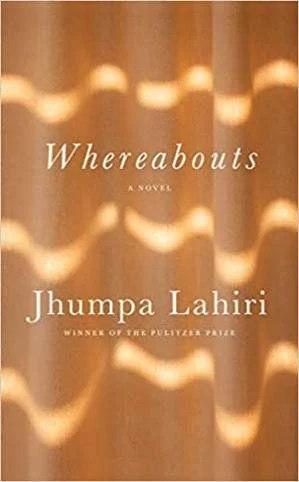
Whereabouts     Jhumpa Lahiri     (Written in Italian and translated by the author)            (2021)  Lahiri delivers a powerful if unconventional short novel, about an unnamed middle-aged single woman in an unnamed European city. Each of the 46 brief chapters is a precisely rendered, first-person vignette of some aspect of the woman’s daily life—she’s in her office or at the museum or on vacation or at the coffee bar. Altogether, the vignettes give the reader amazing insights into her personality and her life’s trajectory. 


The Kindest Lie     Nancy Johnson     (2021)  The racial tensions that trouble the US play out through the stories of two families in the months near the 2008 election of Barack Obama. Ruth Tuttle, a successful Black engineer, can’t move forward with her life in Chicago until she finds the baby whom she was forced to give up when she gave birth at age 17 in an industrial town in Indiana. Her search reconnects her with her family and with the family of a young white boy nicknamed Midnight. The author tackles difficult issues of race, class, poverty, and social justice forthrightly and eloquently.


French Braid     Anne Tyler     (2022)  Meet four generations of the Garrett family, from 1959 to 2020, mainly in Tyler’s favorite locale, Baltimore. The Garretts exemplify what families ideally do for one another: in the words of one character, “. . . ‘hide a few uncomfortable truths, allow a few self-deceptions.’” The family members are convincingly portrayed and their stories are memorable. Hang on through that first chapter, which seems slightly disjointed. This is a splendid book.


History and Mystery: Short Reviews

First, a few historical novels.  

Free Love     Tessa Hadley     (2022) You can rely on Hadley’s novels to unflinchingly probe the dynamics of modern British family life. In this one, she travels back to swinging 1967 London to observe the conventional Fischer family falling apart in the wake of the sexual revolution. The shocking liaisons and their aftermaths drive the plot, but I found myself lingering on the evocative metaphors in Hadley’s descriptive settings. Who knew that British weather could be so beautiful?

The Sense of an Ending     Julian Barnes     (2011)  Tony Webster, a retired Briton who is amicably divorced, receives an unusual legacy that brings to mind painful scenes from his time in secondary school and at university. This ruminative short novel about memory, regret, forgiveness, and revenge was made into a movie in 2017.


Violeta     Isabel Allende     (2022) Translated from the Spanish by Frances Riddle. The prolific Allende has been criticized in some reviews for lack of character development in Violeta. I don’t agree. Violeta Del Valle tells her captivating life story in first person, from her birth in 1920 during one pandemic to her death in 2020 during another. The backdrop is the political upheaval of this century in the history of an unnamed South American country that is very much like Chile. See also my review of Allende’s In the Midst of Winter.  


Next, some mysteries, one of which is a historical mystery and two of which take place at weddings! 

A Comedy of Terrors     Lindsey Davis     (2021)  I’ve reviewed the Flavia Albia mystery series as among my favorites, and this entry is no exception. Although the novels have more violence than I usually tolerate, the first-century Roman ambience is irresistible, the rapid-fire dialog brings the characters fully to life, and the plots will challenge the most sophisticated mystery reader. As an added treat, A Comedy of Terrors, set during the celebration of Saturnalia (the winter solstice), features the holiday revelries of private investigator Flavia Albia and her extended family.

The Guest List     Lucy Foley     (2020)  A British power couple are staging an elaborate wedding on a remote island off the coast of Ireland, but this is no rom-com. It’s a cleverly plotted murder mystery that unfolds with a see-sawing narrative from the standpoints of the wedding planner, the bride, the best man, the sole bridesmaid, a plus-one guest, and the groom.  

Destination Wedding     Aaron Stander     (2020) This is the eleventh of the Sheriff Ray Elkins mysteries set in the northwest of Michigan’s mitten. On the shore of Lake Michigan, severe weather causes havoc for the wealthy guests at a wedding and almost conceals a concurrent suspected murder and art theft. The local color can’t be beat, and the copyediting problems that marred previous titles in the series (as noted in my review) have been mostly resolved.

Just Fiction

A Town Called Solace     Mary Lawson     (2021)  Step back in time to 1972, and head to a small town in northern Ontario, Canada, for a tender story of loss, loneliness, and hope, told from the perspectives of three characters: a hospitalized elderly woman, an eight-year-old girl whose older sister has run away, and a thirty-something man facing divorce and joblessness.


Five Tuesdays in Winter     Lily King     (2021)  I usually prefer the expansiveness of the novel format, but each of these ten stories creates a universe of characters and life experiences. Settings range from New England to the North Sea, from the 1960s to the present. See also my review of King’s novel Writers and Lovers


Crossroads     Jonathan Franzen     (2021)  In 1971-72 Chicago, middle-aged clergyman Russ Hildebrandt and his wife and four children come under the microscope as they struggle with faith, sex, drugs, Vietnam, and rock ‘n’ roll for 580 detail-heavy pages. This is classic Franzen, with unforgettable characters, and it’s the first book of a projected trilogy.


Small Things Like These     Claire Keegan     (2021)  With prose reminiscent of the early work of James Joyce, Keegan’s novella fictionalizes a piece of the history of the Irish “laundries,” where unwed pregnant women were enslaved by the Catholic Church until 1996. In rural Ireland at Christmastime in 1985, a middle-aged family man stumbles upon evidence of such abuse at a local convent.


Fresh Water for Flowers     Valérie Perrin     Translated from the French by Hildegarde Serle     (2020)  This European bestseller is part mystery, part romance, part memento mori. Violette Toussaint, a cemetery keeper in a small town in Burgundy, provides informal grief counselling to mourners as she looks back on her own life and tries to fashion a future for herself. The translation is awkward at points, especially because of the British slang, but the meandering story is heartwarming.


Wish You Were Here     Jodi Picoult     (2021)  Are you ready for a novel set in New York City (and Galápagos) in 2020, right when the coronavirus pandemic breaks out? The societal details are all too familiar, but the story takes unexpected turns, yanking the reader along. The disjointedness of alternate realities reflects our times.


Fiction and Nonfiction: Brief Reviews

Every week, the fiction that I check out from the Ann Arbor District Library gets ruthlessly culled. By the time I’ve read twenty or thirty pages, I know if the story is too violent, the prose too banal, or the characters too obnoxious for my taste. Less than a quarter of my weekly haul ends up being reviewed on this website; reviews of three novels that passed my tests are below.

In this post I also offer three nonfiction titles. I read less nonfiction, and it’s usually in the categories of biography, memoir, cultural studies, or cooking. Here I’m branching out with a book on gardening, one of my passions. Happy reading!

Fiction

Matrix     Lauren Groff     (2021)     In the second half of the 12th century, in England, the bastard daughter of royalty is banished to an impoverished convent. Groff conjures up this life story for Marie de France, about whom very little is actually known—except that she is the author of highly influential surviving medieval poems. The constructed milieu of this novel is believable, the tale mesmerizing, the language incandescent. See also my review of Groff’s Fates and Furies.

The Other Bennet Sister     Janice Hadlow     (2020)  Plucking Mary, the middle of the five Bennet sisters, out of Austen’s Pride and Prejudice, Hadlow imagines how her adult life might have played out. The probings of Mary’s emotional struggles are beautifully rendered, and tone is totally Austenesque. But you don’t need to be an Austen fan to enjoy this gentle, lovely story.

The Vanishing Half     Brit Bennett     (2020)  In this complex exploration of connectedness and concealment in late 20th-century America, light-skinned Black twins go their separate ways as teenagers. The twist here is that one twin decides to pass for white and marries a white man, while the other marries a Black man and remains within the Black community. Each has a daughter, and the paths of these cousins cross in unexpected ways.  


Nonfiction

Bloom’s Best Perennials and Grasses:  Expert Plant Choices and Dramatic Combinations for Year-Round Gardens     Adrian Bloom     (2010)  The title says it all, and the photos are magnificent. This is the book for the gardener who wants to move from ordinary garden-center plants to the next level of gardening, selecting specific varieties based on growing conditions and design preferences.

Hidden Valley Road:  Inside the Mind of an American Family     Robert Kolker     (2020)  Between 1945 and 1965, Don and Mimi Galvin produced twelve children, six of whom were eventually diagnosed as schizophrenic. This exhaustive chronicle of their family life in Colorado, against the backdrop of shifting treatments for schizophrenia, is both heartbreaking and riveting.

The Anthropocene Reviewed: Essays on a Human-Centered Planet     John Green     (2021)  These essays, adapted from the acclaimed podcast of the same title, explore and rate wildly diverse aspects of our geological era, the Anthropocene, including teddy bears, sunsets, Indianapolis, plague, and sycamore trees. John Green bares his soul with humor, intelligence, and compassion. Thanks to Vera Schwankl for recommending this extraordinary book!


More Reads for a Persistent Pandemic

Beheld TaraShea Nesbit (2020) The Mayflower passengers who founded the Plymouth Colony were not all religious dissenters. On the ship there were also indentured servants and craftspeople who did not hold with the puritanical ways of the leaders. Nesbit takes us inside the thoughts of two very different women of Plymouth, in the troubled year 1630. (Ignore the author’s failures in archaizing language.) 

A Rogue’s Company Allison Montclair (2021) First, read the previous two entries in the Sparks and Bainbridge series, reviewed here and here. Then dive into this one, which is another rollicking, intricately plotted mystery set in London immediately after World War II. The two protagonists run a staid marriage bureau but often end up in back alleys with desperate criminals.


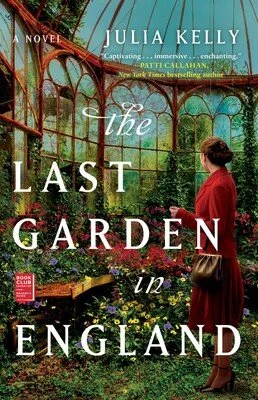
The Last Garden in England Julia Kelly (2021) Three women interact with the elaborate fictional garden of Highbury House in three different time periods. In 1907 Venetia Smith designs the nontraditional landscape. In 1944, Beth Pedley is a farm worker—a land girl—during World War II. And in the present day, Emma Lovell is hired to restore the site to its long-ago glory. Several romances ensue in this pleasant novel.

My Kind of People Lisa Duffy (2020) Melodrama oozes off of every page of this novel, set in the present day on a fictional island off the coast of Boston. And you may protest that young architects and freelance journalists are really not as financially solvent as portrayed here. But I came to love the characters, especially Sky (a newly orphaned 10-year old girl), Leo (an architect, her unlikely guardian), and Maggie (a helpful neighbor, with her own troubles).    

The Children’s Book AS Byatt (2009) Sussex (and some London, Paris, Munich), 1895-1919. Socialists, anarchists, suffragists, libertines. Potters, silversmiths, museum keepers, puppeteers, poets, playwrights, scholars, physicians, tellers of dark fairy tales. An old-fashioned, languorous, discursive story with dozens of characters and lots of historical context.  


The Lincoln Highway Amor Towles (2021) Fans of Towles’ A Gentleman in Moscow, reviewed here, will find much of the same verve and strong character development in his new offering. In 1954, two young brothers set out on a road trip to find the mother who abandoned them, but they have to take many detours. The ending could have been stronger, but this one is still entertaining.  

Reads for a Persistent Pandemic

Well, the pandemic keeps resurging, and with many activities again restricted, I’m doing a lot of reading.

Davies.jpg

The Mission House Carys Davies (2020) In 2018 Davies took us to the early-nineteeth-century American frontier with her brilliantly plotted novel West (reviewed here). The Mission House is set in contemporary India and features more of Davies’ unconventional characters:  a disabled orphan, a barber who aspires to be a country-Western singer, and a depressive Brit taking a rest-cure. Don’t miss this one.

The Pull of the Stars     Emma Donoghue  (2020) If you can bear another pandemic story, The Pull of the Stars is the one. Julia Power is a nurse working in a maternity ward in Dublin during the 1918 flu pandemic. She contends not only with an invisible virus but also with lack of supplies, women oppressed by the strictures of the Catholic Church, and her own sexual awakening.

Tartt.jpg

The Goldfinch Donna Tartt (2013) This winner of the Pulitzer Prize is a Bildungsroman, a mystery, a thriller, and a wild drug-fueled ride through a speculative alternate history of New York City. But you can read its nearly 800 pages solely for Tartt’s extraordinarily lush vocabulary and sympathetically drawn characters. I’ve finally caught up with my 2013 must-read list.


Rooney.jpg

Beautiful World, Where Are You Sally Rooney (2021) We can all speculate whether the character of Alice, a bestselling novelist, shares personality traits with Rooney herself, but all the characters in this novel are deftly delineated. Many struggle with how personal fulfillment intersects with global trauma and strife. This is Rooney’s third exploration of the existential angst plaguing Generation Z; her Normal People (reviewed here) is another winner.


Busman’s Honeymoon Dorothy L Sayers (1937) I hadn’t read this Golden Age classic detective novel in decades, so I’d forgotten much of the plot and was once again surprised by its ingenuity. However, for fans of the romance between Lord Peter Wimsey and Harriet Vane, the murder investigation is definitely secondary to the tender scenes between the honeymooners. (Note that in dialogue there are some ethnic stereotypes, common in this era, that are repugnant.)


Reads for a Waning Pandemic

Not by design, I’ve been reading quite a few novels about family dynamics. Here are some mini-reviews.

Some Luck.jpg

The Last Hundred Years Trilogy:  Some Luck, Early Warning, Golden Age Jane Smiley (2014, 2015) Hang in for more than 1300 pages in three volumes, to follow an Iowa farm family, the Langdons, through an American century, from 1920 to 2020. As you proceed at one year per chapter, refer to the family tree that’s included whenever you need to. Savor the Langdons’ good years, because Smiley’s political predictions for the years 2015 to 2020 are eerily accurate and pretty distressing. I’ve read this entire trilogy twice. If you don’t have time for all three books, at least read Some Luck, which is my favorite segment. 

Perfect Life.jpg

Perfect Life Jessica Shattuck (2009) The lives of four friends intersect in the Boston area fifteen years after they met in college, with a plot that revolves around the question of what it means to be a family, biological and non-biological. This contemporary novel is good, but I like Shattuck’s historical novel, The Women in the Castle, better. See my review here.  

A Lie.jpg

A Lie Someone Told You About Yourself Peter Ho Davies (2021) Ho Davies doesn’t pull any punches as he explores dark truths about fatherhood, marriage, abortion, and the raising of a high-needs child. The book might be autobiographical or it might be totally fiction—doesn’t really matter when the writing is this good.


Good company.jpg

Good Company     Cynthia d’Aprix Sweeney  (2020) The plot here is a little thin (woman finds evidence of husband’s affair and struggles with the knowledge), but the character development is excellent. The setting toggles between the New York theater world and the Los Angeles world of TV and movies.   

Mary Jane.jpg

Mary Jane Jessica Anya Blau (2021) Take an absolutely hilarious look at 1975:  the music, the food, the clothing, the Zeitgeist.  A sweet, sheltered 14-year-old girl becomes a summer nanny in the unusual household of a psychiatrist who is treating a rock star recovering from addiction.

Reviews of some nonfiction titles are coming!

Pandemic Reads, Part Two

In my last post, I reviewed historical fiction and mysteries that I’ve read during the pandemic. I’d also like to recommend some non-mystery novels about contemporary life.

Monogamy.jpg

Monogamy    Sue Miller (2020) When the gregarious owner of an independent bookstore dies, his widow accidentally discovers his infidelity. Sue Miller explores the complex ties of marriage, family, friendship, and career with great subtlety.

Indelicacy.jpg

Indelicacy    Amina Cain (2020) This short novel (almost a novella) tells the story of a young woman who is lifted out of poverty by marriage to a wealthy man. Although it seems that her dreams of having the leisure to become a writer have come true, the reality of her everyday life is quite different from her expectations.

Writers.jpg

Writers and Lovers    Lily King (2020) And here’s another woman with authorial ambitions: Casey, a 31-year-old server at a restaurant in Harvard Square who lives frugally and spends every spare moment writing a novel. She also meets some pretty wacky boyfriends. As a former server myself, I loved the restaurant scenes.


Austin.jpg

Christmas in Austin    Benjamin Markovits (2019) Three generations of the Essinger family gather in Texas for the holidays, and all the usual Christmas traditions and stresses become manifest. You may find yourself identifying with one of the fourteen members of this ensemble cast. (This book is a sequel to A Weekend in New York but stands alone just fine.)

twenty eight.jpg

28 Summers    Erin Hilderbrand (2020) For chick lit escapism, it doesn’t get better than Erin Hilderbrand. This offering borrows its structure from Bernard Slade’s Same Time, Next Year, with the two lovers meeting secretly each summer, starting in 1993, on Hilderbrand’s beloved Nantucket Island. You can take lots of breezy seaside vacations with them. I’ve also reviewed Hilderbrand’s Summer of ‘69.

Geometry.jpg

The Geometry of Holding Hands    Alexander McCall Smith (2020)

This 13th entry in the Isabel Dalhousie series finds the Edinburgh-based philosopher again trying to solve ethical questions among her friends and family, all the while editing an academic journal. The interactions of Isabel and her husband, Jamie, are, as usual, unabashedly romantic. Check out my review of the series as a whole and of the 12th entry specifically.


Pandemic Reads, Part One

I signed off on my book review blog nearly a year ago (see my Blogger Reflections), but I’ve read so many good books since then that I felt obliged to check in with my faithful followers.

During the 2020-21 pandemic, I’ve gravitated toward two genres:  historical fiction and mysteries. Historical fiction carried me off to times other than my own, letting me escape the distress of current life in the United States. With a good mystery, I could get so wrapped up in untangling the plot that I could forget about case counts, mortality statistics, and vaccine data for a few hours.

Here are seven titles that I recommend:

Hamnet.jpg

Hamnet: A Novel of the Plague Maggie O’Farrell (2020) Yes, the title is kind of off-putting during our modern plague, but there’s not a lot of contagion in this fictional imagining of William Shakespeare’s domestic travails. The title character is William’s son, Hamnet, whose name is an alternate spelling of Hamlet; you can make connections to the play of that name. And the writing in this novel . . . it’s just magical. See also my review of O’Farrell’s This Must Be the Place.

Stuck.jpg

Stuck in Manistique Dennis Cuesta (2018) Local color abounds in this well-done mystery set in a small city in the Upper Peninsula of Michigan. There’s also the stranger-comes-into-town trope, as the main character, from Chicago, arrives to settle his aunt’s estate. Readers from the Mitten State should especially enjoy this one.

Voyage.jpg

The Voyage of the Morning Light Marina Endicott (2020) In this epic tale set in 1912, two half-sisters sail through the South Pacific on a merchant ship. Canadian author Endicott doesn’t shy away from complex issues such as colonialism, bigotry, and religious arrogance, both in Micronesia and (through flashbacks) at a school for first-nations children in Canada. The scenes on shipboard are really brilliant.

Someone.jpg

Someone Alice McDermott (2013) McDermott can conjure up New York in the early-to-mid twentieth century better than any other author I know. In this novel, she gives us an intimate portrait of an Irish Catholic woman’s ordinary life, from youth to old age. The beauty here lies in the simplicity and the lovely language. See also my review of McDermott’s The Ninth Hour (2017).

Royal.jpg

A Royal Affair Allison Montclair (2020) In 1946 London, Iris Sparks and Gwendolyn Bainbridge of The Right Sort Marriage Bureau are hired to investigate a potential problem with the engagement of Princess Elizabeth to her prince. This lighthearted mystery is historical, so it hits both of my pandemic requirements! See also my review of the first Montclair novel with Iris and Gwendolyn, The Right Sort of Man (2019).

CLergyman's.jpg

The Clergyman’s Wife Molly Greeley (2019) I usually steer clear of fan fiction, but this spinoff from Jane Austen’s Pride and Prejudice stands on its own as a gentle historical novel of the Regency period—and the Austen links give it extra resonance. The wife of the title is Charlotte Collins (née Lucas), a friend of P&P’s Elizabeth Bennet who made what Elizabeth considered a disastrous marriage. See how this modern author imagines that Charlotte’s choice  played out.

Moonflower.jpg

Moonflower Murders Anthony Horowitz (2020) This offering from one of my favorite mystery writers is a long haul, because it includes within its covers a second complete mystery novel, supposedly written by someone else. Hang in there for the denouement. I’ve reviewed three previous Horowitz mysteries, Magpie Murders (2017), The Word is Murder (2018), and The Sentence is Death (2019). This guy is prolific, and his metafictional mastery is astounding.

More brief reviews of my pandemic reads will be posted in coming weeks!

The Blogger Reflects

The Cedar Park Blog has reviewed 257 books over the past three years. I’ve written all of these reviews except for a handful that my guest reviewer, Paul R Schwankl, stepped in for. (Thanks, Paul!)  

The focus of my blog has been

  • historical novels

  • mysteries, especially historical mysteries

  • contemporary fiction, mostly novels plus some short story collections

  • a few biographies, memoirs, and social histories

Cedar branch.jpg

Hundreds of other books have returned to my local library unreviewed and mostly unread. The trend in fiction publishing today seems to be toward thrillers, horror, fantasy, and science fiction. These genres either disturb my sleep with nightmares or simply don’t capture my interest. Dystopian futurist novels are especially popular, perhaps as warnings about the trajectory of our society or perhaps as a way of saying, “It could be worse.” I reviewed one of these futurist books and decided that one was enough. Among memoirs, I’ve gravitated toward those by women who have triumphed over difficult circumstances in their childhoods.  

It’s now time for me to move on to other writing projects. In suspending my book review blog, I plan to devote more of my time to my own fiction and nonfiction writing. Stay tuned for news of

  • a novel set in Detroit in the 1960s

  • a guide to visualization for pregnancy and birth (with Johanne C Walters)

  • a liturgical pageant for the Christian season of Advent

Meanwhile, you can check out my recent publications: a coming-of-age novel, Adventures of a Girl Architect, and a musical pageant, The Medieval Twelve Days of Christmas, both of which are available on Amazon.com.

This blog will be active until at least November 2021. The Archive of reviews, in the right-hand column, will be available for your browsing pleasure.

Thanks for checking in with the Cedar Park Book Review Blog!


A Woman between the Wars

A Single Thread     Tracy Chevalier     (2019)

I know what you’re thinking: “You’re really recommending a novel about embroidery?”

Chevalier.jpg

First off, let’s get the terminology straight. In the early 1930s, when A Single Thread is set, the British term “embroidery” referred to what we now call “needlepoint,” the stitching of yarn through canvas that has an open weave. Needlepoint is used to make objects that are sturdy and practical, as well as beautiful: cushions, chair covers, eyeglass cases, and such.

Second, portraying a group of female needlepoint experts is a clever device that novelist Tracy Chevalier uses to approach a demographic debacle in post-World–War-I England. The war took the lives of about 700,000 British men, mostly young, and maimed many others, leaving a generation of British women without male partners. These were the “surplus women,” and A Single Thread tells the story of one of them, Violet Speedwell.

Violet lost both her brother and her fiancé to the war. At the start of the novel, she’s decided to separate herself from her dour, miserable mother, who has never recovered from the death of one of her sons. Violet sets off on her own to the nearby city of Winchester and works as a typist, barely scraping by financially. Descriptions of her pitiful meals of bread and margarine reveal the day-to-day poverty endured by millions in Depression-era Britain. But Violet is also starving emotionally.

Then she accidentally happens upon the Winchester Broderers, a group of women who carry on medieval traditions (and terminology) by producing exquisite embroidered articles for use in Winchester Cathedral. The Broderers—some kindly, some decidedly not—become Violet’s anchor in an uncertain world. And because she hangs around Winchester Cathedral a lot for meetings of the Broderers, she meets the cathedral’s bell ringers, a male coterie that provides a love interest.

Tracy Chevalier excels in depicting the inner lives of women in difficult circumstances, as she did with great success in her 1999 historical novel, Girl with a Pearl Earring. In A Single Thread, Chevalier again takes on women’s issues of loneliness, servitude, sexuality, camaraderie, and defiance of social norms. Chevalier makes full use of the symbolism of embroidery (read: needlepoint) as redemptive when, in a climactic scene, Violet uses a well-placed embroidery needle to fend off an attacker.

If you love cathedral architecture or bell ringing or needlework, A Single Thread is a must read. If you just love a historical novel with compelling characters, it’s also a must read.


44 Scotland Street, Again

The Peppermint Tea Chronicles     Alexander McCall Smith     (2019)

McCall Smith.jpg

I’m an admitted partisan of Alexander McCall Smith’s mellow, good-humored novels. The prolific writer churns out several new books every year, and I’ve reviewed many of them on this blog.

The No. 1 Ladies’ Detective Agency Series (with the most titles) recounts the mild adventures of Precious Ramotswe in Botswana, where McCall Smith lived for many years.

The Isabel Dalhousie Series follows the life of a professional philosopher who is also an amateur detective, living in Edinburgh.

My absolute favorite, also set in Edinburgh, is The 44 Scotland Street Series, with its wacky ensemble cast of characters.

The latest, and thirteenth, in the 44 Scotland Street Series is The Peppermint Tea Chronicles. It does not disappoint. As I’ve done with other novels in this series, I called my husband to listen to me read paragraphs that are laugh-aloud funny. The character I love most is young Bertie Pollock, who has transitioned very, very slowly from age five to age seven as the novels have appeared. Young Bertie is so sweet and sincere that you can’t help but root for him when he gets into a pickle, as he often does. To me, he represents all that is good in the world, trying to survive in the face of callousness and exploitation.

As usual, McCall Smith dispenses plenty of nuggets of simple wisdom, like this one: “Older people told long stories that younger people found dull. Everybody knew that, except for older people.” (143)

And he displays his support for feminism, both in his portrayal of female characters and in their dialogue and musings. Here is Elspeth, the mother of triplet toddlers: “Why should masculinity be thoughtless or indifferent to the feelings of others? There were plenty of men, she felt, who did not want to be hard-hearted or unfeeling; there were plenty of men who felt the pain of others, who wanted to do something about it, who wanted to comfort those in need of comfort. Yet there were rather more, she suspected, who did not.” (186)

When the political headlines of the day are getting you down, steer right toward your local library for a McCall Smith book (filed under “M,” not “S”). The 44 Scotland Street Series is best read in the order that the books were written, but McCall Smith’s other series can be read more as stand-alone novels, since he always fills in character background briefly.

Supportive Siblings

The Dutch House     Ann Patchett     (2019)

Patchett.jpg

The Dutch house of the title is a mansion in the suburbs of Philadelphia. Cyril Conroy bought it for his wife, Elna, in the 1940s, when he amassed a large sum in real estate.  He never asked her if she wanted it before the purchase. (Guys did that back then. Some still do, I guess.) The place was previously owned by a Dutch family, the VanHoebeeks, and their portraits and furniture still adorn it.

Elna hates the opulent life that her husband’s financial success has brought to the family, and she especially hates the Dutch house. She decamps, leaving Cyril with their three-year-old son, Danny, and their ten-year-old daughter, Maeve. (That’s supposed to be Maeve’s portrait on the book cover.) The children are taken good care of by a faithful cook and housekeeper until the wicked stepmother, who covets the Dutch house, and her two daughters enter the picture. Then all hell breaks loose.

Narrated in first person by Danny, The Dutch House skips back and forth in time over a period of half a century, as Maeve and Danny cling to each other and try to come out from under the power of that huge, overly ornate structure. The reader can’t help but have sympathy for two people who struggle with the fact that their mother deserted them basically because she couldn’t stand to live in the Dutch house, which their father wouldn’t give up. Or was that really the reason?

Small recurring themes, such as the repeated attempts of Maeve and Danny to quit smoking, enliven the story. “Maeve always said I smoked every cigarette like I was on my way to my execution, and I was thinking this really should be my last one. I knew better, even though those were still the days when doctors kept a pack of Marlboros in the pocket of their lab coats.” (277)

Ann Patchett delivers her usual assured narrative line as her highly believable characters ponder issues of forgiveness, revenge, and the bonds of family. Maeve and Danny are remarkably self-aware, despite their many questionable life decisions. Here’s Danny again: “There are a few times in life when you leap up and the past that you’d been standing on falls away behind you, and the future you mean to land on is not yet in place, and for a moment you’re suspended, knowing nothing and no one, not even yourself.” (121)

I’ve reviewed a previous Ann Patchett novel, Commonwealth, here. Patchett has legions of diehard fans, and The Dutch House will certainly be on their request lists. It’s also a very good choice for those unfamiliar with Patchett’s novels.

A Mystery in the Cotswolds

A Bitter Feast     Deborah Crombie     (2019)

Crombie.jpg

I love a good mystery, so I can’t figure out how I’ve missed Deborah Crombie’s offerings all these years. A Bitter Feast is her eighteenth book in the series of novels about Detective Inspector Gemma James and Detective Superintendent Duncan Kincaid, two present-day Scotland Yard police officers. The series began way back in 1993! What’s more amazing to me is that Crombie is from Texas, and currently lives in Texas, but she writes effortlessly about British cops and British customs. As an American, maybe I’m missing some of the subtle errors that a native Briton would catch, but Crombie is pretty convincing to my mind.

In A Bitter Feast, Gemma and Duncan, along with their three children, are off in the Cotswolds for a weekend visiting the family of a colleague. The Cotswolds region of Britain has long been designated an “Area of Outstanding Natural Beauty,” with its rolling hills and historic buildings constructed from the local golden-colored limestone. So the novelist takes the opportunity to describe bucolic scenery and the glowing of that Cotswold stone in the late afternoon sun. The mystery arises from a car accident: at first the accident seems to have been caused simply by driver error at a dark intersection, but further investigation reveals more nefarious activities. Gemma and Duncan join forces with the village police to gather evidence. The mystery plot itself would make A Bitter Feast worth reading, but there’s a lot more to enjoy.

The “feast” of the title is a gourmet charity luncheon catered by a chef who runs the town pub, which has become a tourist hotspot for its food menu. This chef, Viv Holland, was on a path to becoming a celebrity in London when she mysteriously decamped to the countryside. Viv’s culinary skills are highlighted, and her employment history becomes part of the investigative mix. Small touches work well; for example, Gemma and Duncan’s teen son, who helps out in the kitchen, may have a potential career path in the restaurant industry.

The plot is moved along in large part by dialogue, and fine dialogue it is. I got a good sense of the main actors even though I haven’t read any of the previous Gemma-and-Duncan mysteries—Crombie provides enough background detail for readers just picking up the series. I’d label this novel a cross between a police procedural mystery and a cozy mystery, with the rural setting enhancing the cozy side.

I already have some early volumes by Crombie on order from my district library, so stay tuned to the Cedar Park Book Blog for further reviews. For mysteries by other authors, click the category in the right-hand column.

Youth Traveling with Old Age

Akin     Emma Donaghue     (2019)

Donaghue.jpg

The premise of this novel is unusual, stretching credibility a bit. Noah Selvaggio, a recently retired chemistry professor in Manhattan, is about to leave for a solo trip to Nice, in the French Riviera, to celebrate his 80th birthday. Two complications arise. First, in clearing out a box of family memorabilia, Noah comes across a group of odd photographs that seem to have been taken in Nice during World War II. Second, a social worker phones Noah to ask him to become a temporary foster parent to his eleven-year-old-nephew, Michael, whom he’s never met. Michael’s father is dead, his mother is in prison, and his maternal grandmother, with whom he had been living, has just died. Noah decides to take Michael along on his European vacation, since it would be expensive to cancel the trip altogether.

Several plot lines move the story forward. In Nice, Noah is trying to figure out why his mother would have taken those photographs in Nazi-occupied Nice. He himself was born in Nice and lived there until he was about four, so he’s conjuring up early memories, grasping for obscure French words, and remembering his beloved grandfather, who was a famed photographer. Noah is also thinking through the mysterious circumstances of the death of Michael’s father.
But mainly Noah is trying to get along with Michael, which is particularly challenging because Noah and his late wife had no children of their own. Noah has little knowledge of the digital world into which Michael was born—a point that the many dialogue exchanges between Noah and Michael highlight. For example, when Michael asks about the availability of wi-fi, Noah hears it as a question about his deceased wife, whom he dearly misses.

Both Michael and Noah are alone, but they are “akin” in a world where each has lost most of his family connections. On this trip they’re together, in a foreign place, forced to rely on each other. (In this way, Akin has some similarities to Donaghue’s blockbuster novel-and-movie Room, about a mother and her son kept captive together in a shed by a deranged rapist. Akin, however, is not at all horrifying.) Noah and Michael roam the tourist sites during the Carnaval de Nice, an annual festival, gradually learning each other’s vocabulary and interests and tastes in food.

The sub-plots in the novel are wrapped up pretty tidily, but don’t expect a dramatic happily-ever-after for the protagonists in Akin. Instead Donaghue paints a realistic and satisfying picture of the possibilities for a little less loneliness for both Noah and Michael.

Love

Find Me      André Aciman     (2019)

Aciman.jpg

In 2007,  André Aciman’s novel Call Me by Your Name broke new ground for love stories in presenting the relationship between a teenaged Elio and graduate student Oliver, who was the houseguest of Elio’s professor father in a small Italian town. Elio—preternaturally brilliant, a gifted pianist—is smitten by Oliver, who is handsome, worldly, and similarly brilliant. The language in Call Me by Your Name is lush and erudite; the story is heartbreaking.

In 2019, Aciman’s Find Me revisits the lives of Elio, Elio’s father, and Oliver years later; you can read it as a sequel to Call Me by Your Name or as a standalone novel. There are three sections to Find Me. “Tempo” tells about Elio’s father, Sami, meeting a much younger woman, Miranda, on a train rumbling south from Florence to Rome. In the “Cadenza” section, an adult Elio meets the much older Michel in Paris. Finally, in “Capriccio,” we catch up with Oliver, who’s been living on the East Coast of the United States.

You’ll like reading Find Me if you like

  • Honest and incisive dialogue that drives the plot. Here is Elio talking to Sami: “You taught me how to love—how to love books, music, beautiful ideas, people, pleasure, even myself. Better yet you taught me that we have one life only and that time is always stacked against us.” (112)

  • Wise aphorisms that stop you in your tracks. Two examples: “Music is no more than the sound of our regrets put to a cadence that stirs the illusion of pleasure and hope.” (238)  “Sometimes it’s best to stop things when they’re perfect rather than race on and watch them sour.” (136)

  • Descriptions that go beyond window-dressing to probe character: “Miranda put down her fork and lit a cigarette. I watched her shake the match with a decisive hand motion before dropping it into an ashtray. How strong and invulnerable she suddenly seemed. She was showing her other side, the one that makes hasty indictments, then shuts them off and never lets them back in except when she weakens, only to hold it against them that she did. Men were like matches: they caught fire and were shaken off and dropped in the first ashtray that came her way.” (42)  Oh, here’s another: I liked her slim feet, and her smooth shoulders gleaming with a summer’s tan that seemed to resent letting the scent of last weekend’s sunscreen wear off. Above all I liked her forehead, which was not flat but rounded and which hinted at thoughts I couldn’t put into words but wanted to know better, because there was a wry afterthought visibly floating on her features every time she flashed a smile. (219)

  • Plots that turn on deep and profound love, both gay and straight.

I found the third section of Find Me, Oliver’s story, occasionally confusing, so I had to slow down in my reading race to see how the plot resolved. Savor this one, readers.