Journeys

The novels reviewed below both involve a journey, one of the great tropes of literature for thousands of years, whether you call it a pilgrimage or a voyage or an expedition or a flight or a road trip.
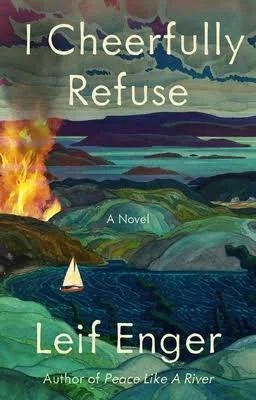
I Cheerfully Refuse     Leif Enger     (2024)  In a dystopian near-future version of far northern Minnesota, Rainy and his wife, Lark, try to escape the notice of an autocratic American government by being far off the beaten track. Although society has basically collapsed, Lark does own a second-hand bookstore, and the written word is a threat to autocracies. After a series of tragedies, Rainy sets off, with his bass guitar, in a rickety sailboat, across the turbulent and unpredictable Lake Superior. He endures many hardships and is often thrown off course by the damaged people he meets at numerous ports of call. This is a scary book, prescient in that it was written before the second Trump presidency. I heard echoes of The Odyssey, The Handmaid’s Tale, The Adventures of Huckleberry Finn, and Don Quixote. Dystopia is not my jam, but I kept reading because of Leif Enger’s stylistic excellence. Enger’s novels are all set at least partially in Minnesota, his home state, and all are written in first-person narration, which conveys truthfulness and immediacy. See my reviews of two of his previous novels, Virgil Wander and Peace Like a River. And for another Lake Superior tale, by Peter Geye, click here.
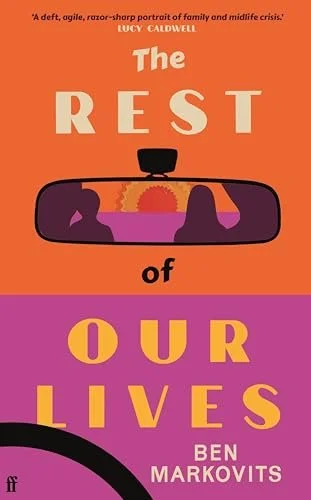
The Rest of Our Lives     Ben Markovits    (2025)  Years ago, Tom Layward vowed that he would leave his wife, Amy, when their younger child turned eighteen. (He couldn’t forgive Amy for an affair that she had.) When he drops off their daughter at her freshman dorm in Pittsburgh, he decides to drive west rather than return to his home in New York. He stops in South Bend to visit his brother, in Denver to see a friend who’s having legal problems, and in Las Vegas to look up a girlfriend from his college days. He finally runs out of road in Los Angeles, where his son is in graduate school. Along the way, Tom reflects on his marriage and on his legal career, both of which are in serious trouble. I thought that this story, told in first person, might be getting too meandering, but then the last 29 pages of the novel pull together hints from the previous 200 pages and wallop the reader. Markovits asks us all to consider, What about the rest of your life?

Pandemic Reads, Part Two

In my last post, I reviewed historical fiction and mysteries that I’ve read during the pandemic. I’d also like to recommend some non-mystery novels about contemporary life.

Monogamy.jpg

Monogamy    Sue Miller (2020) When the gregarious owner of an independent bookstore dies, his widow accidentally discovers his infidelity. Sue Miller explores the complex ties of marriage, family, friendship, and career with great subtlety.

Indelicacy.jpg

Indelicacy    Amina Cain (2020) This short novel (almost a novella) tells the story of a young woman who is lifted out of poverty by marriage to a wealthy man. Although it seems that her dreams of having the leisure to become a writer have come true, the reality of her everyday life is quite different from her expectations.

Writers.jpg

Writers and Lovers    Lily King (2020) And here’s another woman with authorial ambitions: Casey, a 31-year-old server at a restaurant in Harvard Square who lives frugally and spends every spare moment writing a novel. She also meets some pretty wacky boyfriends. As a former server myself, I loved the restaurant scenes.


Austin.jpg

Christmas in Austin    Benjamin Markovits (2019) Three generations of the Essinger family gather in Texas for the holidays, and all the usual Christmas traditions and stresses become manifest. You may find yourself identifying with one of the fourteen members of this ensemble cast. (This book is a sequel to A Weekend in New York but stands alone just fine.)

twenty eight.jpg

28 Summers    Erin Hilderbrand (2020) For chick lit escapism, it doesn’t get better than Erin Hilderbrand. This offering borrows its structure from Bernard Slade’s Same Time, Next Year, with the two lovers meeting secretly each summer, starting in 1993, on Hilderbrand’s beloved Nantucket Island. You can take lots of breezy seaside vacations with them. I’ve also reviewed Hilderbrand’s Summer of ‘69.

Geometry.jpg

The Geometry of Holding Hands    Alexander McCall Smith (2020)

This 13th entry in the Isabel Dalhousie series finds the Edinburgh-based philosopher again trying to solve ethical questions among her friends and family, all the while editing an academic journal. The interactions of Isabel and her husband, Jamie, are, as usual, unabashedly romantic. Check out my review of the series as a whole and of the 12th entry specifically.