

The novels reviewed below both involve a journey, one of the great tropes of literature for thousands of years, whether you call it a pilgrimage or a voyage or an expedition or a flight or a road trip.
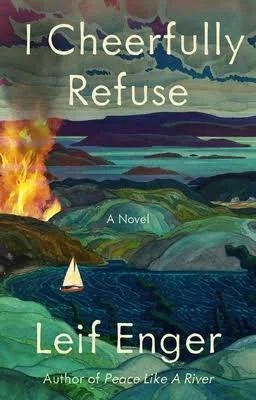
I Cheerfully Refuse Leif Enger (2024) In a dystopian near-future version of far northern Minnesota, Rainy and his wife, Lark, try to escape the notice of an autocratic American government by being far off the beaten track. Although society has basically collapsed, Lark does own a second-hand bookstore, and the written word is a threat to autocracies. After a series of tragedies, Rainy sets off, with his bass guitar, in a rickety sailboat, across the turbulent and unpredictable Lake Superior. He endures many hardships and is often thrown off course by the damaged people he meets at numerous ports of call. This is a scary book, prescient in that it was written before the second Trump presidency. I heard echoes of The Odyssey, The Handmaid’s Tale, The Adventures of Huckleberry Finn, and Don Quixote. Dystopia is not my jam, but I kept reading because of Leif Enger’s stylistic excellence. Enger’s novels are all set at least partially in Minnesota, his home state, and all are written in first-person narration, which conveys truthfulness and immediacy. See my reviews of two of his previous novels, Virgil Wander and Peace Like a River. And for another Lake Superior tale, by Peter Geye, click here.
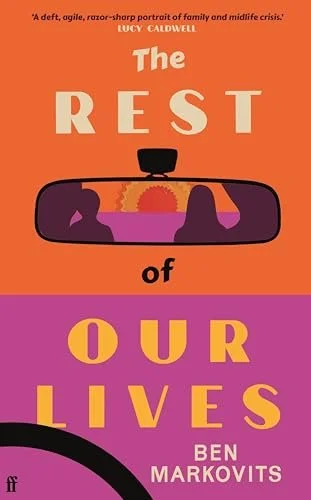
The Rest of Our Lives Ben Markovits (2025) Years ago, Tom Layward vowed that he would leave his wife, Amy, when their younger child turned eighteen. (He couldn’t forgive Amy for an affair that she had.) When he drops off their daughter at her freshman dorm in Pittsburgh, he decides to drive west rather than return to his home in New York. He stops in South Bend to visit his brother, in Denver to see a friend who’s having legal problems, and in Las Vegas to look up a girlfriend from his college days. He finally runs out of road in Los Angeles, where his son is in graduate school. Along the way, Tom reflects on his marriage and on his legal career, both of which are in serious trouble. I thought that this story, told in first person, might be getting too meandering, but then the last 29 pages of the novel pull together hints from the previous 200 pages and wallop the reader. Markovits asks us all to consider, What about the rest of your life?