Starring Lake Superior

November 2025 marked the fiftieth anniversary of the sinking of a very famous freighter in Lake Superior, which is the largest and most northerly of the Great Lakes. Recent nonfiction books about the tragedy include Wrecked: The Edmund Fitzgerald and the Sinking of the American Economy by Thomas M. Nelson and Jerald Podair, and John U Bacon’s bestselling The Gales of November: The Untold Story of the Edmund Fitzgerald. I’ve read excerpts from both these titles, and I recommend them to readers who want all the human-interest details and all the speculation about how the sinking could have been averted. Of course, with this anniversary, there’s also been a revival of Gordon Lightfoot’s classic 1976 folk-rock ballad “The Wreck of the Edmund Fitzgerald,” which can be heard here.

I offer below a review of a historical novel set on Lake Superior long before the Edmund Fitzgerald went down, with all her crew, on November 10, 1975.

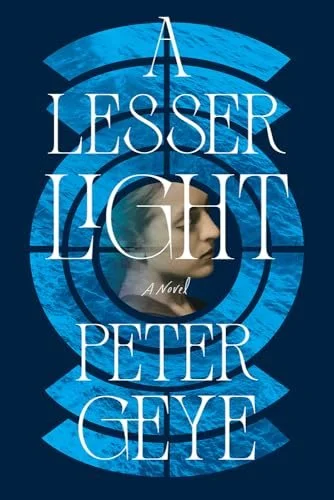
A Lesser Light     Peter Geye     (2025)  I’ve driven and walked for many miles along the shores of Lake Superior, which is more like an inland sea than a lake, with brooding waters and ferocious waves. Lake Superior is this novel’s central character, dictating life and death. The year is 1910, and Theobald Sauer arrives on the south shore of the lake, east of Duluth, Minnesota, to take the post of master lighthouse keeper at a new lighthouse. With him is his bride, Willa, forced into the marriage by financial circumstances and totally unsuited to be Theo’s spouse. Although both Theo and Willa are highly educated, Theo trades in conspiracy theories and religiosity, while Willa looks to science for guidance. Rounding out the cast of characters living near the remote lighthouse are a girl who has “second sight,” her fisherman uncle, the assistant lighthouse keepers and their wives—and wolves. Lots of wolves. The narrative moves very, very slowly, so I’ll admit right here that I skimmed some of the chapters between pages 300 and 400. Still, the novelist’s prose is radiant and his characters, especially that lake, are convincing.  

Mysteries by Prolific Authors

Some authors of mystery novels really churn those titles out.  Here are reviews of novels by two women who are beloved by followers of the genre.
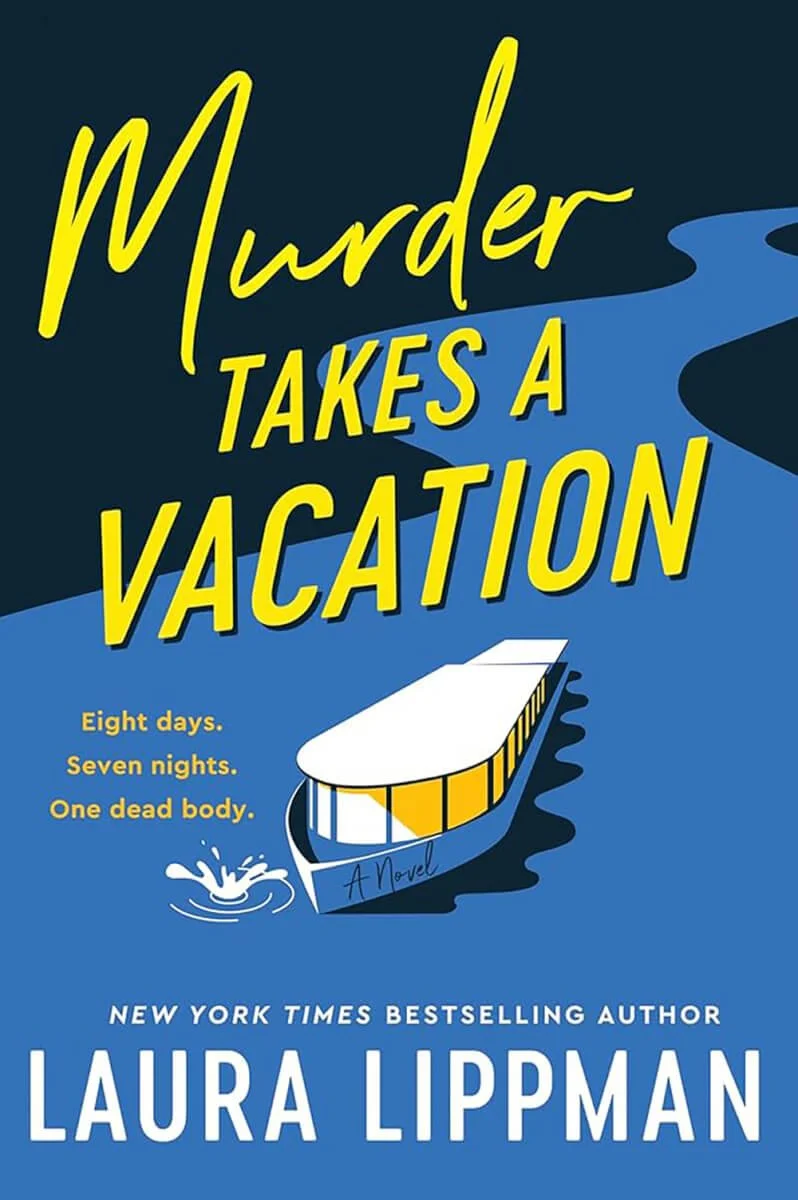
Murder Takes a Vacation     Laura Lippman     (2025)  The mystery writer Laura Lippman takes one of the minor characters from a previous novel and makes her the star of this one. Mrs Muriel Blossom is a widow who has been providing daycare for her daughter’s children for several years. Suddenly, the daughter and son-in-law relocate their family to Japan for work, and they do not invite Mrs Blossom to join them. Mrs Blossom’s sadness at this turn of events is mitigated when she finds a lottery ticket in a parking lot and learns that she’s won a large fortune. She books a cruise on the Seine, with stops in Paris, and that’s when the plot gets twisty. Why do several men take a special interest in a 68-year-old woman who wears unfashionable clothes? Might it be that she has unknowingly been drawn into the heist of a major work of art? I guessed pieces of this mystery, but the full unfolding in the final chapters was a surprise. This is a light read, with appealing characters and several fun excursions around Paris.

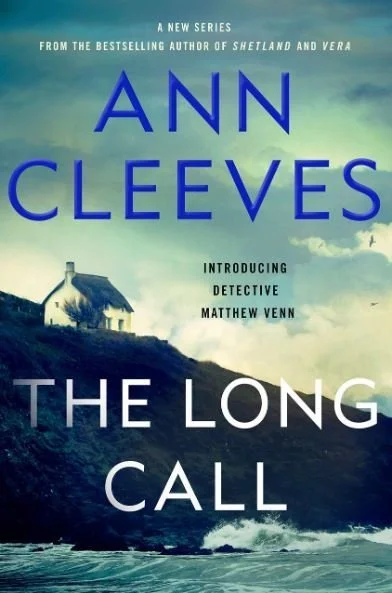
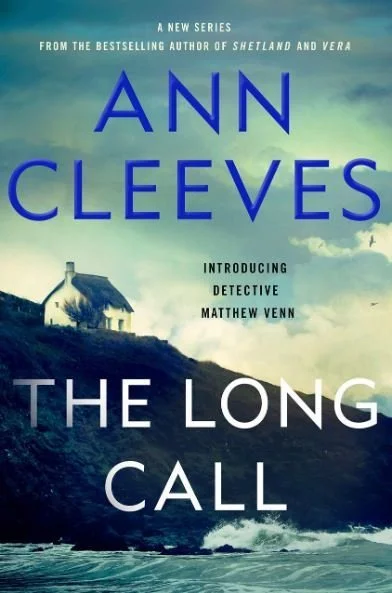
The Long Call     Ann Cleeves     (2019)  Author Ann Cleeves is well known for two series of mysteries that became popular multi-episode television programs, currently streaming on BritBox:  The Shetland Series (with Jimmy Perez) and The Vera Stanhope Series. Back in 2019, Cleeves launched The Two River Series with The Long Call, introducing detective Matthew Venn and set on the wild and gorgeous north coast of Devon, in southwest England. Matthew has recently moved back to this area to take a new police job, but he’s conflicted about being near where he grew up, in a strict fundamentalist Christian sect that he’s long been estranged from. When a man is found stabbed to death on a Devon beach, Matthew heads the investigation, following leads linked to an arts complex that also houses a day center for developmentally disabled adults. Complicating matters, Matthew’s husband founded and now runs this arts complex. The plot has plenty of twists and red herrings, and all the detectives on the case come alive on the page. Matthew, in particular, will steal your heart with his sensitivity and kindness and inner brokenness. He’s also a damn fine investigator. This is the only book in The Two River Series that has been brought to the screen, also on BritBox.


Biographies of Women

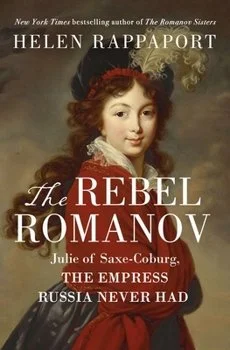
The Rebel Romanov:  Julie of Saxe-Coburg, the Empress Russia Never Had     Helen Rappaport     (2025) 

I’ve been fascinated by the Romanov dynasty ever since I read Robert K. Massie’s Nicholas and Alexandra in 1967, so I hopped on this title by the eminent historian Helen Rappaport. Juliane (Julie) of Saxe-Coburg-Saalfeld was a teenage German princess when, in 1795, Empress Catherine the Great summoned her and her two sisters to St Peterburg to audition to be the wife of her grandson Constantin, who was third in line for the throne of Russia. Rappaport follows Julie’s unconventional life, as she married Constantin, discovered that he was a mentally unstable brute, and fled back to western Europe, boldly creating the life she wanted. Julie’s story is meticulously documented from original letters and documents of the period, and the photo section of this biography is especially rich.

Here are brief recaps of a couple of my other reviews of biographies of women:

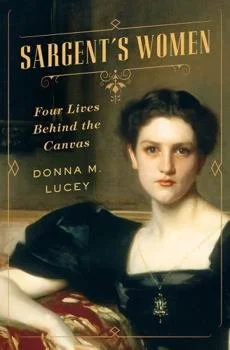
Sargent’s Women: Four Lives Behind the Canvas    Donna M. Lucey     (2017)

If you like Gilded Age gossip, this is a multi-biography that you may want to read. I thought it would be focused primarily John Singer Sargent’s relationship with four of his female subjects, whose portraits are widely known and reproduced:  Elsie Palmer, Sally Fairchild, Elizabeth Chanler, and Isabella Stewart Gardner. (That’s Elizabeth Chanler on the cover of the book.) Sargent painted portraits of these wealthy American women between 1888 and 1922, but in fact his contact with them outside his professional role was fairly limited. So . . . what this book does offer is a view into the excesses that the upper classes indulged in during a period of American industrial expansion and political corruption. My favorite section was the one on Isabella Stewart Gardner, whose private art collection became the famed art museum in Boston that bears her name.

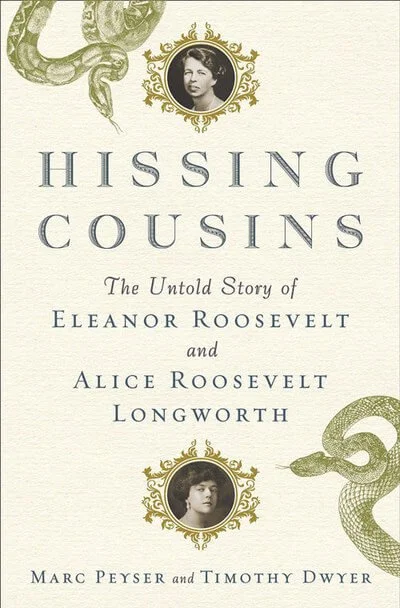
Hissing Cousins: The Untold Story of Eleanor Roosevelt and Alice Roosevelt Longworth        Marc Peyser and Timothy Dwyer     (2015)

This dual biography of Eleanor Roosevelt (1884-1962) and Alice Roosevelt Longworth (1884-1980) reveals many family secrets. Alice, the daughter of President Theodore Roosevelt, lived in the White House in her youth and became the celebrated “Princess Alice.” Eleanor was Theodore’s niece, who married her distant cousin Franklin Delano Roosevelt and herself moved into the White House as First Lady during his presidency. Although Alice and Eleanor played together as children and saw each other socially throughout their lives, they differed radically in their political beliefs and in their personalities. Alice was a Republican, flamboyant, sharp-tongued, and dedicated to influencing the course of history through back-door methods. Eleanor was a Democrat, introverted and slower to speak, but she was a reliable sounding board for FDR on many issues, and she found a strong public voice in advocating for civil rights nationally and human rights internationally. Though the biographers veer into cattiness occasionally, Hissing Cousins is a lively addition to the history of the American Century. Alice and Eleanor are presented as flawed but brilliant women who made their marks in the halls of power.  

Two (Very Different) Mysteries

Marble Hall Murders     Anthony Horowitz     (2025)  Author Horowitz can really churn out the devilishly complicated metafictional mysteries! This one is closely linked to two of his previous mysteries, Magpie Murders and Moonflower Murders, that also starred the character Susan Ryeland. You’ll be able to follow the plot of Marble Hall Murders more easily if you first read those previous books. (See my full review of Magpie Murders here.) In Marble Hall Murders, Susan, now a freelance book editor in London, is engaged by a publishing firm to work with Eliot Crace, an heir of a wealthy literary family. Eliot is writing a continuation novel, following up on a popular mystery series by a fictional author who died in Magpie Murders. Chunks of Eliot’s mystery story are inserted into the story of the interaction of Susan and Eliot, who are, of course, fictional characters themselves. The layers of narrative are so complex that I read this 579-page book in two days so that I could remember all the plot connections. The writing in a Horowitz mystery is clever and flowing and sophisticated. At the end of each book, I always marvel at how all the pieces fit together. This title is a must-read for all mystery fans. And don’t miss the excellent screen adaptations of Magpie Murders and Moonflower Murders starring Lesley Manville, on PBS. (My reviews of other Horowitz mysteries are here and here and here.) 

Mansion Beach     Meg Mitchell Moore     (2025)  The vibe here is definitely “Beach Read” or “Chick Lit,” but an underlying mystery kept me turning the pages. On Block Island, a resort spot off the coast of Rhode Island, someone has drowned, and the identity of the victim is not revealed until very late in the narrative. Main characters: Nicola (young woman who’s left her boyfriend and her law practice for a summer internship on the island); Juliana (tech entrepreneur on the brink of mega-wealth); and Taylor (old-money wife of Nicola’s cousin David). There’s a lot of not-so-subtle poking of the ultra-wealthy and of men who use and then discard women. As the novelist writes (page 306), “It’s a story of money, yes . . . new money, and old money, wealth and class, and the difference between the two. It’s a love story too, of course, which means it’s also a tragedy, which many love stories are.”


Novels in Translation

Days at the Morisaki Bookshop     Satoshi Yagisawa     translated from the Japanese by Eric Ozawa    (2010/2023)  In contemporary Tokyo, Takako is a 25-year-old whose boyfriend announces, out of the blue, that he’s marrying someone else. Since the (ex)-boyfriend and his new fiancée both also work at Takako’s office, she can’t bear to see them and resigns. Her uncle, somewhat estranged from the family, invites Takako to live in a room above his second-hand bookshop, offering her room and board in exchange for some part-time help. And so begins Takako’s introduction to the world of books, especially fiction. She becomes entangled both in literature and in the lives of her uncle, his customers, and the patrons of a nearby coffee shop. This sweet story is set mostly in the Jinbōchō area of Tokyo, which has the largest concentration of book stores in the world. Read it in one sitting and feel better about the world. (The sequel, More Days at the Morisaki Bookshop [2011/2024], picks up the characters a few years later. It’s more discursive and less plot-driven.) 

The Café with No Name     Robert Seethaler     translated from the German by Katy Derbyshire     (2023/2025)  This unusual little novel gives readers a snapshot of working-class life in Vienna in the 1960s and 1970s. The main character is Robert Simon, a loner who does odd jobs around the city until he has the chance to open a small café. (His establishment is not a coffee shop but rather a sort of pub, selling beer, wine, soft drinks, pickles, and “bread with drippings.”) The patrons who pass through all have stories of their own, connecting them in different ways to the café and to its kindly proprietor. They are a varied lot:  factory workers, market vendors, a wrestler, elderly retirees. Don’t expect an overarching plot—just enjoy the characters, who are portrayed with sensitivity and a sense of humor. And always in the background is Vienna, still recovering from World War II, but nonetheless that magical city on the Danube. 


A Fun Little Book

My friend Tom Annesley has a new book out, available on Amazon.

Beer and the Nobel Prize:  Curious Tales of the Nobel Prizes and the People Who Won Them     Thomas M Annesley     (2025) 

Recipients of the Nobel Prize may seem like unapproachable geniuses—indeed, they all had to be extraordinary to be admitted to this highly selective club. But Thomas Annesley’s entertaining book reveals to readers the human side of numerous Nobel winners, with behind-the-scenes stories about their hobbies, musical interests, reactions to the award, and (of course) favorite alcoholic beverages. Annesley, himself a retired science researcher, has assembled data from around the world, sometimes getting in touch with the Nobel laureates themselves or with their surviving relatives. He describes many of the demands of the research process, as well as its quirks, in non-technical language, with dozens of photos that enliven the text.


Historical Fiction Grab Bag

In this post you’ll find reviews of two historical novels—one set in fifteenth-century England and one in early twentieth-century England.

The Pretender     Jo Harkin     (2025)  The provocative premise of this novel is based on historical fact. In the 1480s, one of claimants to the throne of the new English king, Henry VII, was a fair-haired boy, probably named Lambert Simnel. He was championed by the Yorkist faction, who saw the Tudor Henry VII as a usurper. Jo Harkin spins out her story from the viewpoint of this pretender, who was coached in languages and in courtly manners before the Yorkists launched a military campaign against Henry. Since history tells us that Henry VII reigned until 1509, we know in advance that Simnel never became king, but because of his youth he was not executed for his part in the plot. It’s fascinating to follow Harkin’s fictionalized Simnel as he matures from naïve boy to hard-nosed spy in a period of political turmoil and frequent assassinations. I did have some quibbles with the author, however. The random way that she tosses in medieval words and faux-medieval words is distracting. And she has the pretender learning to read Ovid and Horace fluently in less than a year of Latin tutoring. Really? I also doubt that everyone in the fifteenth century was quite as potty-mouthed as Harkin presents them.* Be warned that The Pretender is not only very violent—which is to be expected—but also very bawdy. And if you decide to commit to the 476 pages of this novel, let the names of the many members of the warring royal families just wash over you.  

The Eights     Joanna Miller     (2025)  In 1920, Oxford University began admitting women to its degree-granting programs, and the fictional characters in this novel are four members of that first class of female students. Lodged on Corridor 8 of St Hugh’s College at the university, they call themselves “The Eights.” Beatrice is the daughter of a woman well-known in the suffragist movement in Britain; she’s now seeking her own path by studying politics, philosophy, and economics. Otto (short for Ottoline), a brilliant mathematician, was a socialite before World War I but was traumatized by her volunteer work during the war. Marianne, the daughter of a clergyman, is a scholarship student in English with many secrets. Dora never wanted to attend university but feels compelled to take the place of her brother and her fiancé, both of whom died in the war. The narrative here starts slowly but soon becomes engrossing, as the four women become friends and support each other in a daunting male-dominated environment. Don’t miss the helpful materials at the back of the book, including a glossary and a historical timeline.

* My credentials for these statements: a PhD dissertation on fifteenth-century literature and a stint as an associate editor at the Middle English Dictionary.

London, Right after WW II

Here are two fictional takes on the post-war period in Britain. First, a novel actually written in that period, by the inimitable Barbara Pym, a greatly underrated author. Second, a recently published historical mystery set right after World War II, from a series that is one of my favorites. The similarity of the titles is a bonus! 

Excellent Women     Barbara Pym     (1952)   The novelist’s careful and exacting style and first-rate dialog are at the center of this quiet novel, which focuses on Mildred Lathbury, an introverted single woman in her thirties. The usual post-war difficulties (rationing, bombed-out buildings) are in the background as Mildred goes through her days, working part-time at a social relief agency. She gets herself involved in the domestic dramas of those around her—the neighbors in her building of flats, the members of her local Anglican church, the clergy of that church. Often this involvement, which is unintentional and irritating to her, is quite comical. Mildred is definitely one of the “excellent women” of the title: the unsung females who make the tea at the church bazaar, who defer to men, who sublimate any sexual desires. This is a book to read if you need to calm your nerves after perusing the headlines in 2025.  

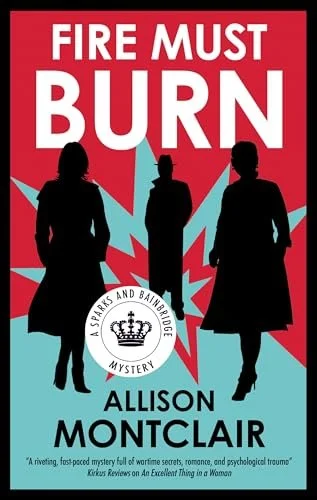
An Excellent Thing in a Woman     Allison Montclair     (2025)  Spoiler alert:  You may want to start with #1 in this mystery series, The Right Sort of Man, reviewed here.

Ringing in at #8 in the Sparks and Bainbridge Mystery Series, this novel, with its title taken from a line in Shakespeare’s King Lear, maintains the high standards of the previous seven. Iris Sparks (retired WW II British spy) and Gwen Bainbridge (war widow with a young son) are once again matching up couples at their London marriage bureau. It’s 1947, and the BBC has ventured into the brand new medium of television, with live broadcasts from Alexandra Palace. Salvatore (“Sally”) Danielli, a friend of Iris from both her university and spying years, is working as a TV stage manager when a body is found in the props room. Iris is determined to clear Sally’s name—as is Gwen, who is Sally’s new girlfriend. What I love about reading these mysteries:  the London ambience, the romances behind the murder scenes, the sparkling dialog, the friendship between Iris and Gwen, and the struggles of everyone in 1947 Britain to come to terms with the many personal devastations of the war.


21st-Century Family Life in Fiction

How the Light Gets In     Joyce Maynard     (2024)  This novel is a sequel to Maynard’s 2021 Count the Ways, and it helps to know the basics of that plot. In Count the Ways, the many sad and shocking events that punctuate Eleanor’s life are traced from her childhood, in the 1950s and 1960s, into the 2000s. Eleanor balances her career as an artist and children’s book author with her role as wife to her woodworker husband, Cam, and as mother to their three children. In How the Light Gets In, Maynard follows Eleanor from her late 50s into her 70s, with many flashbacks to events of previous decades. Family interactions are always complicated, and the three generations of Eleanor’s family have more than their fair share of struggle and misfortune, including estrangement between parent and child, terminal illness, career failure (and success), disability, gender dysphoria, and a long-distance affair. All this takes place against the backdrop of the tumultuous American political scene of the years 2009 to 2024. I found some of the subplots, especially that long-distance affair, farfetched, but I loved the characters so much that I gave the novelist a pass. If you delight in reading about the everyday lives of people doing their best within their imperfect families, Maynard’s work will please you. Incidentally, the light gets in through the cracks.

Truly Madly Guilty     Liane Moriarty     (2016)  I could not get my head around Moriarty’s 2014 bestseller, Big Little Lies, but I thought I’d try this subsequent novel of hers. In Truly Madly Guilty, Moriarty takes us inside three upper-middle-class marriages and inside the heads of the six adults at a friendly backyard barbecue that goes horribly awry. (The setting is Sydney, Australia, where the inhabitants are really partial to barbecues, but it could be any industrialized country.) For more than 200 pages, I read with infuriating impatience, as the “incident” at this barbecue is revealed ever so slowly in brief flashbacks. But after the reveal, the tale is livelier. All the characters have to come to grips with their feelings of guilt and with the way that this guilt affects their personal relationships. The dialogue is realistic, as are the well-drawn characters. I especially loved Oliver, the sensible, nerdy accountant, and Dakota, the bright, bookish ten-year-old daughter of one of the couples. Maybe the wrap-up of the plot is a little too pat, but it worked for me.

 Show Don’t Tell     Curtis Sittenfeld     (2025)  I’ve read and reviewed most of Sittenfeld’s work (click here), and I’ve rarely been disappointed. She portrays 21st-century life candidly, especially in the way that she uncovers the emotions of women—as wives, mothers, sisters, friends, lovers, students, businesspeople, professionals, artists. In this latest collection of short stories, Sittenfeld does not veer away from her raucous, funny approach to fiction, so expect explicit sex and cringey toilet scenes. But don’t expect tidy endings. Many of the stories present the characters at decision points in their lives, and the reader doesn’t always find out what the decision is. I noted also the author’s fascination with the way in which wealthy and famous Americans handle their wealth and fame, including thinly disguised portraits of living billionaires.


Author Spotlight: Weike Wang

Back in 2018—when I reviewed Weike Wang’s first novel, Chemistry, on this blog—I predicted “Weike Wang is an author to watch.” Indeed, Wang has since produced two more well-received novels focusing on the experiences of Chinese American women. In this post, I offer recaps of my reviews of Chemistry and of Wang’s second novel, Joan Is Okay, plus a brand new review of her third book, Rental House. In all her novels, Wang makes her readers think hard about the role of immigrants in American society, about the difficulties that women (of any race) face in choosing careers, and about the tensions between the personal and the professional in the lives of talented people.

Chemistry     Weike Wang     (2017)  The unnamed first-person narrator in Chemistry is a young woman heading into her final year of a doctoral program in chemistry at a prestigious university. She’s Chinese American, brought to the United States as a young child. Boyfriend Eric is a white guy who is just embarking on what will undoubtedly be a rewarding academic career. He wants to marry the narrator, but she demurs, worried about forfeiting her intellectual capacity. Added to this tension is a side plot about the narrator’s best friend, a physician in New York, who talks to the narrator frequently on the phone. Should the narrator marry Eric, a man very well suited to her personality and intelligence, even though he can never fully understand her family’s culture and language? If she doesn’t pursue chemistry, what should she do with her life? And if she moves to the Midwest to follow Eric, should she take her comical, untrainable dog with her? Chemistry doesn’t give readers all the answers, but that’s its charm.

Joan is Okay     Weike Wang     (2022)  All of us know what’s going to happen in the intensive care units of hospitals in New York City in the spring of 2020. We know that ICU physicians like Joan are going to be in the thick of the COVID pandemic. But in 2019, Joan can’t predict this. She’s dealing instead with the expectations of her boss (who rewards her workaholism) as well as the expectations of her Chinese American family (who want her to get married and have kids). She also has a strangely intrusive neighbor and an oddball work colleague. Still, Joan is okay, even when COVID hits. This short novel packs a punch.

Rental House     Weike Wang     (2024)  Keru and Nate met at Yale, married several years later, and settled in New York City. One summer, when the two are in their mid-thirties and doing well in their careers, they decide to rent a house on Cape Cod, inviting their parents to spend separate weeks with them and their large sheepdog. In-law relationships can be fraught, especially so when one set of parents (Keru’s) is Chinese American and one (Nate’s) is Appalachian American. Needless to say, the vacation is not smooth sailing. In the second section of Rental House, we skip ahead five years, as Keru and Nate hit age 40 and rent a vacation house in the Catskills. The same cultural clashes take place, and new marital challenges arise. Wang’s prose style is spare and droll, her dialogues are sharp, and her psychological insights are penetrating.

Two Recent Novels

The Heaven and Earth Grocery Store     James McBride     (2023)  In small-town Pennsylvania in 1936, two outcast groups of citizens, the Jews and the Blacks (“Negroes”) live on the edge of town and learn to support each other to achieve justice denied by the bigoted establishment. Numerous subplots swirl around the main story, which is about a deaf Black boy. The cast of characters is large, and the chapters sometimes have the feel of linked short stories featuring those characters. So the very structure of this novel reinforces its theme of community—of people banding together for the common good and for individual survival. Thanks to my friend Kathy Daly for suggesting this title for review on my blog! 

Smoke and Mirrors     Aaron Stander     (2024)  I’ve reviewed several of Stander’s previous novels (click here) in his series of mysteries set in the northwestern area of Michigan’s “mitten” peninsula. The plot in this twelfth one is satisfyingly intricate, and the editorial lapses of the early titles in the series have, thankfully, been cleaned up. The murders in Smoke and Mirrors take place over the Independence Day holiday weekend, on a gorgeous stretch of sand and dunes on Lake Michigan’s shoreline. As the local police untangle a web of crimes, they discover drug dealing and arson and generational poverty. Over the course of the series, I’ve especially liked following the life trajectory of the main sleuth, Sheriff Ray Elkins, who has had many personal setbacks. And, of course, the references to Michigan locales are a treat. You don’t need to read Stander’s mysteries in order, but you’ll appreciate a few more plot connections if you do.

Rural Tales

Whale Fall     Elizabeth O’Connor     (2024)  Ah, the rustic life on a remote island! Sometimes we long for it, but the reality is harsh. O’Connor’s poignant novel paints a convincing portrait of the inhabitants of a very small fictional island off the coast of Wales in the year 1938. The protagonist is Manod, an eighteen-year-old woman who is trying to decide if she will move to the mainland; she weighs family obligations, personal ambitions, and the international political landscape. The seasonal fishing and sheep-raising routine of the island’s few hardworking inhabitants is interrupted by the arrival of two ethnography researchers from Oxford. At first, as the visitors record folk songs and take photographs, their presence seems benign. Spoiler alert: their presence is not benign. The nature prose of this novel is hauntingly lovely. The story is heartbreaking.

Strange Flowers     Donal Ryan     (2020)  In 2018, I reviewed Donal Ryan’s 2014 collection of linked short stories, titled The Spinning Heart. Ryan’s prose has become even more luminous since then. In his novel Strange Flowers, he once again takes us to his native Ireland, to a family in rural County Tipperary, beginning in 1973. Twenty-year-old Moll Gladney walks away from her parents’ home without a word of farewell, and the novelist plumbs the emotions of her parents, both during the five years that Moll is gone and when she returns with many secrets. Although I thought that the story-within-a-story in the latter part of the book didn’t quite fit, this is still an exceptionally fine exploration of family bonds and of the many varieties of love between humans.


Revisiting Medieval Mysteries

In the early years of this book review blog, I reviewed many mystery novels, especially those set in the Middle Ages. In more recent years, I’ve drifted away from medieval mysteries. This post is a reset! I recently read three of the 17 titles in the medieval mystery series by Priscilla Royal:

Wine of Violence (2003), Sorrow without End (2006), and The Twice-Hanged Man (2019)

To start things off, in 1270, the brilliant and high-born Eleanor of Wynethorpe is selected by England’s King Henry III to be Prioress of Tyndal Priory, near Norwich, on the windswept coast of the North Sea. Tyndal Priory is highly unusual in that it’s a double house, with monks and nuns living in separate but adjoining buildings and ruled by a woman, not a man. Eleanor’s appointment is also highly unusual, in that she’s only twenty years old when she takes up her post. The ensemble cast, solving all kinds of murders, includes Crowner Ralf (kindhearted local coroner), Brother Thomas (reluctant monk who is gay), and Sister Anne (herbalist extraordinaire). The historical elements of these novels are quite accurate, though I didn’t find the daily liturgical obligations of the monks and nuns to be quite prominent enough. The tone is very much like that of Ellis Peters, whose Brother Cadfael mystery series (21 books between 1977 and 1994) is for me the gold standard. Click here to read my essay on medieval mysteries, and click on any series title below to read more reviews.

The Domesday Series by Edward Marston (1993 to 2000) Gervase Bret, a brilliant lawyer, and Ralph Delchard, an intrepid soldier, travel around England investigating disputes related to the Domesday Book, William the Conqueror’s massive survey of properties in the year 1086. Of course, they also solve crimes. 

The Owen Archer Series by Candace Robb (1993 to 2024) In the early 1360s, an archer who has lost an eye in England’s war in France retires to York and apprentices himself to a female apothecary, Lucie Wilton, whom he marries. The mystery part comes in because Owen Archer also works as a spy for the Archbishop of York and the Chancellor of England.

The Roger the Chapman Series by Kate Sedley (1991 to 2013) Roger is an itinerant purveyor of small household goods and haberdashery in late fifteenth-century England. He tells his mystery tales in first-person narrative, looking back, as an old man, on the adventures of his youthful traveling days.

The Dame Frevisse Series by Margaret Frazer (1992-2008)  A fifteenth-century nun at St. Frideswide’s, a small fictional Oxfordshire convent, is a practical and clever sleuth, dealing with murders as well as with the personality clashes and power struggles that are inevitable in a religious community.


The After Effects of World War II

The Great Fire     Shirley Hazzard     (2003)  In 1947, the post-war world is an unsettled place, with bombed cites not yet rebuilt and countless humans left wounded, in body and in spirit. Aldred Leith, a British war hero still in uniform, is traveling in Asia, compiling information for a book about the effects of the global conflict. In occupied Japan, he meets two extraordinarily bright young Australian siblings, Benedict and Helen Driscoll. Benedict is slowly dying from a rare disease, and Helen tends to him. Meanwhile, a friend of Leith’s, military lawyer Peter Exley, is in Hong Kong, prosecuting war crimes. The novelist follows these characters, and many lesser characters whom they interact with, over an eventful and fateful year. Be warned: the prose here is dense, with many multisyllabic abstract nouns to make you stop to reread. But the slog will be well worth your time. Shirley Hazzard vividly illuminates the period and the people, while skewering some Australians for their brashness and some New Zealanders for their provinciality. What of the “great fire” of the title, which recurs in sentences throughout the book? I took it mainly as referring to the cruel destructiveness of war, particularly the bombing of Hiroshima and Nagasaki.

A God in Ruins     Kate Atkinson     (2015)  In Atkinson’s expansive Life After Life (reviewed here), the novelist plays out the many possible life choices of Ursula Todd, with speculative scenarios that are set against the tumultuous history of the twentieth century in Europe. The sequel to Life After Life is A God in Ruins, a novel in much more conventional form but no less mesmerizing, telling the story of Teddy Todd, Ursula’s beloved younger brother. Teddy is a gifted man and a steadying presence to his family. As an RAF pilot during World War II, he fully expects to die on one of his many air raids on the European continent. When, miraculously, he survives being shot down and being imprisoned in Germany, he has to confront the rest of his life. Atkinson reveals the brutal impact of war on one person’s psyche, as well as the wide repercussions of war on his family and friends.

Back in 2017, I posted about The Women in the Castle by Jessica Shattuck. This is another powerful novel, about three German widows in the time right after World War II. Read my full review here.

Novels about Elderly People

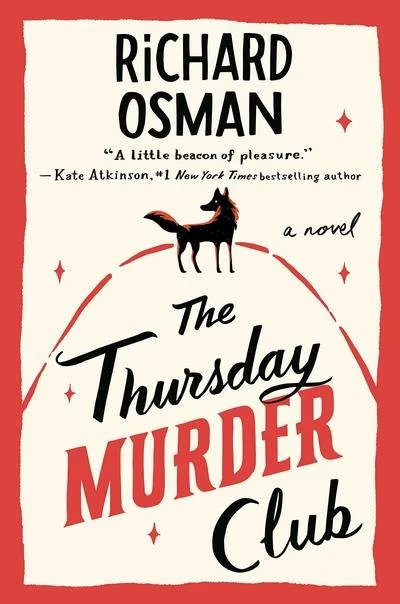
The Thursday Murder Club     Richard Osman     (2020)  In a posh retirement community in present-day England, four residents meet every Thursday to discuss cold cases from the local police department. When a contractor who has worked on the site where they live is found murdered, they jump into the investigation, to the chagrin of the police. The characters in this cozy mystery are almost caricatures of themselves:  the firebrand retired union organizer, the arrogant real estate developer, the brash and fearless ex-spy, the greedy builder, the cautious former nurse, the ambitious police constable, and so on. Each of them is a hoot. The narrative starts out slowly but then rapidly picks up the pace, for a rollicking, witty murder investigation. (A movie version of this novel is due out on Netflix in 2025.)

Frankie     Graham Norton     (2024)  Crusty octogenarian Frances (“Frankie”) Howe, who lives in London, has broken her ankle. Her friend Norah hires Damien, a young home-health aide (“carer” in Brit-speak), for the night shift at Frankie’s apartment. Frankie and Damien begin to bond when they learn that they both grew up in County Cork, Ireland. Gradually, Frankie tells Damien the story of her eventful life, including a restaurant career in New York City from the 1960s into the 1980s. Well, put several gay characters in NYC in the 1980s and you get a devastating inside look at the AIDS epidemic. But this novel is primarily about Frankie, whose resilience and strength help her to survive the nasty machinations of the people she encounters over the decades. Author Graham Norton has previously worked in the genres of memoir and mystery (see my review of his mystery Holding, one of my favorite books of 2018). With Frankie, Norton has ventured successfully into historical fiction, producing a sweet and sensitive novel that kept me turning the pages with anticipation.

And here are two novels about the elderly that I’ve previously reviewed and put on my “favorites” list:

Our Souls at Night     Kent Haruf     (2015)  A widow and a widower, neighbors in a small Midwestern town, carve out their own version of happiness in spite of setbacks. Readers can tuck this story away as a tutorial in how to cope with the inevitability of mortality. (The 2017 movie of the same name starred Robert Redford and Jane Fonda.) Click here for my full review.

Henry, Himself     Stewart O’Nan     (2019)  This is a quiet, introspective portrait of a year in the life of Henry Maxwell, a retired engineer who lives in Pittsburgh with his wife, Emily. The novelist is able to turn everyday events into drama that drives his narrative in a highly effective way. Click here for my full review.


Author Spotlight: Elizabeth Strout

Long-time followers of this blog will have read several reviews of the fiction of Elizabeth Strout over the past eight years. In this post, I offer an overview of all of her books, focusing on the two main strands: books about the character Olive Kitteridge and books about the character Lucy Barton. I include a new review of Strout’s 2024 novel, Tell Me Everything, in which these two strands are braided together.

In my opinion, you can read anything by Elizabeth Strout and you won’t be disappointed. But for maximum enjoyment of the character development, read in the order of publication.

THE OLIVE KITTERIDGE BOOKS

Olive Kitteridge  (2008)  In a Pulitzer-winning collection of linked short stories, Strout introduced an indomitable retired schoolteacher from the fictional rural town of Crosby, Maine. This book was turned into a four-part HBO miniseries in 2014.

Olive, Again  (2019)  The sequel to Olive Kitteridge comes in the form of thirteen more stories that unpeel life in small-town New England. The cranky, candid Olive, who weaves in and out of the tales, is sometimes intolerant but often kind. When her kindness is awkwardly expressed and causes offense, she’s surprised, and she tries to rectify her behavior. The other characters in Olive, Again are townspeople whom Olive interacts with in some way. Their lives are intertwined with each other and with the inevitable sadnesses and transgressions and occasional triumphs of living on this Earth. The surroundings of the town can reflect the despair of the inhabitants, yet it’s not all bleakness. Strout's characters can also connect with the natural world in a way that lifts their spirits, if only briefly.

Three other novels by Strout have characters connected to Olive Kitteridge or rural Maine:  Amy and Isabelle (1998), Abide with Me (2006), and The Burgess Boys (2013).

THE LUCY BARTON BOOKS

My Name is Lucy Barton  (2016)  The titular Lucy is a writer in New York City in the 1980s, with a husband and two young daughters. When Lucy is hospitalized for many weeks with a mysterious illness, her estranged mother travels from Illinois to her bedside. The two women reach an uneasy peace with each other, especially as they tell stories about the folks back home, in the (fictional) Amgash, the depressed rural town where Lucy grew up in extreme poverty.

Anything Is Possible  (2017)  In these linked short stories, the character Lucy Barton has become an acclaimed writer. Chicago is one of the stops on Lucy’s book-promotion tour, so she visits her home town of Amgash, Illinois, to see her siblings. We get much more detail about the childhood suffering of the Barton kids—details that were glossed over and somewhat sanitized in My Name is Lucy Barton. Strout toys with the vagaries of memory in both books, and the power of money emerges as another theme. Lucy has lived the up-by-her-bootstraps version of the American dream—getting into college and building a successful career. Others in her small town remain impoverished, with their share of miseries, including sexual abuse and mental illness. The prose is this book is spare, with every word well chosen. The emotions are raw but presented with subtle empathy.

Oh William! (2021) is another book in the Lucy Barton series, about Lucy’s first husband, whom she reconnects with after the death of her second husband.

Lucy by the Sea  (2022)  In this novel, it’s now early March 2020, and Lucy’s ex-husband, William, insists that they leave New York City for a rental house on the coast of Maine. (He’s a scientist who recognizes how dangerous the coronavirus is.) This town in Maine happens to be Crosby, where the character Olive Kitteridge, from Strout’s other books, lives. In first-person narrative, Lucy details the interactions she has with some of the residents of Crosby during 2020 and early 2021. Strout excels in examining the complexities of the human condition, and Lucy by the Sea is the first discussion of the pandemic I’ve read that truly captures the sense of desperation and loneliness that the pandemic wrought.

OLIVE FINALLY MEETS LUCY!

Tell Me Everything  (2024)  We’re back in Crosby, Maine, in 2022-2023, and Strout’s two strong female characters, Olive Kitteridge and Lucy Barton, come face to face at last. Olive, now in an assisted living facility, regales Lucy with odd tales from her long life. Meanwhile, attorney Bob Burgess (from Strout’s 2013 novel The Burgess Boys) agrees to represent a local man who is suspected of murdering his mother. This murder mystery threads through the book and involves even more characters from Strout’s previous fiction. Some national reviewers of Tell Me Everything have complained that it’s rambling and unfocused. I disagree. I took it as a genre-cross between a novel and a collection of short stories and found it so riveting that I read it in one long afternoon. The clear theme is enunciated on page 292: “’What is the point of anyone’s life?’” Strout challenges her readers to think hard on this question.


Not My Usual Fare

The Thousand Autumns of Jacob de Zoet     David Mitchell     (2010)  This is not a novel that I would have thought I’d like at all. Most of the characters are venal, vulgar schemers. There are numerous scenes of violence. Women characters in particular are targets of horrific crimes. And yet . . .  Jacob de Zoet is a clerk—a kind of accountant—serving with the Dutch East India Company in Japan, starting in 1799. Japan at this time is still closed to the outside world, but the authorities allow a very limited amount of trading with the Dutch through the port of Nagasaki, where a few foreigners are allowed to reside in a gated compound. Jacob is trying to make enough money in five years to win the hand of his wealthy girlfriend back in the Netherlands. He’s an honest and devout soul in an outpost of corruption. I wanted to find out how he fared. I also wanted to learn the fate of a Japanese midwife, Orito Aibagawa, who is introduced in the opening scene of the novel and whose story becomes intertwined with Jacob’s. Another motivation for me to keep reading all 479 pages of this book was the luminescent prose on every single page. Here are a few examples:  “The clock’s pendulum scrapes at time like a sexton’s shovel.” (150) “A gibbous moon is grubby. Stars are bubbles, trapped in ice. The old pine is gnarled and malign.” (258-9) “Fallen red leaves drift over a smeared sun held in dark water.” (447) See what I mean?

Life after Life     Kate Atkinson     (2013)  Another novel that I would not ordinarily select based on the dust jacket description, this speculative narrative goes in multiple directions, depending on the random vagaries of human existence. Ursula Todd, the main protagonist, may have died at her birth in England in 1910, or she may have been saved just in time. She may have killed Hitler in 1930, or she may never have encountered the Führer. And so on . . . The novelist lets Ursula’s story play out in many different directions, over the course of the first half of the twentieth century. This time period in Europe had many calamitous episodes (the trenches, the bread lines, the Blitz), during which chance happenstances could take a person one way or another. Although I usually prefer a straightforward narrative rooted in reality, I was sucked in to the 525 pages of Life after Life by the extraordinary cast of characters and the way these characters interacted with the historic events that they bumped up against. To keep track of it all, note the date that the author provides at the head of each chapter. For another novel that presents alternate views of reality, see my review of Paul Auster’s 4321 from 2017, or check out Penelope Lively’s How It All Began from 2011.

Three Mysteries

Close to Death     Anthony Horowitz     (2024)  Novelist Horowitz is a master of the metafictional mystery, in which he deliberately draws attention to the artificiality of his story, separating the mystery itself from his own act of creating the mystery. (For my fuller discussions of Horowitz’s metafiction, click here and here.) In Close to Death, there’s a very traditional Agatha-Christie-style murder: London financier Giles Kenworthy is shot through the neck with a crossbow at his home in a small, exclusive gated community, Riverview Close. All the other residents of the Close come under suspicion of committing the crime. Interleaved with this murder story is another story—that of an author called Anthony Horowitz who is trying to write a novel based on the investigation of the Kenworthy murder by a secretive private detective named Daniel Hawthorne. Readers have to follow both intricate layers until the two collide in a joint solution. Horowitz (the real-life person!) is devilishly clever, his prose is slick, and his mysteries are ingenious.

Still Life     Louise Penny     (2005)  Although I swore off reading more of Louise Penny’s mysteries back in 2017, I recently went back to this debut novel in her series of 19 novels centered on Chief Inspector Armand Gamache of Québec’s homicide unit. (Sentence fragments in later novels of the series had driven me batty, but Still Life has fewer of these.) I did find some rough edges in Still Life—for example, the sometimes inscrutable dialogue and the unresolved issue of an insubordinate junior officer. However, the descriptions of small-town Québec are superb, the plot is sophisticated, and Gamache is an engaging lead. I understand why Louise Penny has such a faithful following among mystery readers.

Eleven Pipers Piping     C C Benison     (2012)  Each year in January, the bagpipe-playing males of the fictional English village of Thornford Regis commemorate the birthday of Robert Burns with a special catered supper. The new vicar at the local St Nicholas Church, named (I kid you not) Tom Christmas, is obliged to say a prayer at this event, though he can’t abide either bagpipe music or haggis. When a death occurs after the meal, Father Christmas is pulled into the investigation, and we’re off and running with a twisty-turny, red-herring-laden classic British mystery. The roster of characters is large (consult the chart at the front of the book); the British slang is laid on heavy (although the author is Canadian); and the incidence of questionable paternity is frequent. But the plot is worked out meticulously, and the characters are quite endearing. This is the second in a series of three related mysteries—the others being, of course, Twelve Drummers Drumming and Ten Lords A-Leaping. C C Benison is the pen name of Douglas Whiteway.


Novels Set in 21st-Century America

All three of these novels have to do with money, which seems to be a central theme of our current century.

The Mighty Red     Louise Erdrich     (2024)  The surface story of The Mighty Red centers on Kismet Poe, a Native American teenager living near the Red River in North Dakota (where the novelist herself grew up). Two very different young men, Gary Geist and Hugo Dumach, are in romantic pursuit of Kismet; her mother, Crystal Frechette, tries to advise her. A side mystery arises when Kismet’s father, Martin, disappears, along with all trace of more than a million dollars in funds that have been raised for a church renovation. Meanwhile, dark secrets about Gary and the Red River swirl around, not revealed until late in the tale. The river actually underpins the entire narrative here. For generations, its springtime floods have deposited rich soil for farmers’ crops, but chemical overuse has poisoned much of the land. The profits of agribusiness are a powerful draw in the economic recession of 2008, when the main action of this sly and sparkling novel takes place. I want to confess that this is the first of Erdrich’s novels that I’ve read, although I have read her poems. The author herself gave me an autographed copy of her poetry collection Baptism of Desire when I had dinner with her in 1994. Louise Erdrich is the only literary rock star that I’ve ever met, and I can report that she is gracious as well as brilliant.

Entitlement     Rumann Alam     (2024)  Money, money, money! Billionaire Asher Jeffries (age 83) has plenty, and he wants to give it away through his New York foundation. One of his foundation employees, Brooke Orr (age 33), becomes his protégé and confidante. At first, Brooke is committed to the task of finding worthy recipients for Jeffries’ money, but gradually she comes to feel entitled to more and more of that money for herself. The tension builds as readers watch Brooke’s greed grow. The author’s shifting narrative voices are sometimes too abrupt for my reading style, but his character development and his depiction of Manhattan in 2014 ring true. Most of all, he fearlessly lays bare the corrupting power of money, while not shying away from issues of race and gender.

The Wedding People     Alison Espach     (2024)  For years, Phoebe has endured painful fertility treatments that have been unsuccessful. Her husband has deserted her for another woman and then divorced her. Her work as an adjunct academic is unfulfilling and unrewarded. So she travels to an expensive hotel in Newport, Rhode Island, determined to take pills and end it all. But she stumbles into a week-long wedding celebration that was supposed to have exclusive reservations for the entire hotel, and the bride is not happy to have an interloper. Phoebe gets drawn into the wedding drama—one character calls it “the goddamned most elaborate wedding possible.” If, like me, you are baffled by the current American obsession with over-the-top weddings, you’ll find the satire here quite satisfying. The writing, heavy on dialog to carry the plot, is sharp and witty. But, in the end, the novel is less about weddings and more about surviving depression and finding your true self.