Two Bestsellers

From—where else?—the New York Times bestseller lists.
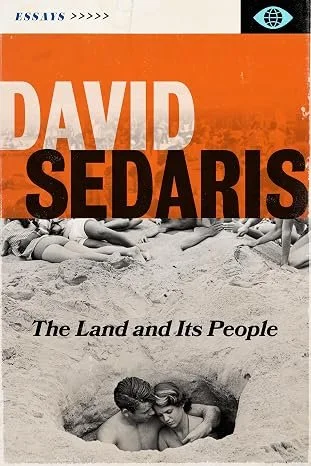
The Land and Its People     David Sedaris     (2026)  The 28 essays in this latest collection from David Sedaris, his sixteenth, are products of the craft he’s been honing for decades, so they’re tip-top. The theme in this volume tends to be friendship, with stories about people Sedaris knew in his younger days, about his siblings, and about people he’s met while traveling (on lecture tours or on vacation). I had read several of the essays in the magazines where they were previously published, but that didn’t diminish my enjoyment of them—it allowed me to notice more details. As usual, Sedaris is clever, witty, insightful, and sometimes vulgar. For a more complete assessment of his talents, see my lengthy review here. One sentence from that review:  “Sedaris blurs the line between fiction and nonfiction, taking scenes from real life, amplifying them, and surrounding them with extraordinary contextualizations.”
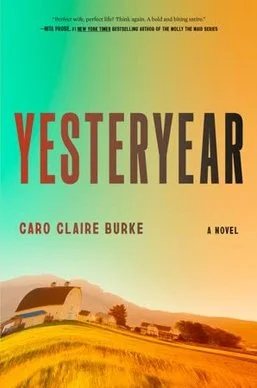
Yesteryear     Caro Claire Burke     (2026)  The satire is over-the-top in this highly addictive debut novel. First-person narrator Natalie Heller Mills is a wealthy tradwife social media influencer with millions of followers. “Yesteryear” is the name of the Idaho farm where she and her cowboy-adjacent husband raise a passel of kids who drink raw milk. Although Natalie couches her story in the godly language of her evangelical upbringing, her narcissism and cattiness are quite apparent. And although she appears online to be managing her household and her sourdough bread and her posts all on her own, the farm actually has a large hidden crew of workers. Then one day Natalie wakes up to find herself in a hardscrabble life on a mid-19th-century homestead, with a husband and family sort of like—but not quite the same as—her 21st-century husband and family. I kept reading for hours to find out what was going on. Was it time travel or a bad dream or a reality television show or revenge of the universe for Natalie’s exploitations? Novelist Burke searingly lampoons MAGA supporters without ever calling them that, but she also spoofs East Coast elites (at Harvard, no less) with exaggerated portrayals. The action moves along quickly, and the ending is a zinger, in this highly recommended read.
 

Two Fiction + Two Nonfiction

First, two works of fiction, both about financiers:

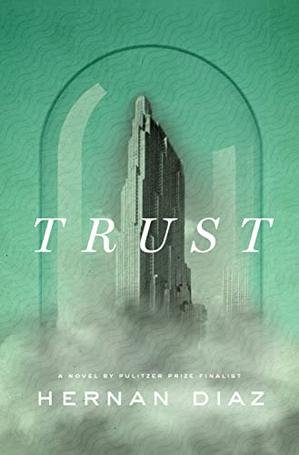
Trust     Hernan Diaz     (2022)  Diaz explores the trustworthiness of narrative through four different takes on the same story, about a fictional early-twentieth-century Wall Street financier. First, a novella captures the style of Edith Wharton, then an unfinished autobiography reveals its author’s vanity and arrogance. A memoir by the autobiography’s ghost writer gives another perspective, and finally the diary of the financier’s wife provides a new twist to the tale. Diaz navigates these disparate genres with stylistic ease, as he asks, Whom do you trust to tell you the truth?

The Magnolia Palace     Fiona Davis     (2022)  I reviewed Davis’s 2016 novel, The Dollhouse, on this blog in 2017, and The Magnolia Palace is the fifth novel that Davis has churned out since then. Her signature formula includes an actual iconic building in New York City as the setting and two fictional young women, living decades apart, who are involved in a complicated mystery. The Magnolia Palace is a lightweight, entertaining romp, set in the Frick Collection, a fine art museum that was formerly the home of Henry Clay Frick’s family. The two women are models, one in 1919 and one in 1966. Brush up on your art history!


Next, two collections of essays:

These Precious Days     Ann Patchett     (2022) Patchett provides plenty of  insights into her family background and her fiction-writing process in these essays. (See my reviews of her novels Commonwealth and The Dutch House.) The title piece, and the longest, starts with Patchett reading Tom Hanks’s short story collection, Uncommon Type. She admires the book (as did I; see my review) and, through a series of coincidences, gets to know the actor and his assistant, Sooki Raphael. Sooki ends up as a long-term houseguest of Patchett and her husband at the beginning of the pandemic. Patchett writes a moving account of their unexpected and rewarding friendship.

Happy-Go-Lucky     David Sedaris     (2022)  For fans of David Sedaris (count me in), every new collection of his essays means a couple of evenings of sure-fire good reading, unveiling the vagaries of family relationships. (See my previous commentary on his body of work.) Happy-Go-Lucky focuses quite a bit on the last years of David’s nonagenarian father, Lou, and on the impact of the COVID pandemic. The stories are honest, touching, sometimes heartbreaking, sometimes disturbing. There is simply no other essayist who is as irreverent and candid and downright funny as David Sedaris.