

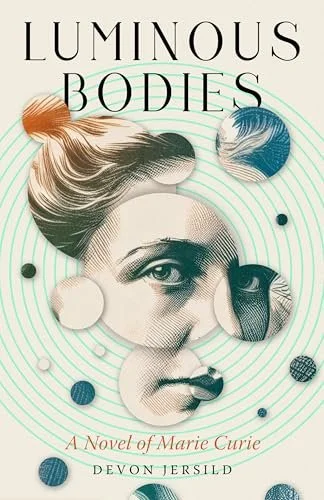
Luminous Bodies: A Novel of Marie Curie Devon Jersild (2026) Although this is a historical novel, its first-person narration reads more like a memoir or autobiography of Marie Skłodowska Curie, who lived from 1867 to 1934. The text tracks the life of the preeminent scientist from 1894 to 1915, with flashbacks to Curie’s childhood in Poland. Two main themes emerge: the denigration of women in science during this period of history and the conflict between Curie’s personal life and her career. After the death of her husband, Pierre, in 1906, she gradually fell into an affair with a married colleague, Paul Langevin. The scandal that this liaison caused actually threatened to derail her second Nobel Prize, which she was awarded in 1911. As I read the novel, I was constantly aware of the tension between groundbreaking research and physical safety. The scientists seemed not to be aware that the radioactive materials they were working with were life-threatening to them—or perhaps they knew and chose to continue.
The Calamity Club Kathryn Stockett (2026) Rural Mississippi, summer of 1933. Does it get more depressed and depressing than that? Yup—if you’re living in a cruel orphanage, like eleven-year-old Meg Lefleur. The author introduces readers to Meg and also to Birdie Calhoun, a bookkeeper in her twenties with many family responsibilities. How these two meet, and how their lives intersect, takes a couple hundred pages of this 634-page novel. I won’t reveal details of the Calamity Club that Birdie and a host of minor characters become involved with, but ultimately, it’s a way for desperate women to survive in terrible economic conditions—to keep a roof over their heads and food on the table and relatives bailed out of jail. Descriptions of the Southern heat and humidity will have you plucking at your clothes to see if they are sticking to you, and Kathryn Stockett’s gutsy women characters who upend the patriarchy will haunt you long after you finish this recommended novel.