Native Gardens: A Longer Review

Plant This, Not That:  Over 200 Native Swaps for a More Sustainable, Pollinator-Friendly Garden      Elise Howard     (2026)

Elise Howard’s book, lavishly illustrated with color photos, offers a treasure-trove of native plants that you can choose instead of the standard garden center offerings. Howard asks gardeners to forgo many staples of American gardens in favor of plants that were present before European migration brought species from around the globe to our shores and before extensive hybridization reduced the number of plants available to pollinators. Why? If a plant isn’t native, it’s not part of the complex web of interdependent species in every local area.

Sometimes the plant substitution that Howard advocates is fairly simple:  buy a native hydrangea instead of one that came from Asia, or buy a native rose instead of a highly hybridized rose. But in other cases, you’ll need to choose an entirely different genus in order to go native:  instead of a lilac, plant a redbud; instead of a hosta, plant a fern. This guide has a capsule description of each recommended plant, as well as a detailed map that shows where in the United States that plant is native.

The stakes for swapping out are higher when a non-native landscape plant in your yard is also classified as an invasive plant. Invasives include (in at least some part of the United States) privet, barberry, callery pear, Japanese honeysuckle, pachysandra, English ivy, bugleweed, periwinkle, creeping jenny, spotted deadnettle, and many others. These plants can leap boundaries to smother native plants in nearby yards as well as in nearby forests and hedgerows and highway medians. And invasives don’t support local pollinators and other wildlife the way natives do. Plant This, Not That helps gardeners get a handle on what to plant to keep the bees buzzing and the birds singing. For example, instead of privet, plant serviceberry, one of my favorites.

I gleaned many great ideas for my own gardens from this book, and I totally agree with Elise Howard that we should plant more natives, getting rid of lawns and of invasive plants. I write from many decades of experience in incorporating natives into urban gardens, plus twelve years of growing native plants in three large rain gardens. (Rain gardens are slightly sunken areas with native plantings selected for their ability to absorb rainwater directed to them.) From this perspective, I do have a few critiques of Howard’s gardening dicta—dicta that are commonly accepted within the community of native-plant enthusiasts.

Percentages.  Along with other prominent native-plant advocates, Howard recommends aiming for 70% native plants on your plot of Earth, including the lawn. This is a high bar, and my gardens don’t achieve it, even though I have no lawn whatever. This is partially because I grow many culinary herbs that are of Mediterranean origin—basil, oregano, parsley, sage, rosemary—as well as non-native tomatoes, peppers, and eggplant. And the huge leaves of my non-native rhubarb plants take up a sunny corner of my yard. My vegetable/herb garden provides my household with an incomparable edible harvest. Even if I did forego a garden that stocks my kitchen, I’d have to buy produce that was raised on someone else’s plot of Earth. (See also my comments on Harmless Non-Natives, below.)

Harmless Non-Natives.  What if a plant that you love originated outside of North America but does not spread unduly—no self-seeding, no creeping rhizomes?  And what if a noninvasive plant has been hybridized to the point that it has no value to pollinators?  Should you keep these plants? These non-natives do take up space that native plants could use, but they’re doing no more harm than would a patio or an Adirondack chair in your yard. For instance, I have many long-lived peony plants, some of which were present when we bought our current property. Peonies originated in Asia, and most of them are of no value to pollinators. But they are not invasive, and they look very nice, both when in glorious bloom and when, after bloom time, they stand as compact green shrubs until a hard frost. I respect the pollinators, but I don’t plan to uproot my peonies.

Hyper-Local Natives.  Howard urges that gardeners plant only natives that are very specific to the pollinators in their locale. These days, greenhouses that sell hyper-local plants populate my county in Michigan. But a decade or two ago, I had to search out native plants online or from the few plant nerds who grew them in their back yards. Some of the plants that I bought then are not native to my local bioregion but rather to a couple of states away. Foamflower and Virginia sweetspire are now established and thriving in my gardens, and I don’t plan to replace them with hyper-local natives.

Maintenance.  I take exception to Elise Howard’s claim that native gardens are super-easy to maintain. I’ve planted natives that were so highly aggressive that, with much effort, I pulled them all up and banished them from my yard. (Nodding wild onion, I’m talking to you.) I’ve planted natives that were 8 feet tall and kept falling over, looking pitiful in an urban setting. (I gave away the cup plants.) I’ve planted natives that the deer herd in our neighborhood totally devoured. (Farewell, golden Alexanders). I’ve planted natives that were so prone to disease that they were virtually dead every year by midsummer. (Sorry, you poor black-eyed Susans.) Native gardens, like most gardens, have to be edited constantly. The gardener has to add and subtract plants to keep the plot in balance and to provide blooms for pollinators throughout the growing season. For example, I have to dig up some of my blue flag irises every few years, or I’d have nothing else in my rain gardens. Blue flag iris is an attractive plant—with flowers in the spring and neat, upright leaves the rest of the growing season—but I also want room for summer-blooming blazing star and autumn-blooming Joe Pye weed. Further, I spread cedar mulch around the plants in my gardens to reduce weeds. Howard strongly advises against the use of mulch, instead advising that gardeners leave each year’s dead stems and flowers on the soil. But I’ve found that, even in my densely planted native garden areas, weed seeds blow in and weeds must be removed. Since I don’t spray chemical weedkillers in my gardens, mulch is my friend on the weed scene.

Neighborliness.  Complaints that I hear about native gardens, even in my highly progressive city, center on tidiness. Native gardens that are not weeded draw criticism for their unruly appearance, and tall native gardens planted on an extension or a street corner can block visibility for pedestrians, bicyclists, and vehicles. If you live in a rural area, you can probably dedicate a section of your property to tall natives like big bluestem, which used to grow in enormous swaths on America’s prairies. In the city or the suburbs, however, such plantings can cause neighborhood friction. My own rain gardens, full of native plants, at first raised the hackles of some neighbors, who thought that I was installing ponds to breed mosquitoes. I now have a descriptive sign in my front yard rain garden and take time to answer the questions of passersby, defusing their concern. Slowly, attitudes may change, but in many areas of the country, city ordinances and HOA rules may still militate against natives. Until native gardens are more generally understood, I’ve compromised with a few “nativars”—plants that have been bred from native stock to bring out certain desirable traits, such as larger flowers or lower height. Pollinators may not always gravitate to my nativar ironweed as much as they would to a hyper-local ironweed, but neighbors can’t object to the appearance of the plant in my front yard.  

My recommendations. (1) Dig up plants that are invasive in your region, and send them to a landfill or to a city composting center, not to your backyard compost pile. (2) Remove your lawn—little by little if that works best for you—and plant natives. (3) If you want, keep your vegetable and herb garden, plus some of your beloved non-natives that aren’t invasive. (4) Learn about rain gardens, and create one with native plants. (5) Use Elise Howard’s book as one of your guides, but research carefully before you buy. If you’re going to invest in a native plant, you’ll want to be certain that it will work in your yard—and that it will give you joy. 

Addenda:

  • For plant information, missouribotanicalgarden.org is indispensable (plant finder).

  • Any book by Douglas Tallamy will give you the ecological arguments for native plants.

  • Here is my county’s excellent website on rain gardens.

  • A July 2026 piece by science writer Ferris Jabr in the New York Times (here) is the best I’ve read on a balanced approach to native plants.

  • Note that I’ve used common names for plants mentioned in this post. A quick online search will give you the scientific names.


Nonfiction: Gardening and Cooking

Two of my favorite pastimes are featured in this post.

Winterland: Create a Beautiful Garden for Every Season     Cathy Rees     photos by Lisa Looke     (2021)  Author Rees has a pleasant conversational tone as she advises about how to arrange gardens for wintertime beauty. In the five sections of the book (Design, Contrast, Embellish, Care, and Share) she offers many clever and practical approaches, accompanied by photos. I especially liked her ideas on layering of plants, on sculptural pruning, and on working with the sunlight and shadows of winter. This isn’t necessarily a book to purchase but rather one to check out from your local library and page through—especially in the warm seasons, when the ground is thawed and you can implement changes that you can appreciate when the snow falls.

The Sheet Pan:  150+ Easy, Creative Meals from Your Most Versatile Pan     America’s Test Kitchen     (2025)  Everything you’ve ever wanted to know about cooking with a sheet pan can be found in this lavishly illustrated guidebook. As a mostly vegetarian cook, I just skimmed over the chapters on meats, but I put many sticky notes in the chapters that feature sandwiches, vegetable mains, breakfast, sides, and snacks. Recipe examples: White Bean and Sun-Dried Tomato Patties; Lavash Flatbreads with Romesco, Tomatoes, and Spinach; Roasted Tofu and Sweet Potato Bowls; Roasted Vegetables and Lentils with Feta and Herb Oil; Everyday French Toast; One Big Pancake; Elote; Spiced Nuts. All these and many more savory and sweet dishes can be made on a sheet pan! I found particularly helpful the book’s introductory section, titled “The Sheet Pan Advantage,” which takes the reader through all the necessary techniques for sheet-pan success. America’s Test Kitchen is a solidly reliable source for cooking advice, and this volume is a winner.

Biographies of Women

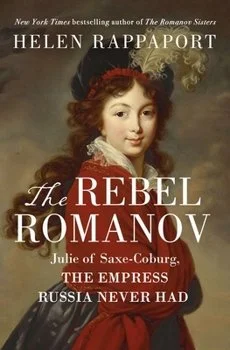
The Rebel Romanov:  Julie of Saxe-Coburg, the Empress Russia Never Had     Helen Rappaport     (2025) 

I’ve been fascinated by the Romanov dynasty ever since I read Robert K. Massie’s Nicholas and Alexandra in 1967, so I hopped on this title by the eminent historian Helen Rappaport. Juliane (Julie) of Saxe-Coburg-Saalfeld was a teenage German princess when, in 1795, Empress Catherine the Great summoned her and her two sisters to St Peterburg to audition to be the wife of her grandson Constantin, who was third in line for the throne of Russia. Rappaport follows Julie’s unconventional life, as she married Constantin, discovered that he was a mentally unstable brute, and fled back to western Europe, boldly creating the life she wanted. Julie’s story is meticulously documented from original letters and documents of the period, and the photo section of this biography is especially rich.


Here are brief recaps of a couple of my other reviews of biographies of women:

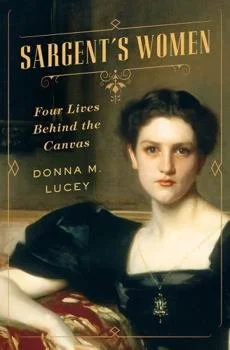
Sargent’s Women: Four Lives Behind the Canvas    Donna M. Lucey     (2017)

If you like Gilded Age gossip, this is a multi-biography that you may want to read. I thought it would be focused primarily John Singer Sargent’s relationship with four of his female subjects, whose portraits are widely known and reproduced:  Elsie Palmer, Sally Fairchild, Elizabeth Chanler, and Isabella Stewart Gardner. (That’s Elizabeth Chanler on the cover of the book.) Sargent painted portraits of these wealthy American women between 1888 and 1922, but in fact his contact with them outside his professional role was fairly limited. So . . . what this book does offer is a view into the excesses that the upper classes indulged in during a period of American industrial expansion and political corruption. My favorite section was the one on Isabella Stewart Gardner, whose private art collection became the famed art museum in Boston that bears her name.

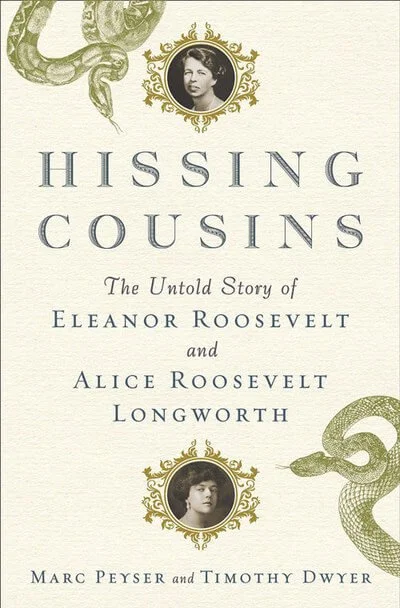
Hissing Cousins: The Untold Story of Eleanor Roosevelt and Alice Roosevelt Longworth        Marc Peyser and Timothy Dwyer     (2015)

This dual biography of Eleanor Roosevelt (1884-1962) and Alice Roosevelt Longworth (1884-1980) reveals many family secrets. Alice, the daughter of President Theodore Roosevelt, lived in the White House in her youth and became the celebrated “Princess Alice.” Eleanor was Theodore’s niece, who married her distant cousin Franklin Delano Roosevelt and herself moved into the White House as First Lady during his presidency. Although Alice and Eleanor played together as children and saw each other socially throughout their lives, they differed radically in their political beliefs and in their personalities. Alice was a Republican, flamboyant, sharp-tongued, and dedicated to influencing the course of history through back-door methods. Eleanor was a Democrat, introverted and slower to speak, but she was a reliable sounding board for FDR on many issues, and she found a strong public voice in advocating for civil rights nationally and human rights internationally. Though the biographers veer into cattiness occasionally, Hissing Cousins is a lively addition to the history of the American Century. Alice and Eleanor are presented as flawed but brilliant women who made their marks in the halls of power.  

A Fun Little Book

My friend Tom Annesley has a new book out, available on Amazon.

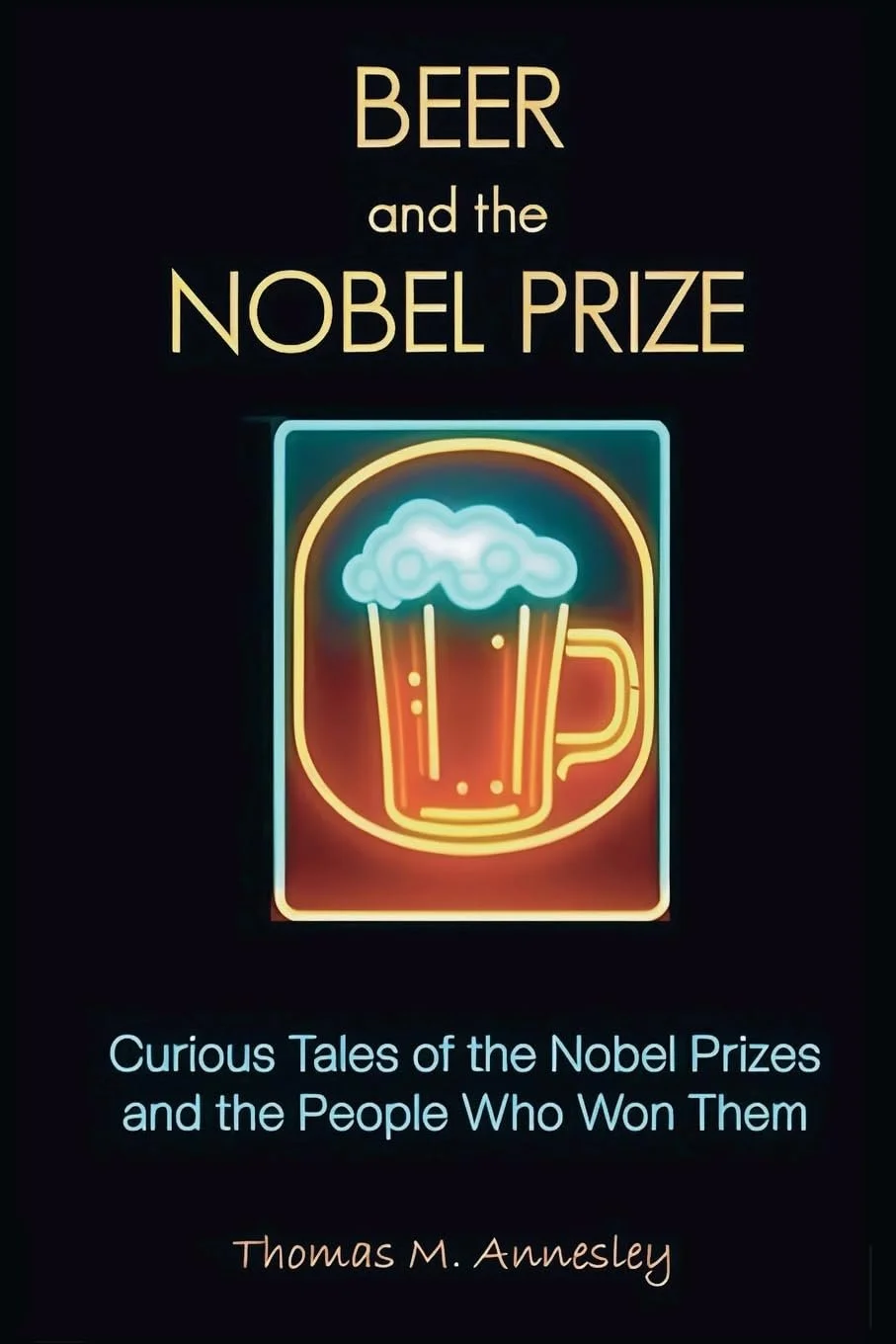
Beer and the Nobel Prize:  Curious Tales of the Nobel Prizes and the People Who Won Them     Thomas M Annesley     (2025) 

Recipients of the Nobel Prize may seem like unapproachable geniuses—indeed, they all had to be extraordinary to be admitted to this highly selective club. But Thomas Annesley’s entertaining book reveals to readers the human side of numerous Nobel winners, with behind-the-scenes stories about their hobbies, musical interests, reactions to the award, and (of course) favorite alcoholic beverages. Annesley, himself a retired science researcher, has assembled data from around the world, sometimes getting in touch with the Nobel laureates themselves or with their surviving relatives. He describes many of the demands of the research process, as well as its quirks, in non-technical language, with dozens of photos that enliven the text.


"All Flourishing Is Mutual"

Despite its title, this book not a gardening manual but rather an inspiring reimagination of what our life on Earth could be.  

The Serviceberry: Abundance and Reciprocity in the Natural World     Robin Wall Kimmerer, Illustrations by John Burgoyne    (2024) 

The serviceberry tree—scientific name, Amelanchier—comes in thirty-plus different species, almost all native to North America. Serviceberries are wide-branching trees, growing very slowly to only 15 or 20 feet high. They go by several names, including Juneberry, Saskatoon, and Shadblow. In the spring they’re covered with silvery leaves and white or light pink flowers that attract many pollinators. Then, in early summer, the leaves become green and the trees produce clusters of tiny fruits that turn deep-red to purple when ripe. These edible berries have a taste that I place somewhere between cranberry and blueberry. Birds and squirrels love the berries, but there are so many that I can often pick several quarts for my family from the half-dozen small serviceberry trees in my yard. We eat the berries on cereal, in muffins, and in multi-berry desserts. In autumn, the serviceberry leaves turn to brilliant red or orange, enlivening the yard, and in winter, I pull out my bags of frozen serviceberries for adding to baked goods and fruit salads.

Obviously, I love the four-season gifts of serviceberry trees, so I find Robin Wall Kimmerer’s book a delight. Kimmerer, who is a professor of environmental biology at SUNY, is also a member of the Potawatomi Nation; she brings to her argument both scientific insights and a deep sense of the human interconnectedness with the rest of the Earth. She uses the serviceberry tree as a exemplar, in the natural world, of what we as humans might do in our economic world, in our built environment. Her appeal to community and sharing and gratitude is radical in this era of authoritarianism and revenge and greed. It’s an appeal that is both rational and heartfelt.

Some brief excerpts:

“The Serviceberries show us . . . [a] model . . .based upon reciprocity rather than accumulation, where wealth and security come from the quality of our relationships, not from the illusion of self-sufficiency.” (72)

“Serviceberries are networked not only aboveground with partners for pollination and dispersal but belowground with webs of mycorrhizal fungi and other microbial communities that are exchanging resources.” (78)

“We have the power to . . .develop the local, reciprocal economies that serve community rather than undermine it.” (93)

“All flourishing is mutual.” (back cover)

The physical attributes of this book contribute to its message. Exquisite line drawings by John Burgoyne perfectly complement the text and merit examination on their own. The cover of the book, in a textured matte paper, is pleasing to the touch. The entire volume is very small, fitting into the palms of the reader’s hands, like a handful of serviceberries in June. It is truly a treasure.    

Many thanks to Vera Schwankl and Brian Neau for giving me Kimmerer’s The Serviceberry for Christmas 2024!

Politics. Sigh.

Jesus and John Wayne: How White Evangelicals Corrupted a Faith and Fractured a Nation     Kristin Kobes Du Mez     (2020)  The title encapsulates the author’s argument: that an iconic 20th-century actor who portrayed heroic soldiers and cowboys epitomizes the societal goals of the segment of white American society that identifies as evangelical. Kristin Kobes Du Mez is a respected historian at Calvin University, which is affiliated with the Christian Reformed Church in North America, so she writes with the authority of one who knows religion from within. Her meticulously researched and footnoted book traces 75 years of expanding white evangelical embrace of a hyper-masculine political vision that subjugates women and immigrants and elevates authoritarianism and aggression. The presidency of Donald Trump, she posits, did not come about just because evangelicals held their noses and voted for a libertine because he would stack the courts with anti-abortion judges. They voted for him primarily because he embodied their goals of “Christian nationalism.” Many self-described American evangelicals know little about theology. Their beliefs are instead cultural and political, based in what Kobes Du Mez calls a “bunker mentality” and a “persecution narrative” that only a badass autocrat can alleviate. This New York Times bestseller-list book is both enlightening and scary.

The evangelical movement in the United States has long been an interest of mine. Back in 2017, I read Frances FitzGerald’s The Evangelicals: The Struggle to Shape America, and I summed it up this way:

The Evangelicals disentangles the many strands of a movement that now includes about 25% of the population of the United States. FitzGerald pulls data from the histories of religion, culture, and politics with ease, showing how evangelicals developed their stances on issues such as slavery, segregation, labor unions, the Vietnam War, communism, abortion, immigration, and gay rights. If you are bemused by the phenomenon of evangelicalism in America, or if you just want some background on a powerful segment of our society, this is the book to read. (You can see my entire review here.)

Also in 2017, I reviewed JD Vance’s Hillbilly Elegy: A Memoir of a Family and Culture in Crisis, concluding with this paragraph:

Vance treasures his hillbilly background and yet despises it. He hasn’t quite figured out where he stands, though he aligns himself politically with conservative Republicans. Hillbilly Elegy is an imperfect book, with far too many contradictions and generalizations and cherry-picked citations. But you may want to read it because it’s become highly influential in our present-day political climate of angry polarization. (You can read my entire review here.)

In early 2018, my guest reviewer, Paul Schwankl, assessed One Nation after Trump: A Guide for the Perplexed, the Disillusioned, the Desperate, and the Not Yet Deported, by E. J. Dionne Jr, Norman J. Ornstein, and Thomas E. Mann. Click here to read his review.

In my next post, I’ll be back to fiction!


A Guide for Insomniacs

Hello Sleep: The Science and Art of Overcoming Insomnia Without Medications Jade Wu     (2023)

I’m breaking with the strong trend toward fiction in this blog to review this nonfiction title. I’ve read quite a few other books about sleep and insomnia, but I haven’t reviewed them here because they were either (a) unhelpful or (b) cruel.

I’ve also read countless online articles with recommendations for products or practices related to sleep. In response to these articles, I’ve installed a room-darkening shade, an air filter that doubles as a white noise machine, a highly-rated mattress, an expensive pillow, and an array of natural fiber blankets that can be layered on or peeled away. I’ve used eye masks, over-the-counter medications, and several types of ear plugs. I’ve practiced progressive relaxation, visualization, mindfulness meditation, and counting sheep. Some of these have helped my sleep marginally.  

Hello Sleep is a game changer. Dr Wu, who is a clinical psychologist and behavioral  sleep medicine specialist at Duke University, adopts a conversational tone as she explains how to establish a friendly—rather than an adversarial—relationship with sleep. I bounced around in her book before I then read it front to back, and I recommend reading it front to back, slowly and with attention.

Here are my key take-aways. Yours may be somewhat different, since Wu emphasizes individual differences in sleep.

  • Stop worrying that you are ruining your health because you have insomnia.

  • Distinguish tiredness from sleepiness. Sleep only when you are truly sleepy.

  • Establish set times for retiring and rising. Wu provides clear instructions for determining these times and for calculating your “sleep efficiency.”

  • If you wake in the night, get up and do something calm rather than tossing and turning. (Many other sleep books concur on this one.)

  • During the day, get some exercise and expose yourself to plenty of natural light.

  • Keep your brain from racing at night by spending time in the daytime to reflect on issues in your life. (I would add that handwritten lists help me avoid night-time ruminations.)

  • Don’t place too much trust in recommendations for merchandise that purports to help you sleep. Sure, it’s good to have a dark, cool room with good air circulation, but seeing sleep as your friend is more important.

Dr Wu also has chapters on prescription sleep medications and on medical conditions that can affect sleep.

If you are an insomniac, read this book. You can even read it at 3:00 am when you can’t sleep. Just ignore the lack of a comma in the title.   

Finally, Some Nonfiction

Yes, in addition to all those historical novels that you see reviewed on this blog, I do read some nonfiction, especially on the topics of gardening, society, and cooking. Here are three titles that I recommend.

The Complete Gardener     Monty Don       (2021)  This revised and updated second edition of Monty Don’s popular 2003 guidebook is a delight. I’ve streamed many episodes of Don’s long-running BBC television program, Gardeners’ World, and I find that his written text mirrors his television voice—wise, friendly, sensible. Although Don has had no formal training in horticulture, he’s been a gardener since his youth, and his knowledge base is extraordinary. He championed organic gardening and pollinator protections long before these approaches became widely accepted. In The Complete Gardener, he takes the reader through all the basics, from garden design and soil enrichment to the management of wildlife and pests. Then there are chapters on each of the eighteen sections of Don’s own extensive garden, which is located in Herefordshire, England: The Spring Garden, The Damp Garden, The Orchard Beds, The Herb Garden, The Vegetable Garden, and so forth. The book continues with advice on specific perennials, annuals, bulbs, climbers, shrubs, wildflowers, vegetables, herbs, and fruit trees. The entire text is accompanied by evocative photos. The British are blessed with a mild, moist climate, so most of that island has conditions similar to USDA zone 8—kind of like the coast of Washington and Oregon. I sometimes fall in love with a plant recommended by Monty Don only to find, upon digging (ahem) further, that the plant will not grow in my own gardens in southeast Michigan, which are USDA zone 5b, approaching 6a. Thanks to Paul Schwankl for finding this book and giving it to me as a gift!

Graceland, At Last:  Notes on Hope and Heartache from the American South     Margaret Renkl     (2021)  Once I discovered Margaret Renkl’s column in the New York Times, I’ve never missed it. But I did miss her pre-2020 essays, so this collection of 60 of them, published from 2017 to 2020, is a gift. Renkl has organized the pieces by topic: Flora & Fauna, Politics & Religion, Social Justice, Environment, Family & Community, and Arts & Culture. There are occasional digs at former president Trump, but my favorite pieces are about Renkl’s pollinator-friendly, wildlife-friendly yard in suburban Nashville. The wise, sharp-witted, insightful, and wide-ranging commentary has opened my eyes to many issues in the southern United States, especially in Tennessee, that I would never have thought about. One summative quote: “Maybe being a Southern writer is only a matter of loving a damaged and damaging place, of loving its flawed and beautiful people, so much that you have to stay there, observing and recording and believing, against all odds, that one day it will finally live up to the promise of its own good heart.” (282)

Smitten Kitchen Keepers:  New Classics for Your Forever Files     Deb Perelman     (2022)  In this third printed cookbook from Deb Perelman, you’ll find 100 of her favorite recipes, some of which also appear on her hugely successful cooking blog, smittenkitchen.com. Perelman cooks in a tiny NYC home kitchen, so she’s obsessive about minimizing steps and dishwashing while maintaining high culinary standards. In addition to recipes with unusual combinations of ingredients, Smitten Kitchen Keepers presents a number of very ordinary dishes that Perelman has amped up to gustatory heaven—French toast, potato salad, meatloaf, chocolate chip cookies, and many more. Sometimes it’s the condiments she chooses, sometimes it’s the order of cooking operations, but her recipes (which are always very clear) make these dishes sing. Since there’s a strong emphasis on recipes for vegetables, beans, and lentils, vegetarians will find much to love here, and Perelman sometimes offers vegan options in her notes. Speaking of notes, don’t skip the entertaining headnote that introduces each recipe. 

Outside the Norms

Phelps-Roper.jpg

Unfollow: A Memoir of Loving and Leaving the Westboro Baptist Church    Megan Phelps-Roper     (2019)

Take a deep breath before you start to read Megan Phelps-Roper’s powerful memoir. She’s unsparing in her descriptions of the militant anti-gay crusade of the Westboro Baptist Church, citing the many gross and disgusting slogans and songs that the cult used online and in demonstrations across the United States.

In case you’re unfamiliar with the activities of Westboro, Phelps-Roper’s first chapter, “The Quarrel of the Covenant,” explains the genesis of her grandfather’s crusade against homosexuality. Fred Phelps, who led Westboro until his death in 2014, began his national campaign in Topeka, Kansas, in 1989, by picketing a local park where gay people congregated. Phelps justified the picketing with fiery sermons in which he preached that God commanded believers to denounce the sins of those around them in society. One favorite Bible passage, among the many that Fred Phelps cited, was “Cry aloud, spare not, lift up thy voice like a trumpet, and shew my people their transgression, and the house of Jacob their sins.” (71)

The actions that got Westboro the most international press coverage were their pickets at the funerals of US military service members. Though this picketing seems to defy logic, Phelps wanted to proclaim God’s punishment of the US for promoting homosexuality and other practices that Westboro deemed sinful. In other words, the US had promoted sin, therefore God had purposely killed US service members, therefore Westboro had to draw attention to the connection. To be clear, the deceased service members were very unlikely to have been gay themselves.

In 1986, Megan Phelps-Roper was born into the Westboro Baptist Church, which has never numbered more than 100 members, most of whom are and have been members of Fred Phelps’s large extended family. Although he kept close control, insisting on absolute obedience and adherence to rules, Fred Phelps also required that members receive formal education in public institutions, including colleges and law schools. Thus Megan Phelps-Roper, a bright and diligent student, became an articulate spokesperson for Westboro, handling the cult’s online presence starting around 2008, when she was in her early twenties.

By 2012, Megan Phelps-Roper’s concerns about Westboro grew to the point that she and one of her sisters moved out of their family home and severed ties with the cult. Her agonizing decision was based on recognition of multiple inconsistencies in Westboro’s dogmas, plus an internal coup by men (“elders”) who displaced her grandfather:

“I couldn’t believe how our love within the church had been warped beyond recognition by the elders’ unscriptural will to punish. By their implacable demands for unquestioning obedience. By their pernicious need for superiority and control. They had developed a toxic sense of certainty in their own righteousness, seizing for themselves the role of the ultimate arbiter of divine truth—and they now seemed willing to lay waste to anyone who disagreed with them. It was a heinous arrogance and sinfulness that could not be denied. And in a moment of horrifying clarity, I finally saw what had eluded me for so long: We had all been behaving in the exact same way toward outsiders. It was as if we were finally doing to ourselves what we had been doing to others—for over twenty years.” (158-9)

As I read Unfollow, I tried to track the theological arguments underpinning Westboro’s despicable actions. One doctrine, among many, that I could not get my head around was their belief in double predestination—an unchanging decision of God to send a human either to heaven or to hell. If the sinners of America were totally doomed, what was the point of picketing? Such sinners could not be saved, even if they turned away from their wickedness. The picketing did attract media coverage of Westboro, but the group did not gain converts to their belief system as a result of that coverage.

You need not immerse yourself deeply in such theological conundrums to appreciate Phelps-Roper’s moving story. However, it may help to know that she puts the many biblical quotes used by Westboro in italics in her text. And all Bible passages are from the 1611 King James version, which is the only English version that Westboro accepts as inspired by God. (Phelps-Roper also uses italics liberally in her own, non-Biblical text.)

Phelps-Roper presents the evolution of her understanding of the world and of her family in painstaking detail. Despite the constraints on her, she felt deep love from her family within Westboro, and in turn she continues to express love for all of them, both those who have remained with Westboro and those who have broken free. For me, the most astounding component of Phelps-Roper’s life story is her relationship with Chad Fjelland, the man who would eventually become her husband.

Fjelland began interacting with Phelps-Roper online when she was still Westboro’s PR person. He didn’t send the kind of angry messages that she usually received through social media. Instead, he was patient and inquiring, trying to understand why Westboro rejoiced in military deaths and in other tragedies around the world, though he was unambiguous in saying that he would never espouse the beliefs of Westboro. Fjelland and a couple of other brave souls who debated reasonably with Phelps-Roper online were instrumental in her departure from Westboro. My one minor complaint about Unfollow is that Phelps-Roper did not carry her story a little further, to describe her deepening relationship with Fjelland after she finally met him in person.

Unfollow demonstrates that religious beliefs that are taken to extremes, that fall outside the norms of a civil society, are dangerous, not only to the individuals caught within those belief systems but also to the society at large. Social media can spread falsehoods, imagined conspiracies, and bigotry, but, as the case of Chad Fjelland demonstrates, social media can also provide a way for rational, concerned people to connect with some cult members. The undercurrent of hatred in the United States today is frightening. We owe it to our nation to understand groups like Westboro Baptist Church, and Megan Phelps-Roper offers us a clear window to that understanding.

[Please note:  I call the Westboro Baptist Church a “cult” intentionally. For an explanation of how I approach such groups, see this previous review of mine. Note also that mainstream Baptists have renounced Westboro.]]

The Language of the Internet

Because Internet:  Understanding the New Rules of Language     Gretchen McCulloch     (2019)

McCulloch.jpg

I’ve been involved with the mechanics of language on many fronts, especially as a lexicographer (for both medieval and modern English dictionaries) and as a teacher of writing. So a book that promises to steer me through the highways and byways of internet language naturally went on my library request list. Gretchen McCulloch does not disappoint.

As a linguistics scholar with credentials in more traditional language analyses, McCulloch is able to situate internet language within a larger framework. She starts her explorations slowly, explaining the differences between formal and informal writing and distinguishing both of these from formal and informal speech. She also provides useful background on the history of the internet, while refraining from disparagement of any internet users.

For example, the “founding population, the first wave of people to go online” (68), whom she calls Old Internet People, were amazing tech innovators, whether they were hauling around punch cards in the 1960s or coding HTML in the 1990s. Old Internet People aren’t necessarily elderly in age. They’re sophisticated in their programming abilities and proud of their online history, though they may not use more recent social media like Facebook. McCulloch goes on to describe

  • Full Internet People (into the social internet, especially instant messaging)

  • Semi Internet People (went online for work and only dip into the social internet)

  • Pre Internet People (never really connected much)

  • Post Internet People (can’t remember a time when they weren’t online constantly)

Having categorized those who use internet language, McCulloch gets to the core of her analysis, with in-depth chapters on

  • typography, which conveys tone

  • emoticons and emoji, which communicate physical gestures

  • chat and posts, which carry conversations

  • memes, which are just very odd.

McCulloch makes some grand pronouncements about internet language, and I found her assertions solid and convincing:

  • “From an internet linguistics perspective, language variation online is important not so much because it’s new (language has always varied), but because it’s only rarely been written down.” (56)

  • “Regardless of the specific linguistic circles we hang out with online, we’re all speakers of internet language because the shape of our language is influenced by the internet as a cultural context. Every language online is becoming decentralized, getting more of its informal register written down. Every speaker is learning how to write exquisite layers of social nuance that we once reserved for speech, whether we mark them my switching alphabets, switching languages, or respelling words. All our texting and tweeting is making us better at expressing ourselves in writing.” (57)

  • “More than two million people use emoji every single hour. Emoji didn’t succeed because they were a language, they succeeded because they’re not a language. Rather than try to complete with words on their home turf, emoji added a whole new system to represent a whole other layer of meaning . . . a way of representing our gestures and physical space.” (191-2)

  • “The chat format’s astonishing durability signals the true birth of a new form of communication. Chat is the perfect intersection of written and informal language. . . . While emails and social media posts and website text can all lay claim to the title of informal writing by virtue of being unedited, chat is informal writing in its purest form . . . with chat, the audience is known and the time horizon is fast. The other person can literally see that you’re typing, so it’s better to just get something out there than worry about composing the perfect message.” (214-5)

  • “What we’re arriving at, between typography and visuals, is a flexible set of ways to communicate our intentions and share space online. Not everyone uses every option: some people love emoji, some people prefer old-school emoticons or abbreviations, some people would rather do it with comedic timing in their vocabulary, linebreaks, and punctuation. But everyone needs something.” (195)

Because Internet is essential reading for anyone who uses the internet. I discovered, for example, that I don’t fit neatly into any one of McCulloch’s categories of Internet People. I worked for decades at a large university that was an early adopter of internet communication. I have my own website and blog. But I still follow the norms of offline authorities in my spelling and punctuation and grammar. My language seems to hybridize online and offline culture. I had to look up a few of McCulloch’s terms, but, hey, I could google them easily.

You’ll surely find some facts in Because Internet that fit your case. If you tweet frequently, you’ll learn why you punctuate the way you do. If you love Facebook, you’ll find out how your posts conform to internet language. Even if you’re not into memes, you’ll get an understanding of why others are: “The appeal of memes is the appeal of belonging to a community of fellow insiders.” (244) 

I can’t resist one final quote from Because Internet: “Language is a network, a web. Language is the ultimate participatory democracy. To put it in technological terms, language is humanity’s most spectacular open source project.” (267)

For another review of a book about the internet, click here.

Especially for Thanksgiving

365 Thank Yous: The Year a Simple Act of Daily Gratitude Changed My Life    John Kralik     (2010)

Kralik.jpg

I first read the memoir 365 Thank Yous when it came out in 2010. It made such an impression on me that I decided to re-read it to review on this blog for Thanksgiving 2019.

In 365 Thank Yous, John Kralik recalls how miserable he felt when he set out to hike the Echo Mountain Trail above Pasadena, California, on New Year’s Day in 2008. His small law firm was in dire financial straits; he was going through an acrimonious, drawn-out divorce; his new girlfriend had recently broken up with him; he was living in a tiny, uncomfortable apartment; he was overweight and in bad shape physically.

During Kralik’s hike, a voice seemed to speak to him, saying, “Until you learn to be grateful for the things you have . . .you will not receive the things you want.” (14) Upon hearing this voice, Kralik began to contemplate the concept of gratitude.

The next day, Kralik received in his apartment mailbox a brief but kind note from his ex-girlfriend, thanking him for the Christmas gift he had given her. This piece of mail confirmed for him that he should be thanking the people around him, and he resolved to pursue gratitude in a specific way:  by sending handwritten notes, one for each day of the coming year.

Thanking people for Christmas gifts that he’d received was an easy start, but Kralik soon went far beyond this, thanking his work colleagues, his friends, members of his extended family, and even the barista who served him coffee. “Many of my notes were not about material gifts. In these notes, I tried to describe just what the other person had done for me and to show my understanding of that person’s effort.  . . .This was part of my shift of focus from the gift to the giver.” (213-4)

The logistics of Kralik’s thank-you project were pretty simple. He wrote two or three sentences in longhand on a plain note card that he mailed through the postal service, and he maintained a spreadsheet of his recipients, with annotations of what he’d written. In today’s advanced internet culture, handwritten mail is an extreme rarity, but even in 2008 people were surprised and delighted to receive Kralik’s thoughtful notes.

The details of the individual thank-you notes that Kralik wrote are really the heart of this book. Kralik includes the texts of many of his notes, reconstructed from his spreadsheet. His words are unpretentious and honest, and they elicit warm responses from the recipients.

Almost immediately, Kralik’s thank-you notes brought him small doses of good fortune. These could, of course, have been coincidences, but Kralik saw them as evidence of the power of gratitude. As just one example, he sent personal thank-you notes to fellow lawyers who had referred cases to his firm. These lawyers then referred even more cases to Kralik’s firm, helping him with his financial woes. Month by month, Kralik wrote his thank-you notes, connecting with people he’d gone to college with or worked with early in his career. He began to realize that he had a powerful network of supporters.

In the end, Kralik didn’t quite make his goal of writing 365 thank-you notes in the 2008 calendar year. It took him about fifteen months to reach this number. But he kept writing, and as a result of the notes, he overcame quite a few of the difficult situations that he had faced on that New Year’s Day. Toward the end of 2008, he took stock:  “If the voice I’d heard in the mountains had implied that I would get all that I wanted, it seemed, at least at this juncture, that it was a promise unfulfilled. Yet, by being thankful for what I had, I realized that I had everything I needed.” (187)

What was that voice that Kralik heard on his hike? Was his conscience telling him that he was an ungrateful wretch? Was Nature reminding him that he wasn’t appreciating the splendor of his surroundings? Was the voice of a deity speaking to him in the wind? It doesn’t matter. Kralik states straightforwardly that he heard a voice, and the thank-you note from his ex-girlfriend confirmed the message of the voice: Be grateful.  

May all of us, even in the face of adversity, be able to ascend into the mountains of gratitude on the upcoming Thanksgiving Day.

Bonus Post: Aging Gracefully

Women Rowing North:  Navigating Life’s Currents and Flourishing As We Age    Mary Pipher     (2019)

Pipher.jpg

Mary Pipher is the perceptive psychologist who burst through cultural expectations in 1994 to bring us Reviving Ophelia: Saving the Selves of Adolescent Girls, which examined the effects of societal pressures on young women in America. For this book, Pipher drew on case studies and on her own experiences as a therapist and as the mother of a teenage girl.

Twenty-five years later, Pipher, now aged 71, explores what it is to be an aging woman—specifically, a woman in her sixties or seventies. Women Rowing North is a warm-hearted and encouraging guidebook. Using the overarching image of a boat trip on a river, she divides her narrative into four sections:

  • Challenges of the Journey—addressing the loss of confidence that can come with illness, loneliness, or changes in physical appearance.

  • Travel Skills—with specific advice on “building a good day” and “creating community.”

  • The People on the Boat—expanding the view to the friends, relatives, life partners, and grandchildren of older women.

  • The Northern Lights—focusing on how older women can find their authentic selves as they approach the end of their lives.

Throughout, Pipher illustrates her points with vignettes about actual women whom she interviewed: businesswomen and homemakers, the long-married and the single, the straight and the gay, women of color and white women, middle-class women and women living on the edge of poverty. I found these miniature stories illuminating and reassuring, and I gravitated to them when Pipher occasionally strung together a few too many aphorisms in the rest of the text.

I was also drawn to passages in which Pipher discusses the “sense for deep time and inter-connectedness“ (232) that we often cannot fully experience until we are far advanced in age. Here’s a sample of her reflections: “When we look back, we can see generations of mothers and fathers who managed to take care of their children. We can see our ancestors working in peat fields, drumming around fires, fishing in faraway seas, or traveling by sled through fierce northern winters. We can see the Indian encampments of the Great Plains, the immigration or slave ships, and the grandparents walking west from the big East Coast cities. . . We are adrift on a little boat rocked in the river of time, part of a long line of women who have lived in caves, swum in rivers, and foraged for food.” (205)

I don’t read many self-help books, and I’ve never reviewed one on this blog before, but for Mary Pipher I’ve made an exception. She rows toward the north with peacefulness and power.  

Social Histories of Detroit

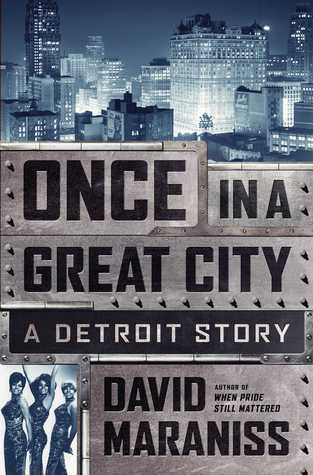
Once in a Great City: A Detroit Story    David Maraniss     (2015)

Maraniss.jpg

I’ve been reading a lot of Detroit histories as background for a novel I’m currently writing. This is my favorite.  

Journalist David Maraniss combines deep research with eminent readability as he describes  Detroit in a narrow but critical slice of time—from the fall of 1962 into the spring of 1964. In an Author’s Note, Maraniss confirms that “the city itself is the main character in this urban biography” (xiii). But a dozen or so of Detroit’s prominent inhabitants are featured also, their stories woven through the narrative, their characters and personalities tellingly revealed: labor leader Walter Reuther, auto exec Henry Ford II (“the Deuce”), Aretha’s father the Rev CL Franklin, mayor Jerome P Cavanagh, and Motown founder Berry Gordy, Jr, among others.  

Maraniss also interviewed many ordinary citizens. I found the remembrances of Robert C Ankony, as transcribed by Maraniss, particularly effective in evoking Southwest Detroit, which was smack up against the border with Dearborn. He describes the smokestack smell from the foundry at the River Rouge Complex and the look of the storefronts on West Vernor and Michigan. Ankony was a 14-year-old truant from school on the fateful day of November 9, 1962, when he became an eyewitness to the massive fire that burned the Ford Rotunda to the ground. The Rotunda was a fabulous exhibition space that was one of the five top tourist attractions in the US at the time, and its destruction, which opens Once in a Great City, portends coming troubles in all sectors of Detroit life.  

Complete with maps to help you visually locate key sites from the period, Once in a Great City chronicles the battles for civil rights, the marketing of the first Ford Mustang, and Detroit’s failed bid to host the 1968 Olympics. National events form a backdrop: the assassination of JFK, the rise to prominence of MLK, the Great Society promises of LBJ. These three men paid attention to Detroit in the early Sixties because it was then still a truly great city.  

The Origins of the Urban Crisis: Race and Inequality in Postwar Detroit     Thomas J. Sugrue     (1996, with a new preface by the author in the 2005 edition) 

Sugrue.jpg

In academic research about 20th-century Detroit, everything starts with this classic social history, which breaks through previous assumptions that a “culture of poverty” and the Great Society programs of Lyndon Johnson created urban decline in Rust Belt cities such as Detroit. Thomas Sugrue amasses meticulous details to construct instead a picture of deindustrialization and of discrimination in employment and housing that led to an impoverished underclass of African Americans hopelessly stuck in a deteriorating urban landscape. 

The research basis of this book is astounding. Sugrue went digging in numerous archives, drilling down to the level of newsletters of local neighborhood associations and minutes of city commission meetings (as just two examples) to extract the story of what really happened in Detroit in the 1950s and 1960s. He didn’t rely just on newspaper accounts or police reports, which were often skewed to downplay racial violence, redlining, and the shenanigans of the captains of industry. While we may assume that the 1950s were a period of unalloyed American prosperity, Sugrue’s data demonstrate that the societal prejudices of the 1950s and the previous decades led directly to massive unemployment, infrastructure decay, and white flight to the suburbs in mid-century and late-century Detroit.

The Origins of the Urban Crisis is not a quick read, but for anyone who wants to fully understand Detroit—and many other major American cities—it’s essential.

For People Who Love Books

The Library Book     Susan Orlean     (2018) 

Orlean.jpg

Susan Orlean has been a staff writer for the New Yorker for decades, so she knows how to write a punchy piece about a disaster like the catastrophic 1986 fire at the Los Angeles Public Library. But this time, instead of boiling her investigations down to 5000 words, she has expanded them into a book-length exploration of the Los Angeles Public Library and of libraries in general. With each chapter of The Library Book she traipses off in a different direction—the biographies of early librarians in LA, her own love of books, and even the burning of books as a tool of oppression in Nazi Germany.  

Threading through it all is Orlean’s search for answers to why the LA Public Library burned in 1986, with the incineration of 400,000 books and serious damage to 700,000 more. Orlean keeps coming back to arson suspect Harry Peak, and she interviews Peak’s family, friends, and associates as she tries to figure out what really happened. Orlean’s weaving of the story is mesmerizing. You come away knowing a lot more about the creation of books and libraries, without even realizing that you’ve been taught.  

Her insights into the value of public libraries, backed by many examples, are priceless. Here are a few:  

  • “The publicness of the public library is an increasingly rare commodity. It becomes harder all the time to think of places that welcome everyone and don’t charge any money for that warm embrace.” (67)

  • “In times of trouble libraries are sanctuaries. They become town squares and community centers—even blood-draw locations.” (76)

  • “Books are a sort of cultural DNA, the code for who, as a society, we are, and what we know. All the wonders and failures, all the champions and villains, all the legends and ideas and revelations of a culture last forever in its books. Destroying those books is a way of saying that the culture itself no longer exists; its history has disappeared; the continuity between its past and its future is ruptured. Taking books away from a culture is to take away its shared memory. It’s like taking away the ability to remember your dreams. Destroying a culture’s books is sentencing it to something worse than death: It is sentencing it to seem as if it never lived.” (103) 

My home-town source for reading material, the Ann Arbor District Library (AADL), is a gem of a system. Since I can’t afford to buy books, all the reviews on this Cedar Park Book Blog are based on my borrowings from AADL, which has an aggressive acquisitions program as well as exceptional staff at all levels. The visionary Library Director, Josie Parker, has shepherded the AADL into the digital age while retaining all the qualities of a traditional library. I applaud the Ann Arbor District Library as I recommend Susan Orlean’s book, which is an encomium for all libraries.  

For you writers out there, I offer one more quotation: 

“You don’t need to take a book off a shelf to know there is a voice inside that is waiting to speak to you, and behind that was someone who truly believed that if he or she spoke, someone would listen. It was that affirmation that always amazed me. Even the oddest, most particular book was written with that kind of crazy courage—the writer’s belief that someone would find his or her book important to read. I was struck by how precious and foolish and brave that belief is, and how necessary, and how full of hope it is to collect these books and manuscripts and preserve them. It declares that all these stories matter, and so does every effort to create something that connects us to one another, and to our past and to what is still to come.” (309-310)

Bonus Post: Michelle Obama's Memoir

Becoming     Michelle Obama     (2018)

MObama.jpg

Michelle Obama’s memoir was the bestselling book of 2018, even though it wasn’t published until November of that year. Many of the surprises of the book have been widely discussed in news articles—for instance, that Michelle had a miscarriage before her older daughter, Malia, was born and that she and Barack used IVF to conceive both Malia and their second daughter, Sasha.

Becoming is as engaging as a page-turner novel; I read it cover-to- cover in one day. Instead of rehearsing the biographical details of the book, which you can find in reviews all over the place, I’ll tell you what aspects struck me most:

  • The authentic voice of Michelle Obama.

The Michelle in this memoir is the same Michelle that you know from talk shows and interviews and that slam-dunk speech that she gave at the 2016 Democratic National Convention. The cadence of the phrases is the same, the warmth is the same, the frankness is the same.

  • The story of the evening that Barack proposed marriage.

Readers are aware, of course, that Michelle and Barack did get married, but the suspense in this scene is delightful.

  • The insights into ordinary middle-class African American family life.

Yes, Michelle grew up on Chicago’s tough South Side, but she doesn’t whine about what she lacked. She describes gatherings of her large extended family with obvious affection. She praises her parents for the sacrifices they made so that she and her older brother could have good educations.

  • The insights into life in the White House.

It’s luxurious, but the necessary security measures make it a virtual prison for the First Family. Michelle was determined that her young daughters have some semblance of a normal childhood, and this was a tall order for the eight years of Barack’s presidency.

  • The sad truth of how hurtful right-wing media attacks are.

Over and over, Michelle describes how devastated she was when her patriotism was questioned about quotes taken out of context or when she was viciously attacked for wearing a particular piece of clothing. 

  • The revelation of Michelle’s sense of insecurity.

The seemingly indomitable former First Lady recounts, repeatedly, when she felt inadequate, when she feared that she was not good enough. Her 2016 appearance on James Corden’s “Carpool Karaoke” seemed effortless and relaxed, but she tells us that it was “a little terrifying” (402) and that she practiced for weeks. She agreed to appear only to promote a song that would raise money for a global project for the education of girls.

You’ll notice that I refer to the author here as “Michelle,” and I mean no disrespect in using her given name. Don’t most Americans feel as if they know her personally? Didn’t she connect with the citizenry in a way that other First Ladies simply haven’t? Becoming cements that connection.

Postscript: Thanks to Dorothy Needham Moreno for lending me her copy of Becoming so that I didn’t have to sit for a year on the library’s wait list!

Bonus Post: How America Eats

Hippie Food: How Back-to-the-Landers, Longhairs, and Revolutionaries Changed the Way We Eat    Jonathan Kauffman     (2018) 

Kauffman.jpg

Back in the early 1960s, my parents frequented Zerbo’s Health Foods, a store that’s still in operation in Livonia, Michigan. They brought home jars of wheat germ, bags of soy flour, and bottles of supplements, including vitamin E capsules, bone meal tablets, and liquid halibut liver oil. They espoused many of the unsubstantiated claims found in Prevention magazine as it existed in the 1950s, such as that fluoridated water was poison. Adelle Davis (Let’s Eat Right to Keep Fit, 1954) was also an influence, with her emphasis on whole grains and raw milk. My mother didn’t give up disgusting mid-20th-century prepared foods such as frozen fish sticks and canned peas, but she had “health foods” in the refrigerator even if they kept getting shoved to the back. In that era, health food stores catered to a very small minority of Americans.

In the 1970s came a torrent of books that had a much larger following among the members of the Baby Boom generation. Even though some of the recipes produced inedible, mushy dishes that my kids called “vegiterribles,” many dishes became favorites in my 1980s kitchen, as I kept gobbling up these food guidebooks: 

  • Ten Talents by Frank and Rosalie Hurd (1968)

  • The Tassajara Bread Book by Edward Espe Brown (1970)

  • Diet for a Small Planet by Frances Moore Lappé (1971)

  • The Vegetarian Epicure by Anna Thomas (1972)

  • Recipes for a Small Planet by Frances Moore Lappé and Ellen Buchman Ewald (1973)

  • The Book of Tofu by William Shurtleff and Akiko Aoyagi  (1975)

  • The More-with-Less Cookbook by Doris Janzen Longacre (1976)

  • The Moosewood Cookbook by Mollie Katzen (1977) 

In Hippie Foods, Jonathan Kauffman, an award-winning food writer for the San Francisco Chronicle, provides the back story for all these books, linking them to their antecedents and tracing the political movements that spawned them. I was delighted to learn the contexts of the foods that have found their way into (and sometimes right back out of) my kitchen over the decades:  organic produce, vegan concoctions from the Seventh Day Adventist tradition, soy and tofu in all their manifestations, and whole grain breads.

Kauffman interviewed dozens of the key players in this food revolution. A few of these earnest aging hippies were able to parlay their involvement in natural and organic foods into corporate successes, including Stonyfield Farm (yogurt), Eden Foods (soy milk), and Lundberg Family Farms (rice). Hippie Food also follows the macrobiotic strand, somewhat associated with  Zen Buddhism, that flourished on both coasts in the 1960s, and recounts the rise of food co-ops, farmers’ markets, and vegetarian restaurants all across the United States.  

Kauffman found several  reasons that hippie foods have now been thoroughly integrated into mainstream American cuisine. Concern about the dangers of chemically treated crops and over-processed foods had a basis in fact, and the public took note. Home cooks found easy recipes for everyday meals in cookbooks developed by other home cooks, not by professional chefs. Most importantly, Kauffman says, “the 1970s counterculture succeeded in selling America on its concept of healthy food.” (282) I agree with this assessment, but I would add that I’ll gladly take the 1970s countercultural food over the dreck peddled by most of the corporate food giants today.  

Hippie Food is an intelligent and well-researched work of social history, capturing those decades in the 20th century when the political was often expressed through the practical, in the kitchen, in the garden, and on the farm. I decided to overlook Kauffman’s occasional snarkiness and awkward comparisons (“like a matchstick Eiffel Tower held together with strawberry jam” [238]) . And I forgave him for omitting my favorite old cookbook, Laurel's Kitchen by Laurel Robertson, Carol Flinders, and Bronwen Godfrey (1976). After all, Kauffman devotes several pages to the history of food cooperatives in my own Ann Arbor, Michigan, which has long been a hotspot for the natural foods movement. To this day, I shop at Ann Arbor’s People’s Food Co-op, especially for local produce and freshly milled whole wheat bread flour. And, for the record, I support the fluoridation of drinking water.  

For another analysis of food and culture in the United States, see my review of Discriminating Taste by S Margot Finn.

Bonus Post: Washenaw Reads, 2019

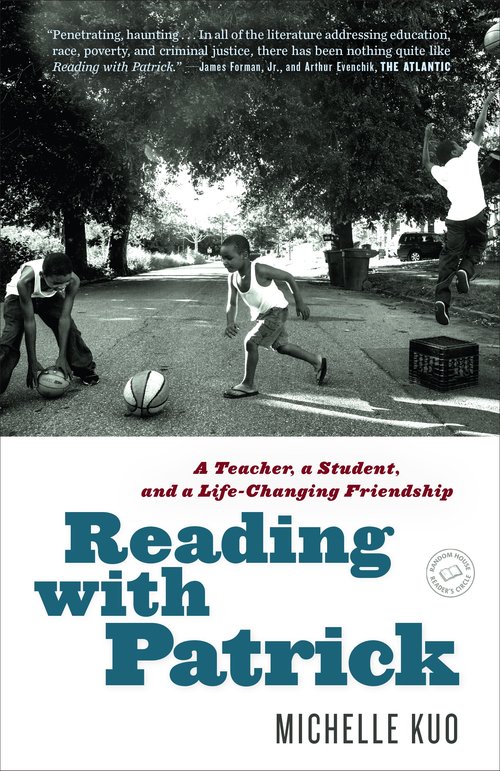
Reading with Patrick: A Teacher, a Student, and a Life-changing Friendship     Michelle Kuo     (2017) 

Kuo 2.jpg

Washtenaw County, Michigan, selected Reading with Patrick as the “Washtenaw Reads” book for 2019, providing extra copies on library shelves so that the community can engage in discussions of the provocative issues that the book raises.  

The author of Reading with Patrick, Michelle Kuo, the daughter of Taiwanese immigrants, is a Michigan native who graduated from Harvard in 2003 and then volunteered for two years with Teach for America in Helena, Arkansas, an extremely poor rural town on the Mississippi Delta.  

Kuo could have completed this tough teaching assignment and then moved on. She could have kept her distance from the difficult personal lives of her middle-school students. Instead she became a friend and mentor to one particular student, Patrick Browning, and wrote this book about Patrick’s awakening to the joys of reading. Kuo initially read with Patrick during her Teach for America stint, but she returned to Helena after she completed law school, when she learned that Patrick had been arrested, charged with murder. For months, as Patrick awaited trial, Kuo visited him in jail, bringing him books and encouraging him to write.  

Reading with Patrick can be disturbing, especially in its descriptions of Patrick’s imprisonment and trial. I also found the bigotry that Kuo encountered as an Asian American disheartening. But Kuo doesn’t complain about her struggles or pass judgment on the societal systems that neglected and betrayed Patrick and the other young people in Helena. In Reading with Patrick she simply tells the story and allows the obvious conclusions to come to the surface. In an interview with the New York Times, however, Kuo summarized her book:   

“It’s an intimate story about the failure of the education and criminal justice systems and the legacy of slavery; about how literature is for everyone, how books connect people, and the hope that with enough openness and generosity we can do the hard work of knowing each other and ourselves.”  

If you live in Washtenaw County, you can participate in Washtenaw Reads events in early 2019. If you live anywhere in the United States, you can pick up Reading with Patrick at your local library and learn about a remarkable friendship.

Nonfiction & Fiction by Russo

Elsewhere: A Memoir     Richard Russo     (2012)

That Old Cape Magic     Richard Russo     (2009)

The Destiny Thief:  Essays on Writers, Writing and Life     Richard Russo     (2018)

Russo.jpg

Richard Russo’s 2001 novel Empire Falls (which won the Pulitzer Prize) and most of his other novels are set in decaying industrial towns peopled by rough-and-tumble strugglers. It’s no secret that in his fiction Russo drew on his experiences growing up in Gloversville, in upstate New York, which by the 1960s was severely polluted, from the byproducts of the manufacture of leather gloves, and poverty stricken, since the glove industry had moved to India and China.

When I ran across this memoir by Russo, I thought he might reveal how his novels are linked to his own biography. Elsewhere does provide some clues for avid Russo readers, but it’s primarily the story of Russo’s relationship with his mother, who raised him on her own after her divorce from his father when Richard was a small child. Jean Russo was smart, hardworking, attractive, sexy, fashionable, controlling, manipulative, selfish, explosive, confused, and unhappy most of the time. Richard loved her fiercely and tried for decades to relieve her sadnesses. Only after her death, in her mid-eighties, did he realize that she likely had a serious mental health condition that was never diagnosed or treated.

The narrative is somewhat uneven, as memoir can be, but Elsewhere is a touching portrait of a tormented woman. I kept looking back at the photos of Russo and his mother on the cover of the book, feeling as if I knew these two people personally.

Russo Cape.jpg

For a glimpse into how Russo’s mother may have influenced his fiction, try That Old Cape Magic, a 2009 novel that’s one of his gentlest narratives—a kind of meditation on relationships (successful, failed, failing, blissful, doomed, redeemable). Griffin, the middle-aged protagonist, attends two weddings, a year apart. The first wedding takes place on Cape Cod, and it stirs up in his memory the childhood vacations that he spent there with his parents, who were escaping their academic jobs in the hated Midwest. Griffin is trying to come to terms with his parents’ unhappy marriage, especially since he’s carrying his father’s ashes in the trunk of his car, and since his own marriage is not so solid. Griffin’s mother, long divorced from his late father, phones him constantly in this story, and her voice sounds similar, in tone and level of sarcasm, to the voice that author Russo gives to his own mother in his memoir. 

Russo Essays.jpg

For more details on Russo’s writing process, pick up his 2018 book, The Destiny Thief, a collection of nine essays, some of which have been previously published. I’d recommend skipping the essay on The Pickwick Papers unless you’re a serious fan of Charles Dickens. But the essay “Getting Good” has valuable advice for aspiring writers, particularly on the controversial issue of digital versus print publication. The piece titled “What Frogs Think: A Defense of Omniscience” is a brilliant analysis of the function of narrative voice in fiction, with examples from Russo’s work and from the writing of others, based on his years of teaching in writing programs across the country and around the world.

In another vein, “Imagining Jenny” is an emotional account of how a writer friend of Russo’s underwent gender reassignment surgery. All in all, this collection is pure Russo—sardonic, funny, and smart.

Guest Review: Cloaks and Daggers

Hunting Eichmann:  How a Band of Survivors and a Young Spy Agency Chased Down the World’s Most Notorious Nazi     Neal Bascomb     (2009)

Today, as a bonus Tuesday post, another guest review by ethicist and philosopher Paul R. Schwankl!

Bascomb.jpg

Adolf Eichmann (1906-1962) managed the Third Reich’s plans to exterminate Jews. For fifteen years after World War II, he was the most notorious alleged war criminal still at large. In 1960, a team from the Israeli security services smuggled him from Argentina to Israel to be tried for crimes against humanity. These are the bare facts of the case.

As someone who was trained in moral philosophy, I’m interested in analyses of the evil in this man. But I also love cloak-and-dagger stories, so I’m grateful to Neal Bascomb for his magisterial book Hunting Eichmann, based on an immense number of interviews and memoirs, detailing the lucky breaks and good choices that allowed Eichmann to hide—and allowed the Israelis to capture him.

At the end of World War II, the victorious Allies didn’t at first realize how important Eichmann was to the Holocaust. He didn’t run individual death camps; he was the distant overseer who made sure that Jews got to them. Significantly, he hated being photographed. After the war, he got swept up along with millions of other German soldiers and put into a crowded and understaffed prison camp, where he passed as a low-level officer. He easily escaped and worked as a rural laborer in northern Germany. But by 1950 his adversaries had figured out his role in Hitler’s Final Solution, so he made his way to the seaport of Genoa, staying with pro-fascists along his route, including Catholic priests and monks who felt that as long as Eichmann was against communism it didn’t matter how many Jews he had killed. Eichmann sailed to South America and had no trouble entering fascist-friendly Argentina, getting a job, and, in 1952, bringing his wife and three sons over to join him. It seemed that Adolph Eichmann, now named Ricardo Klement, had won.

But a remarkable happenstance, combined with one of Eichmann’s few mistakes, started to unravel his cover. Eichmann allowed his sons to use the surname of their birth; they claimed that their father was dead and that Ricardo Klement was their uncle. In 1956, the eldest son, Klaus, starting dating a German Argentinian, Sylvia Hermann. When Klaus visited her German-speaking home, he assumed that it was safe to brag to Sylvia’s blind father, Lothar Hermann, that his dad had been big in the Wehrmacht. Klaus did not know that Lothar was half Jewish and had gone blind from beatings by the Gestapo. Eventually, Lothar and Sylvia got in touch with Israelis who were still pursuing war criminals. Lothar and Sylvia also, with much difficulty, found out where the Eichmann family lived. In a highlight of the book, Sylvia risked her life by calling on the family and coming face to face with Adolf Eichmann (Ricardo Klement) himself.

From there Israeli operatives largely took over the hunt, first undertaking a positive identification, which was hampered by a lack of photographs. The capture of Eichmann and his transportation to Israel took three years of work. It was an amazing accomplishment by the Israelis, though the details were long kept secret. Argentina complained that the Israeli captors had violated Argentine sovereignty, which Israel admitted they had done. Israel asserted that it was standing for a righteous world in which criminals like Eichmann must not go free. The Jewish state ultimately patched things up with the post-Peronist Argentine government.

In reading Bascomb’s account, I was impressed with the expertise of the career spies and agents who captured Eichmann, but the amateurs and part-timers also did some truly amazing things. For example, one Israeli started wooing a former mistress of Eichmann in Vienna. After several excruciating dates, the Israeli persuaded her to open her photo album, which contained one of the rare pictures of Eichmann. He got the Vienna police to seize the album on the pretext that the woman was hiding stolen ration tickets in it.

 Many war criminals have come and gone since Eichmann’s day, and it is still possible to bring them to trial; an ex-Nazi in his nineties was sentenced just recently. I would like to think that the Israelis’ success with Eichmann helped, by laying an effective foundation separate from the Allies’ work at Nuremberg. Eichmann was hanged and cremated and his ashes scattered at sea; he remains the only person to whom Israeli courts have applied the death penalty. In the United States today, we can all use a reminder that law can indeed rule.