Unconventional Contemporary Women

Whether in Nebraska or New York, you can find women who defy stereotypes.
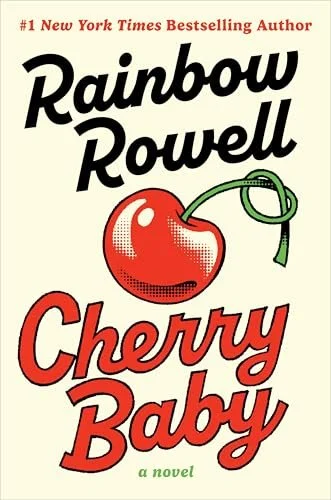
Cherry Baby     Rainbow Rowell     (2026)  First, the title. Cherry is a plus-sized woman in her thirties who lives in Omaha. Baby is the name of a character that her husband, Tom, invented in a webcomic that went viral and is being made into a movie in Hollywood. Baby bears a remarkable resemblance to Cherry—hence, marital discord. Cherry and Tom separate, planning to divorce, and Cherry starts dating Russ, an old college crush of hers. Will she start a new life with Russ? Will she reunite with Tom? That’s the basic premise of the novel, but there’s much more. The novelist explores many aspects of body positivity, including through explicit sex scenes. The culture of Nebraska versus the culture of California is in the background, as are Cherry’s disagreements with her fundamentalist Christian family. It’s a roller-coaster ride, engaging and witty. (For my review of Rowell’s 2011 novel, Attachments, click here and scroll down.)
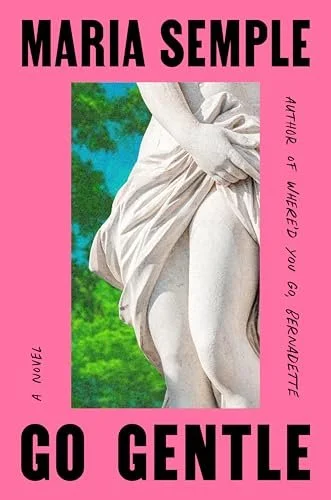
Go Gentle     Maria Semple     (2026)  Adora Hazzard is a fiftyish philosopher who specializes in ancient Greek Stoicism, and like a good Stoic, she tries to control her emotional reaction to the uncontrollable events around her. But she is nonetheless a pretty wild woman, getting herself involved in an unexpected romance and in an international art heist. Readers dash around New York City with the manic Adora in novelist Semple’s trademark fashion (exemplified in the 2016 Today Will Be Different, reviewed here). Semple excels in probing parent-child relationships, women’s midlife angst, and the pretentiousness of the ultra-wealthy. The hilarious one-liners in the dialogue come fast and furious in Go Gentle’s first-person narration, which makes sense when we learn, in a lengthy flashback, that Adora was once a Hollywood comedy writer. The title of this novel is a reference to Dylan Thomas’s poem that advises against passive acquiescence to mortality, and Adora certainly doesn’t acquiesce.
 

More Historical Novels

Four novels, set in four different periods of the twentieth century. (To read additional reviews of historical novels, click here and here.)

  • The World War I Era

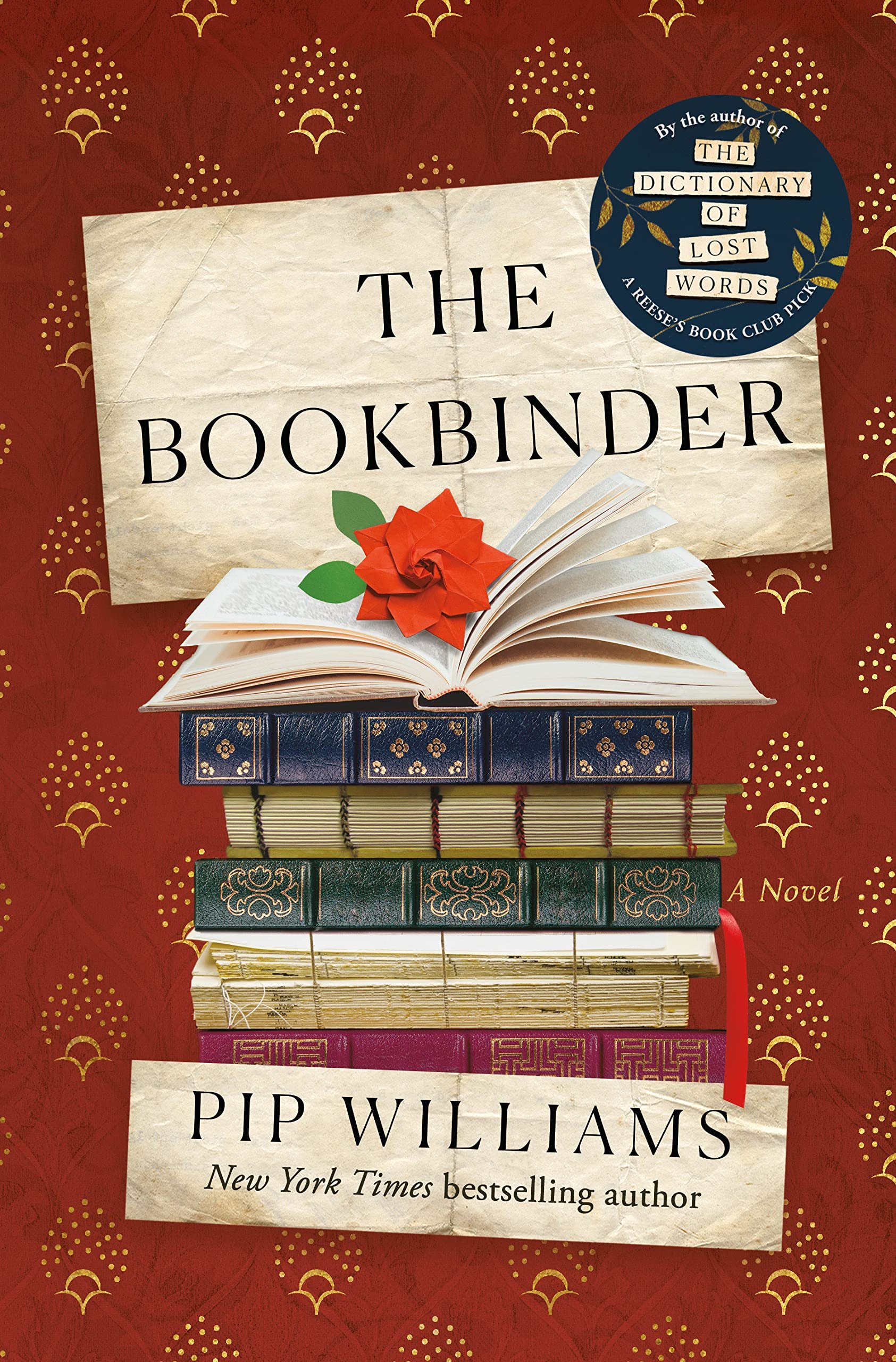
The Bookbinder     Pip Williams     (2023)  I’ve been avoiding novels set in the trenches of World War I because the blood-and-guts horrors are just too much for me. But The Bookbinder takes place in placid Oxford, England, focusing on the women left behind, with a few letters from a nurse in France. Peggy and Maude are twin sisters who work in the bindery of Oxford’s highly respected university press. Maude has disabilities that make this repetitive work ideal for her, but Peggy is bored, wishing for much more intellectual stimulation. When Belgian war refugees arrive in Oxford, a romance element to the plot emerges, to intersect with the story of Peggy’s quest to attend university. The pace of this novel is slow, with descriptions of the minutiae of daily life and details of hand bookbinding, but hang in there. The action picks up, and weighty themes (women’s rights, the morality of war, the treatment of the disabled) emerge. A companion novel to The Bookbinder is Pip Williams’s bestselling The Dictionary of Lost Words. Watch for a review of the latter in an upcoming post on this blog.

  • The World War II Era

Beyond That, the Sea     Laura Spence-Ash     (2023) First, my minor quibbles: a few language inaccuracies and a lot of coincidences. Those noted, I really liked the unusual plot and the well-drawn characters in this novel. At the start of World War II, Beatrix Thompson, age 11, is evacuated from war-ravaged London. Unlike some British child evacuees who ended up in rural England with exploitative farmers, Beatrix is sent to Boston to live with the kind and welcoming Gregory family. One of the Gregory sons is two years older than Beatrix, and one is two years younger. Can you foresee a love triangle forming?  She ends up staying with the Gregorys until the end of the war, when she reluctantly returns to her London family. The story travels on until 1977, as Beatrix (“Bea” in the US, “Trixie” in the UK) tries to find her place in the world.

  • 1959/2018

Homecoming     Kate Morton     (2023)  You either love Kate Morton’s novels or you gasp, “No way am I slogging through 544 pages!” I slogged through Homecoming, letting myself become fully immersed in the exceedingly complex plot, chock full of Morton’s characteristic flashbacks and secrets and instances of doubtful paternity—and more secrets. Here is the basic outline: In December 2018, Australian-born Jess Turner-Bridges, who has long lived in London, receives word that her beloved grandmother has been hospitalized in Sydney. Jess flies to Australia and accidentally learns about a terrible family tragedy that occurred on Christmas Eve of 1959. We’re off and running! Morton often anchors her novels’ extravagantly wide-ranging plots in spectacular landscapes and/or houses—here it’s the Adelaide Hills and magnificent houses there and in Sydney. Most people have room for at least one Kate Morton novel in their lives. You could read this one, or you could check out my reviews of two of her other family-saga mysteries: The Clockmaker’s Daughter and The Lake House.

  • The Turn of the (Most Recent) Millennium

Attachments     Rainbow Rowell     (2011)  Remember the Y2K scare back in 1999? Media hype had us all worried that computers around the world would crash on January 1, 2000, because of the use of two-digit abbreviations for years. Attachments takes place in the years 1999 and 2000, with this Y2K angst as a backdrop. Lincoln, an introverted computer security specialist at a newspaper in Nebraska, is charged with following up on employee emails that have been flagged as possibly inappropriate. He reads lengthy personal exchanges between the newspaper’s copy editor (Jennifer) and entertainment writer (Beth), and he falls in love with Beth, whom he has never met. The pop culture references from the turn of the millennium are nostalgic, and the circuitous route by which Lincoln and Beth eventually get together is hilarious. As I raced through this novel, Rainbow Rowell had me laughing out loud at hundreds of witty emails.