


The Subtle Pleasures of Indiscretion Alexander McCall Smith (2026) Isabel Dalhousie, the philosopher of applied ethics, is back for another adventure in modern-day Edinburgh! I recommend all the extra-gentle Isabel novels, but you can pick up the characters with this 16th book in the series. Isabel’s handsome younger husband, Jamie, constantly reminds her to avoid getting entangled in the messy minor crises of friends and acquaintances. But Isabel can’t resist. This time, hoping to fix a family’s dispute about revelations from DNA testing, she inadvertently ventures into spiritualism. Subplots include (1) the scheming of an impresario to seduce Jamie, who is a classical musician, and (2) the scheming of an academic philosopher to discredit a colleague. For my overview of the McCall Smith books about Isabel, click here.
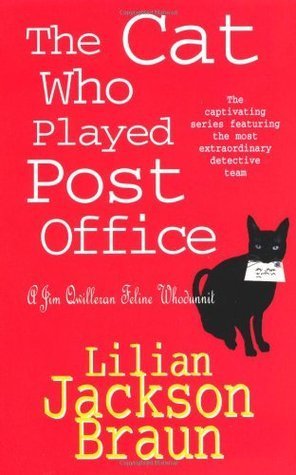
The Cat Who . . . Series Lilian Jackson Braun (1966-2007) I’ve never had a cat as a pet, but twenty years ago I read my way through most of The Cat Who . . . series of cozy mysteries. I’ve recently revisited several of the books. The first three titles, written in the 1960s, have the newspaper writer James Qwilleran living in an unnamed midwestern city and solving mysteries with the help of his preternaturally brilliant cat Koko. The novelist, after a writing hiatus of two decades, brought Qwilleran back in 1986, when he inherits a huge fortune from an old family friend, Fanny Klingenschoen. A stipulation of Fanny’s will is that Qwilleran must live for five years in remote Moose County, which is somewhere unspecified in the Upper Midwest. This setting for the next 26 (!) titles in the series caught my attention, because Qwilleran decamps to the fictional Pickax City, a tiny burg that critics think was modeled on Bad Axe, in the “thumb” area of Michigan. (To me, Jackson Braun’s descriptions actually fit better with Michigan’s Upper Peninsula, and I love that local color.) An inordinate number of people seem to die around Qwilleran, with Koko the cat pointing the way toward the murderers. The slang in these novels is dated, and smoking is allowed in restaurants, but the characters are charming and the reading is easy. Note that libraries may have only a limited number of The Cat Who . . . books available. If you want to sample the series, try to find The Cat Who Played Post Office (1987), since this is the novel in which Qwilleran moves into the Klingenschoen mansion in Pickax, and readers are introduced to the key townspeople. For my reviews of other Michigan-based novels, click here.