

I love happy endings, but life isn’t always like that. Here are three novels I’ve read recently that have literary merit despite their sad topics.
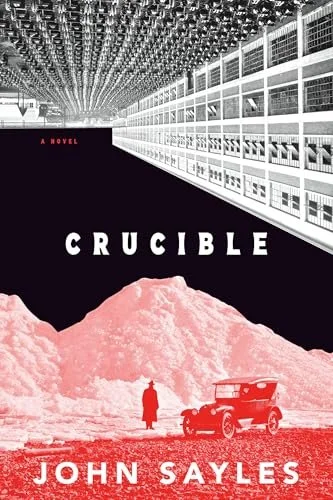
Crucible John Sayles (2026) From 1929 to 1945, Detroit was a cauldron of turmoil: Prohibition-era rum-running, the Great Depression, labor-management strife, race riots. The “crucible” of the novel’s title refers both to this turmoil and to the containers of molten metal at the foundry of the Ford Motor Company’s Rouge Plant, where mainly Black workers toiled in horrific conditions. Crucible is the gritty story of fictional assembly-line workers and of actual personalities of the period—Henry Ford, Diego Rivera, Joe Louis, and others. As if that weren’t enough chaos, the novelist also takes readers to the jungles of Brazil, where Henry Ford tried to establish a plantation to provide rubber for vehicle tires. Throughout, the dialogue (from veteran screenwriter Sayles) is highly believable. A few scenes describing movies of the period get overlong, but they do give insights into the era’s popular culture. And I loved the local color; the street names and landmarks and odd little shops were still reminders of Old Detroit when I knew the city in the 1960s.
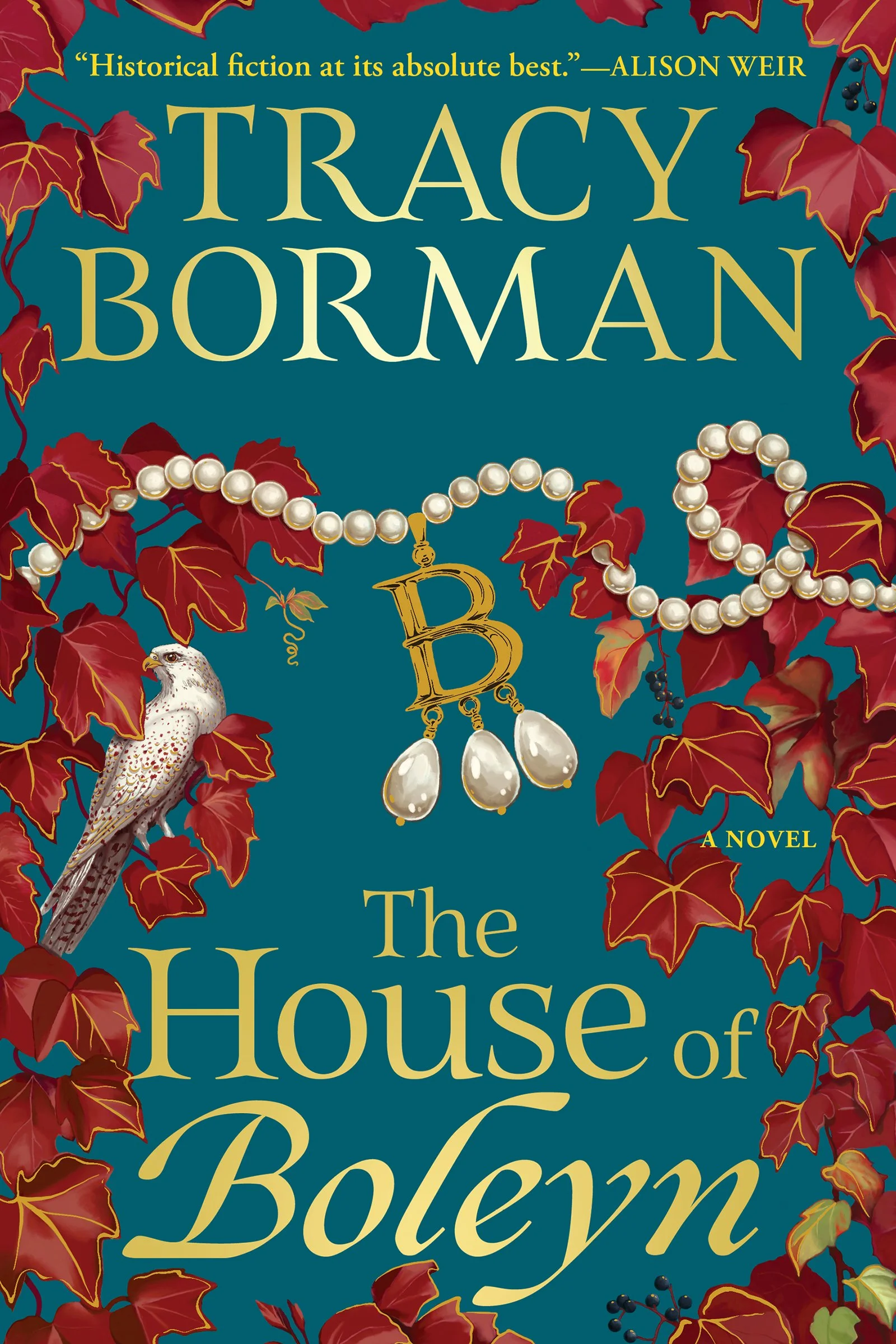
The House of Boleyn Tracy Borman (2026) If you know the story of Anne Boleyn, the second wife of England’s King Henry VIII, you know how this novel is going to end, and it’s not pretty. But the focus of novelist Tracy Borman, who is also a distinguished British historian, is not so much Anne herself as her family—her siblings, father, mother, grandmother, in-laws—and her interactions with them. Borman takes the view that Anne was not the seductress she is often depicted as but rather a victim of Henry’s predations, and that Anne’s father, Thomas, tried to keep her away from the royal court, to protect her. The action spans the period from 1512 to 1540 and fictionalizes the Boleyn family members as well as taking readers into the lives of a number of totally invented minor characters, particularly servants. (I know this historical period quite well, but I would have liked a list of all the players, to keep straight all the men who were named Thomas and the women who were named Elizabeth!) Descriptions of the castles where the nobility lived evoke the period, and scenes set in different seasons provide a pastoral elegance.

The Adjunct Maria Adelmann (2026) I’ll warn you before you read this review that The Adjunct is a troubling novel, almost becoming a screed that denounces the inhuman treatment of contract instructors at American colleges. That said, I read the whole damn book, because I myself spent seven years in the 1980s and 1990s as an adjunct lecturer, and I recognized all the elements of exploitation: the meager pay, the non-existent benefits, the last-minute course assignments, the disdain from tenured faculty, the tenuousness of the employment, the constant search for something better. Adjuncts are usually professionals who hold doctorates or other higher degrees in their field and who cling to the hope that they will some day obtain a coveted tenure-track position. Tenure-track positions are, however, vanishingly rare, as colleges save money by filling their teaching ranks with cheap laborers. In the novel, Sam is an adjunct English instructor who races between two teaching jobs in Baltimore, carrying a heavy class load while desperately trying to keep afloat financially and also trying to write a scholarly article to advance her career. Ordinary life issues (like a toothache) end up being catastrophic. Aside from all her employment-related problems, Sam has to deal with a former mentor who has depicted her unfavorably—and quite recognizably—in his latest novel. It’s all true-to-life, and capably written, though gloomy. On a happier note, I can tell you that, since 2004, adjuncts at the University of Michigan have had a union, which has brought stability and better pay to their positions.