20th-Century Families

Fiction set in the twentieth century may seem too close to the present day to qualify as “historical,” so perhaps it’s better to categorize these novels as “family sagas.” Following characters for decades allows an author to demonstrate their reactions to many life challenges.
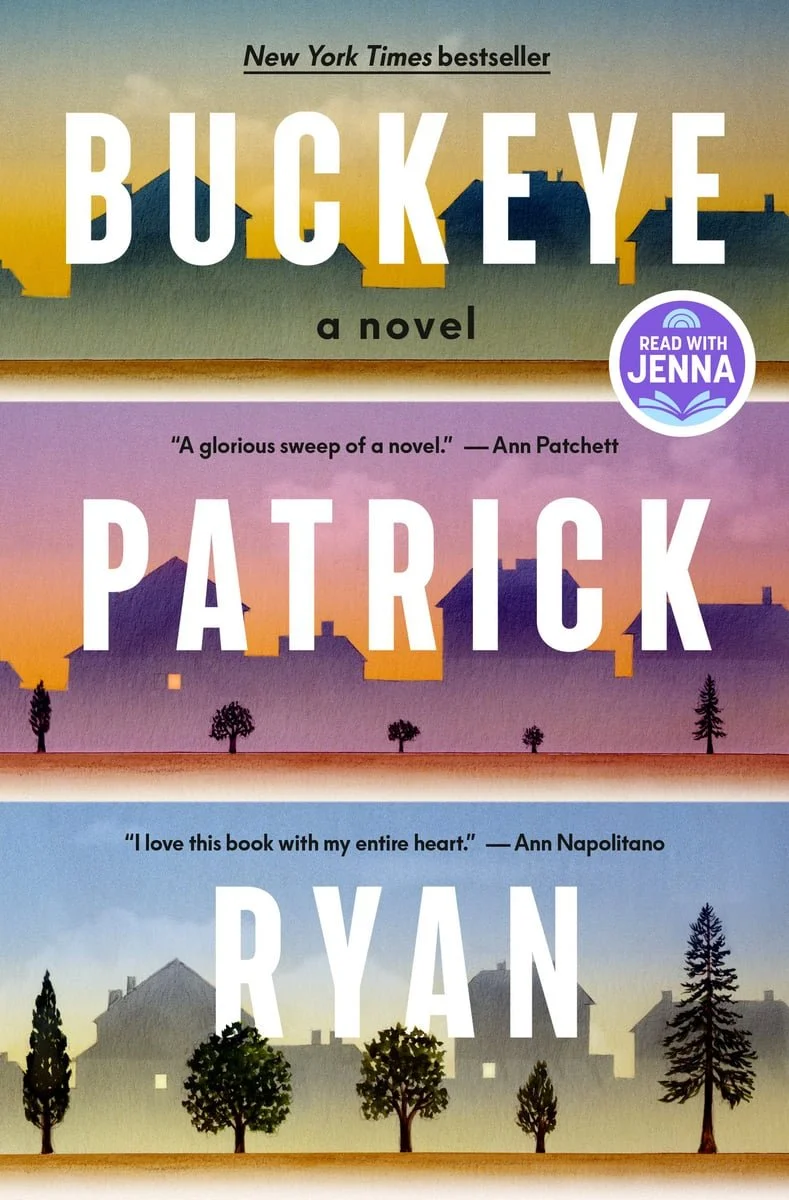
Buckeye     Patrick Ryan     (2025)  Sweeping across many decades of the twentieth century, this engaging novel recounts the lives of two couples—Cal and Becky Jenkins and Felix and Margaret Salt—who become linked by a fateful encounter at the end of World War II. The novelist moves the action along briskly while still lingering on everyday details that flesh out the scenes. The setting is a fictional town in northwest Ohio, an area where I was born and where I still have many relatives, and it rings true. One theme that pervades the narrative is the lasting trauma of war:  the mustard gas that a World War I veteran remembers, the loneliness and grief of wives whose husbands are fighting in World War II, the senseless slaughter of the Vietnam War. One national reviewer of Buckeye called it “old fashioned.” Yup. I loved it.
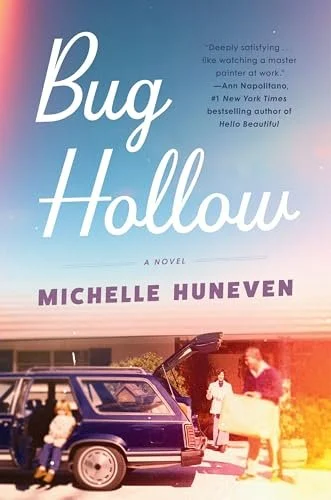
Bug Hollow     Michelle Huneven     (2025)  In 272 pages, this fast-paced story takes readers through forty-plus years in the lives of the Samuelson family. (And that page count includes a rather odd excursion into the life of “an old family friend,” Mrs Wright.) The sudden accidental death of one of the Samuelsons affects the members of the family in different ways—alcoholism, an extramarital affair, an unexpected adoption. Author Huneven develops her characters deftly, showing how they remain resilient despite the inevitable unhappinesses of their lives. A bonus is the portrayal of the culture of southern California through the decades.

Rural Tales

Whale Fall     Elizabeth O’Connor     (2024)  Ah, the rustic life on a remote island! Sometimes we long for it, but the reality is harsh. O’Connor’s poignant novel paints a convincing portrait of the inhabitants of a very small fictional island off the coast of Wales in the year 1938. The protagonist is Manod, an eighteen-year-old woman who is trying to decide if she will move to the mainland; she weighs family obligations, personal ambitions, and the international political landscape. The seasonal fishing and sheep-raising routine of the island’s few hardworking inhabitants is interrupted by the arrival of two ethnography researchers from Oxford. At first, as the visitors record folk songs and take photographs, their presence seems benign. Spoiler alert: their presence is not benign. The nature prose of this novel is hauntingly lovely. The story is heartbreaking.

Strange Flowers     Donal Ryan     (2020)  In 2018, I reviewed Donal Ryan’s 2014 collection of linked short stories, titled The Spinning Heart. Ryan’s prose has become even more luminous since then. In his novel Strange Flowers, he once again takes us to his native Ireland, to a family in rural County Tipperary, beginning in 1973. Twenty-year-old Moll Gladney walks away from her parents’ home without a word of farewell, and the novelist plumbs the emotions of her parents, both during the five years that Moll is gone and when she returns with many secrets. Although I thought that the story-within-a-story in the latter part of the book didn’t quite fit, this is still an exceptionally fine exploration of family bonds and of the many varieties of love between humans.


Short, Short, Long

Two short novels, both from Ireland:

Foster     Claire Keegan     (2010, 2022)  This gem-like novella is already part of the school curriculum in Ireland, and now, twelve years after its initial publication, the full version is finally available in the United States. Keegan compresses an enormous amount into 92 pages, as she did with her acclaimed novella Small Things Like These. In Foster, a young Irish girl is taken to live with relatives at the beginning of summer. It’s unclear if the arrangement is permanent or temporary, and the tension of this uncertainty hangs over the narrative—as do mysteries about the girls’ birth parents and about her foster parents. Keegan is able to evoke panoramic scenes with spare sentences like this one, on the first page: “It is a hot day, bright, with patches of shade and greenish, sudden light along the road.” The dialogue is similarly spare but revealing of character. Don’t miss this book. (The movie version, The Quiet Girl, is also excellent—in the Irish language, with subtitles.)

The Queen of Dirt Island     Donal Ryan     (2022, 2023)  In rural County Tipperary, widow Eileen Aylward shares her modest house with her daughter, Saoirse (pronounced something like SUR-sha), and her widowed mother-in-law, Mary. Their story spans the mid-1980s to the early 2010s and includes feuds, romances, deaths, and run-ins with the Irish Republican Army. Through it all, they hang on by loving each other fiercely, even though they yell at each other a lot. You might classify this book, which is divided into two-page mini-chapters, as a very long prose poem—the language is that rich. And toward the end, a delightful element of meta-fiction also enters the narrative. For another exquisite piece of writing from Donal Ryan, check out his linked short stories in The Spinning Heart, which I reviewed on this blog back in 2018.

And a long novel, from the United States:

Commitment     Mona Simpson     (2023)  Walter, Lina, and Donnie Aziz are teens in California in 1972 when their struggling single-parent mother, Diane, becomes severely depressed and is institutionalized. Walter, who is starting college at Berkeley, leaves Lina and Donnie in the care of a devoted family friend, Julie. The novelist tracks the lives of these five people over the next decade and a half, delving by turns into decisions by each of Diane’s three children, often in intricate detail. The narrative structure made me want to know what would happen in the next chapter—and the next—but  this long novel does require (ahem) commitment on the part of the reader. I think it’s worth the time to observe how bravely the characters face adversity.