For Indigenous Peoples Day

The Berry Pickers     Amanda Peters     (2023)  In 1962, a group of Indigenous Mi’kmaq people from Nova Scotia, Canada, cross the border to Maine as summer migrant workers. When a 4-year-old Mi’kmaq girl, Ruthie, disappears from the berry fields one August day, her family is devastated. Her 6-year-old brother, Joe, is the last to see her; guilt and regret will shape his entire life. Meanwhile, in a town in Maine, a girl named Norma has recurrent dreams that she thinks may in fact be memories of people she once knew. Over the ensuing decades, the novel shifts back and forth between Joe’s life and Norma’s, until their two stories collide. The injustices visited upon Indigenous peoples are woven into the narrative of their existence—the repressive boarding schools, the employment discrimination. But what struck me even more was the author’s portrayal of the contrast between the Mi’kmaq community and the white community—laughter and light versus gloom and closed curtains. Prepare to weep by the end of this moving novel.

For another take on the Native American experience, here’s a reprise of a review that I posted earlier this year:

The River We Remember     William Kent Krueger     (2023)  “In a town where the hatred from wars long past and wars more recent still had hooks set in so many hearts, was anyone safe?” (341) This sentence from Krueger’s latest mystery novel points to the broader themes underlying his text: the untreated trauma inflicted on millions of soldiers by combat, the racism endured by Japanese Americans after World War II, and the racism endured by Native Americans ever since colonizers arrived in North America. And yet, this novel is still a solid mystery, with many twists and turns. It’s set in the fictional small town of Jewel, in southern Minnesota, in 1958, and starts with the discovery of the body of Jimmy Quinn in the Alabaster River. The dead man had numerous enemies, so the job of the sheriff, Brody Dern, is complicated. The novelist takes us deep into the lives of many of the inhabitants of the town, deftly building character through dialog. A warning for the squeamish, among whom I count myself: the concluding chapters have some gory scenes.
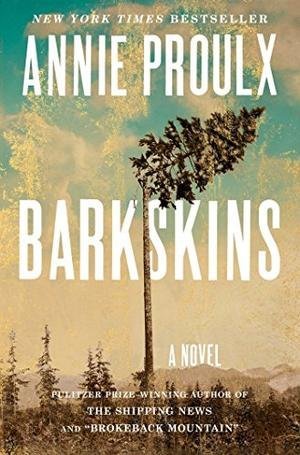
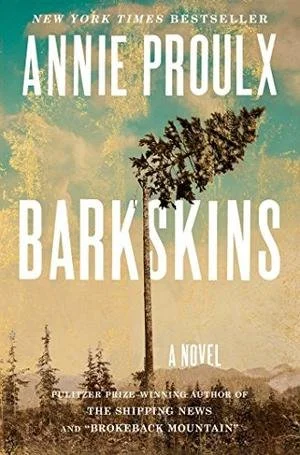
Finally, the relation of Indigenous peoples to the forests of the North American continent is beautifully presented in Annie Proulx’s Barkskins (2016), reviewed here.

Farewell, Nantucket

We’ve reached the autumnal equinox and the official end of summer, but you can keep the sand between your toes with these Beach Reads.

Swan Song     Elin Hilderbrand     (2024)

With this appropriately named romance novel, the rock-star author Elin Hilderbrand is ending her series set on the island of Nantucket. Hilderbrand says that she’s run out of plot ideas for her characters, but she doesn’t close the door totally on possible future Nantucket tales. Meanwhile, Swan Song tells the story of the final case taken on by retiring police chief Ed Kapenash. The $22-million home of island newcomers Bull and Leslee Richardson has burned to the ground, and Coco Coyle, personal assistant to the Richardsons, is missing and is suspected of the arson. In lengthy flashbacks, we learn that Coco has been befriended by Ed’s daughter, Kacy, and is entangled with other islanders. Hilderbrand liberally peppers this mystery/romance narrative with her usual pop culture references to music, fashion, and cuisine. When she takes readers, for example, to an extravagant party at the Richardson’s mansion, she paints the scene expertly.

Nobody does a Beach Read like Hilderbrand, as I’ve noted in my reviews of several other offerings in her thirty-book Nantucket series. Here are recaps of some of those reviews.

The Five-Star Weekend     Elin Hilderbrand     (2023)  In this gossipy escapade, fifty-something Hollis Shaw gathers four friends (one from each phase of her life) for a weekend of companionship and gourmet dining, to help her move through her grief from the recent death of her husband. All the friends have their own back stories and secrets, and their lives have intersected with Hollis’s life in surprising ways. As usual, prepare to be inundated with references to designer clothes, fine wines, and Nantucket restaurants.

28 Summers    Erin Hilderbrand (2020)  For chick lit escapism, it doesn’t get better than this Hilderbrand novel, which borrows its structure from Bernard Slade’s Same Time, Next Year. Two lovers meet secretly each summer, starting in 1993, on Nantucket Island. You can take lots of breezy seaside vacations with them.

Summer of ’69     Elin Hilderbrand     (2019)  In the Author’s Note at the back of Summer of ’69, Elin Hilderbrand explains that she was born on July 17, 1969. Fifty years on, she revisits the momentous events of that summer, including in her fictional narrative such actual occurrences as the Apollo 11 mission to the moon, the death of Mary Jo Kopechne at Chappaquiddick that derailed Ted Kennedy’s presidential hopes, the rock ‘n’ roll encampment at Woodstock, and the continuing slaughter of troops and civilians in Vietnam. Hilderbrand’s main characters are the Foley-Levin family, who summer on Nantucket. Blair, the eldest of the offspring, is recently married and discovers late in pregnancy that she’s carrying twins. Kirby, the rebel sister, takes a job on the nearby island of Martha’s Vineyard, where she is almost a witness in the Kopechne/Kennedy case. Tiger, the only son, is off fighting in Vietnam, driving his mother to drink. And 13-year-old Jessie, the youngest, gets invited to Woodstock. Through the experiences of this family, Hilderbrand takes us back to 1969 in all its glory and horror. Some of the plot twists will be obvious to any avid reader of mystery novels, and a few anachronisms crop up. But, despite the backdrop of the Vietnam War, Summer of ’69 is mostly brisk and cheerful, with wrap-ups of most of the plot lines by the final pages. You can have that second margarita and still be able to follow the story.

Endless Summer     Elin Hilderbrand     (2022)  This collection of nine short prequels and sequels to several of Hilderbrand’s novels is for her diehard followers. Of special note are the sequel novellas, Summer of ’79 and Summer of ’89, that are included. These novellas follow the Foley-Levin clan ten years out and then twenty years out from the novel Summer of ’69, with emphasis on various romantic entanglements that play out in sometimes unexpected ways as the decades unfold. The pop culture references that Hilderbrand uses to set the decade can be heavy at times, but I love epilogues, and these two novellas are, in a way, highly extended epilogues.

If you need a novel set on a different island off the East Coast of the United States, hop over to Martha’s Vineyard:

The Lost Letters from Martha’s Vineyard     Michael Callahan     (2024)  This story toggles between 1959, when actor Mercy Welles disappears from Hollywood on the cusp of stardom, and 2018, when NYC television producer Kit O’Neill discovers some letters of her recently deceased grandmother. The mystery unfolds on Martha’s Vineyard in both time periods, and it’s a pretty good mystery, with a couple of romances for extra spice. (Callahan did need a better editor, though, who might have stopped him from using the word “ensconced” so many times.)


Books Set in Michigan

Funny Story     Emily Henry     (2024)  I had missed Emily Henry’s bestseller boat until I picked up this romance novel that some reviewers say is her best yet. The plot of Funny Story revolves around two tropes of the romance genre: fake dating and friends-to-lovers. Daphne’s fiancé, Peter, dumps her right before their wedding, and Daphne has to find a place to live quickly. Peter’s new girlfriend has also dumped her boyfriend, Miles, who has a spare room in his apartment that he offers to Daphne. She pegs Miles as a scruffy pothead, but she takes the room, since she knows little about (the fictional) Waning Bay, Michigan, where she relocated at the insistence of Peter. Got it? The one good thing in Daphne’s life is that she loves her work as a children’s librarian. And then Miles introduces her to the summertime grandeur of their lakeside town and its environs. The Daphne/Miles plot plays out with glittery dialogue (how could ordinary people come up with so many one-liners?) and some explicit sex scenes. Along the way, readers get a tour of the area around Traverse City, Michigan—the pristine Lake Michigan beaches, the sand dunes, the wineries, the farmers’ markets, the festivals. The characters tend to overanalyze themselves, but I raced through all 384 pages of Funny Story, inhaling the Michigan charm.

On this website I’ve reviewed many other books set in Michigan. Here are brief recaps of some of those reviews.

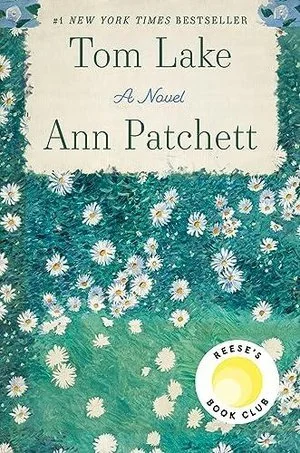
Tom Lake     Ann Patchett     (2023)  In 2020, at the start of the pandemic, three young adult daughters of a family are hunkered down at their childhood home, a cherry and apple farm in Michigan, helping harvest the crops. They beg their mother to tell the full story of her summer romance with movie star Peter Duke, which took place back in 1988 when Duke was a struggling young actor. The mother obliges, and the novel toggles between 1988 and 2020. Novelist Patchett could ask for compensation from the Michigan Travel Commission, given her glowing descriptions of the state’s natural beauty, especially the area around Traverse City.

Adventures of a Girl Architect     Hazel Harzinger     (2018)  Smart and hardworking Elena Troye is determined to become a practicing architect. In this witty, fast-paced novel, she recounts the ups and downs of breaking into a male-dominated profession. After a disastrous studio review at the University of Michigan, there's the seeming triumph of landing a job in glitzy, booming Las Vegas in 2006. When the national recession deepens in 2009, Elena returns to the Midwest for grad school and then the grueling architecture licensing exams. Along the way, she balances the professional with the personal—boyfriends, family ties, friendships. And she maintains her interest in fashion, even if that seems “girly.” In the workplace world of 2011-2014, Elena battles harassment from her superiors and mud on construction sites. She never gives up her dream of designing beautiful, functional buildings—and finding romantic happiness. Elena calls herself a “Girl Architect” with ironic self-mockery as she defies gender stereotypes. Click here to order Adventures of a Girl Architect by Michigan author Hazel Harzinger.

Hunter’s Moon     Philip Caputo     (2019)  In seven linked short stories, Caputo summons up the wild allure of the far northern regions of the United States. Six of the stories take place in Michigan’s Upper Peninsula, which hovers around the 46th parallel of latitude, and the seventh is set even farther north, in Alaska. Each story revolves in some way around hunting or fishing: the appeal of rugged terrain, the terror of getting lost, and the reality of weapons violence. I don’t hunt, and I don’t understand the technicalities of rifles, but as you read Hunter’s Moon you can set those components aside and revel in Caputo’s descriptions of the natural world.

Mysteries by Aaron Stander (2000-2020)  The sand dunes, the sunsets, the resiny scent of pine forests: Michiganders will recognize that Stander’s eleven murder mysteries are set in the northwest section of the Lower Peninsula. The main detective is Sheriff Ray Elkins, a rumpled middle-aged former professor of criminal justice from downstate who has retreated to the North Woods where he was raised. He’s surrounded by a distinctive cast of year-round residents, who disdain the vacationers renting beach houses during the glorious warm months. The many state references will tickle those who, like me, cherish our nation’s third (Great Lakes) coast. Small Michigan details drop in on almost every page. Click here for more of my reviews of books in this series.

We Hope for Better Things     Erin Bartels     (2019)  Interracial relationships are the theme of Erin Bartels’ multi-century historical novel. In the present-day chapters, white Detroit journalist Elizabeth Balsam, following up on a lead about unpublished photos of the 1967 Detroit riots, ends up at her great-aunt Nora’s farmhouse in Lapeer, about an hour’s drive north of the city. A different layer of Elizabeth’s family history is revealed in chapters set in Lapeer in 1861, when the farmhouse was a stop for slaves fleeing on the Underground Railroad. That title? It’s from the motto for the city of Detroit: Speramus meliora; resurget cineribus. “We hope for better things; it will rise from the ashes.”

Beautiful Music      Michael Zadoorian     (2018)  This is the touching story of a high school freshman at Redford High School, on Detroit’s far northwest side, in the early 1970s—a period of increasing racial tension and violence in the city. Danny Yzemski is a sweet, shy kid who’s bullied in school and beleaguered at home. His coming-of-age is aided by his discovery of the transformative power of hard rock music. The detailed descriptions of Danny’s neighborhood along the Grand River corridor—the routes he took, the stores he frequented—re-create the era precisely. Even the breakfast cereals that Danny eats are authentic to the period. For vintage Detroit flavor, tune in to Beautiful Music.

There’s nonfiction set in Michigan, also, as in this dual biography:

The Kelloggs:  The Battling Brothers of Battle Creek     Howard Markel     (2017)  In the small southwestern Michigan city of Battle Creek, two brothers distinguished themselves in separate but related arenas. John Harvey Kellogg (1852-1943), a physician and author, established the Battle Creek Sanitarium in 1878, treating thousands of patients and promoting some surprisingly prescient wellness regimens on both dietary and exercise fronts. In 1906, Will Keith Kellogg (1860-1951) founded the Battle Creek Toasted Corn Flake Company, now the Kellogg Company, revolutionizing breakfast foods through manipulation of ingredients and industrial mass production. Click here for my full review.

Three Intertwined Novels by Colm Tóibín

The Irish author Colm Tóibín has an uncanny ability to get inside the heads of his characters, especially the female characters. The three historical novels reviewed here highlight this talent of his, as well as his plot-driven explorations of everyday life in the later twentieth century, both in rural Ireland and in New York City.

Brooklyn     Colm Tóibín     (2009)  Eilis Lacey is a young woman in 1950s Ireland who is persuaded to set off to work in the United States, landing in Brooklyn. The contrast between the straightlaced, hidebound Irish town of Enniscorthy, where she grew up, and vibrant, pulsating New York could not be greater. At a dance, she meets a handsome plumber from a rollicking Italian American family and falls in love. How Eilis then becomes trapped in a heartbreaking love triangle is intricately plotted to the last page of the novel. (The film version of Brooklyn stars Saoirse Ronan as a pitch-perfect Eilis, and the cinematography is stunning.)

Nora Webster     Colm Tóibín     (2014)  For this novel, Tóibín takes us back to Enniscorthy, in rural southeast Ireland. It’s now the late 1960s, and the title character is a recently widowed woman with four children. Having lost her beloved husband, Nora Webster has to make many decisions on her own over the next few years. Tóibín probes her deliberations. Should she sell the family’s summer cottage? Should she get a full-time job or try to rely on her widow’s pension? How should she deal with her grieving children, who range in age from early teens to early twenties? Nora’s daily life is set against the backdrop of The Troubles, the very violent conflicts between Protestants and Catholics, primarily in Northern Ireland but also spilling over into the Republic of Ireland. (I lived in Dublin in this period and found Tóibín’s local color highly accurate.) Tantalizingly, he mentions in passing Eilis and other characters from his novels Brooklyn and Long Island, and the novel Nora Webster fills in much of the community background for those two novels. Some reviewers consider Nora Webster to be Tóibín’s masterpiece. I didn’t want her story to end.

Long Island     Colm Tóibín     (2024)  It’s now 1976, and Eilis is living fairly contentedly with her husband and two teenaged children in a middle-class neighborhood on Long Island. In the opening chapter of the novel, a man comes to her door and announces that his wife is pregnant with a child fathered by Eilis’s husband. The man vows that when the child is born he will drop it on her doorstep. Eilis struggles mightily with this news, deciding to travel to Ireland at the time of the expected birth. This visit, ostensibly for her mother’s eightieth birthday, is her first trip to her homeland in twenty years. Meanwhile, back in Enniscorthy, the characters introduced in the novels Brooklyn and Nora Webster have evolved in their own Irish way. The return of Eilis to Ireland resurrects many secrets and sets in motion a distressing chain of events.

For the most reader satisfaction, do read these novels in chronological order. I hope you enjoy the work of Colm Tóibín as much as I did!

Politics. Sigh.

Jesus and John Wayne: How White Evangelicals Corrupted a Faith and Fractured a Nation     Kristin Kobes Du Mez     (2020)  The title encapsulates the author’s argument: that an iconic 20th-century actor who portrayed heroic soldiers and cowboys epitomizes the societal goals of the segment of white American society that identifies as evangelical. Kristin Kobes Du Mez is a respected historian at Calvin University, which is affiliated with the Christian Reformed Church in North America, so she writes with the authority of one who knows religion from within. Her meticulously researched and footnoted book traces 75 years of expanding white evangelical embrace of a hyper-masculine political vision that subjugates women and immigrants and elevates authoritarianism and aggression. The presidency of Donald Trump, she posits, did not come about just because evangelicals held their noses and voted for a libertine because he would stack the courts with anti-abortion judges. They voted for him primarily because he embodied their goals of “Christian nationalism.” Many self-described American evangelicals know little about theology. Their beliefs are instead cultural and political, based in what Kobes Du Mez calls a “bunker mentality” and a “persecution narrative” that only a badass autocrat can alleviate. This New York Times bestseller-list book is both enlightening and scary.

The evangelical movement in the United States has long been an interest of mine. Back in 2017, I read Frances FitzGerald’s The Evangelicals: The Struggle to Shape America, and I summed it up this way:

The Evangelicals disentangles the many strands of a movement that now includes about 25% of the population of the United States. FitzGerald pulls data from the histories of religion, culture, and politics with ease, showing how evangelicals developed their stances on issues such as slavery, segregation, labor unions, the Vietnam War, communism, abortion, immigration, and gay rights. If you are bemused by the phenomenon of evangelicalism in America, or if you just want some background on a powerful segment of our society, this is the book to read. (You can see my entire review here.)

Also in 2017, I reviewed JD Vance’s Hillbilly Elegy: A Memoir of a Family and Culture in Crisis, concluding with this paragraph:

Vance treasures his hillbilly background and yet despises it. He hasn’t quite figured out where he stands, though he aligns himself politically with conservative Republicans. Hillbilly Elegy is an imperfect book, with far too many contradictions and generalizations and cherry-picked citations. But you may want to read it because it’s become highly influential in our present-day political climate of angry polarization. (You can read my entire review here.)

In early 2018, my guest reviewer, Paul Schwankl, assessed One Nation after Trump: A Guide for the Perplexed, the Disillusioned, the Desperate, and the Not Yet Deported, by E. J. Dionne Jr, Norman J. Ornstein, and Thomas E. Mann. Click here to read his review.

In my next post, I’ll be back to fiction!


Gentle Reads

Longtime followers of this blog know that I don’t select thrillers or horror novels or apocalyptic dystopian fiction for my reading or for my reviews. If an author slips a car crash or a ghost into a good family saga, I’m fine, but if I hit detailed descriptions of World War I trench warfare, I close the book.

In the novels that I call Gentle Reads, the emphasis is on the interactions of well-constructed characters, and the endings are mostly happy. The best of the Gentle Reads avoid sentimentality and have some racy elements.

Thanks to Dorothy Devin for recommending this Gentle Read:

Iona Iverson’s Rules for Commuting     Clare Pooley     (2022)  On a commuter train in London, a well-dressed businessman chokes on a grape in his breakfast fruit salad. Although the British rarely speak with strangers on public transit, passengers do come to the man’s aid, and a nurse performs the Heimlich Maneuver, saving his life. From this interaction springs a friendship among Londoners from very different stages and walks of life. Iona Iverson, a flamboyant magazine advice columnist, is the catalyst and the central figure in the group, as they navigate major life changes with each other’s help. The story is sweet but not saccharine, offering the possibility of societal healing through friendship and mutual help. A quote from a chapter highlighting Iona: “They were joined together, like it or not, by a brush with death. So, what were the rules now? God, it was difficult being British sometimes.” (35) If you like this one, try Clare Pooley’s previously published Gentle Read, The Authenticity Project (2020), which has a similar message of the transformative power of friendship. And check out my review of a novel with a similar feel:  Eleanor Oliphant Is Completely Fine by Gail Honeyman (2017).  

On a far end of the Gentle Reads spectrum, at the gentlest end, is this recent pick:

The Stellar Debut of Galactica MacFee     Alexander McCall Smith     (2023)  Clocking in at #17 in McCall Smith’s 44 Scotland Street series is another of his wacky and delightful explorations of the lives of those who live (or used to live) on Scotland Street in Edinburgh. Among the many characters, my favorite is Bertie Pollock, who starts out as five years old and very, very slowly ages to seven years old over the course of the novels. The titular Galactica MacFee is an obnoxious little girl who joins Bertie’s school class and torments poor Bertie. If you haven’t read any of the previous 44 Scotland Street books, my lengthy post about #11 in the series, The Bertie Project, can help you with background. In this latest installment, McCall Smith’s authorial musings on society and politics do seem to have become more crochety, but his underlying message about the importance of kindness in the world shines through. For additional reviews of McCall Smith’s novels, click here and here and here.

On the other end of the Gentle Reads spectrum, with some intense scenes in its fast-moving concluding chapters, is this one:

The Hazelbourne Ladies Motorcycle and Flying Club     Helen Simonson     (2024)  In 1919, the British are celebrating the end of World War I but also mourning the immense loss of life, both in combat and from the influenza pandemic. (Contemporary readers who are emerging from the COVID pandemic will be able to relate to the sense of having years stolen from one’s life because of a world-wide catastrophe.) In Simonson’s novel, Constance Haverhill is a young woman at loose ends. She’s spending the summer at a seaside hotel as the companion and assistant to an elderly woman, but she needs to find permanent employment, preferably in the field of accounting, in which she has experience from her job during the war. Also at the hotel is the Wirrall family: the matriarch, a former actress; the daughter, Poppy, who runs a motorcycle club for women; and the son, Harris, a former pilot who lost a leg in the war. Simonson’s drawing-room dialogues may sometimes seem old fashioned, but they build the characters. And hang on for that whiz-bang conclusion.

You may have noticed that all these titles are by British/Scottish authors. While American authors have cornered the market on Beach Reads (click here and here and here), the United Kingdom seems to generate quite a few Gentle Reads!

Pandemic Stories

First, a review of the most recent pandemic story I’ve read. But then, scroll down . . .

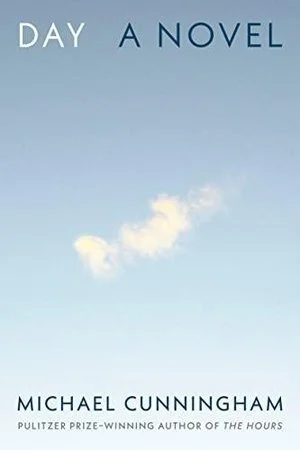
Day     Michael Cunningham     (2023)  This poignant novel takes us into the life of a family in New York City on three specific days:  April 5, 2019; April 5, 2020; and April 5, 2021. Of course, the pandemic is a major feature of the narrative, but readers are reminded that, in every family, many other factors were at play in those years. Isabel and Dan are struggling with their careers and their marriage. Their young children, Nathan and Violet, can’t help but notice. Dan’s brother, Garth, is trying to figure out his relationship with his friend Chess, who is the mother of their son. But the emotional support for the family resides in Robbie, Isabel’s brother. Robbie has been living with Dan and Isabel, but in 2019 the apartment has become too cramped, and he has to move on. He’s also been dumped by his latest boyfriend, finding consolation in an Instagram alter-ego named Wolfe. With deft, subtle strokes, novelist Cunningham delineates these characters, both the adults and the children, creating a rich portrait.

More Pandemic Stories

A world-changing event such as a pandemic is certainly a plot generator. If you are still trying to get your head around what happened, here are reprises of some of my previous posts.

The Pandemic of the 2020s

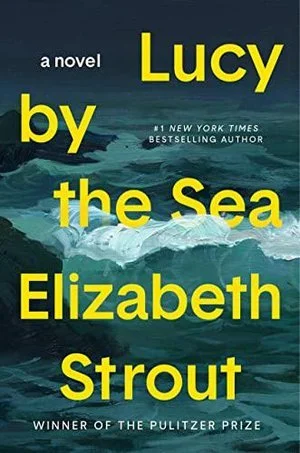
Lucy by the Sea     Elizabeth Strout     (2022) Pulitzer-Prize winner Strout looks at the effects of the COVID-19 pandemic through the eyes of Lucy Barton (a character she’s developed in My Name is Lucy Barton, Anything is Possible, and Oh William). Lucy’s ex-husband, William, is a scientist who sees how dangerous the coronavirus is. In early March 2020, he insists that Lucy leave New York City for a rental house on the coast of Maine. In first-person narrative, Lucy details the interactions she has with family and friends during 2020 and early 2021. Lucy by the Sea truly captures the sense of desperation and loneliness that the pandemic wrought.

Happy-Go-Lucky     David Sedaris     (2022)  For fans of David Sedaris (count me in), every new collection of his essays means a couple of evenings of sure-fire good reading, unveiling the vagaries of family relationships. Happy-Go-Lucky focuses quite a bit on the last years of David’s nonagenarian father, Lou, and on the impact of the COVID pandemic. The stories are honest, touching, sometimes heartbreaking, sometimes disturbing. There is simply no other essayist who is as irreverent and candid and downright funny as David Sedaris.

Wish You Were Here     Jodi Picoult     (2021)  Picoult sets this novel in New York City and Galápagos in 2020, right when the coronavirus pandemic breaks out. The societal details are all too familiar, but the story takes unexpected turns, yanking the reader along. The disjointedness of alternate realities reflects our times.

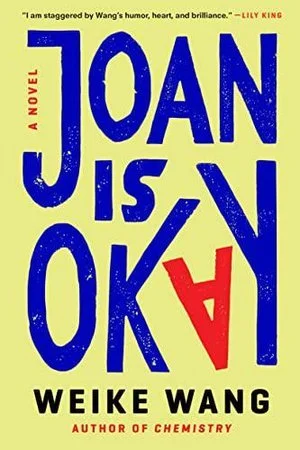
Joan is Okay     Weike Wang     (2022)  All of us know what’s going to happen in the intensive care units of hospitals in New York City in the spring of 2020. We know that ICU physicians like Joan are going to be in the thick of the COVID pandemic. But in 2019, Joan can’t predict this. She’s dealing instead with the expectations of her boss (who rewards her workaholism) as well as the expectations of her Chinese American family (who want her to get married and have kids). She also has a strangely intrusive neighbor and an oddball work colleague. Still, Joan is okay, even when COVID hits. This short novel packs a punch.

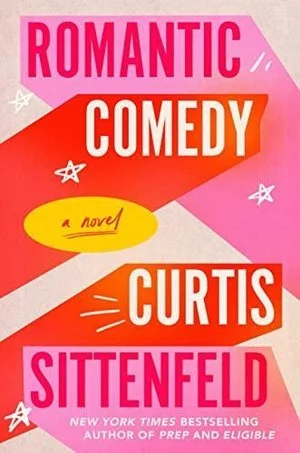
Romantic Comedy     Curtis Sittenfeld     (2023) Go behind the scenes in 2018 at The Night Owls, a not-very-disguised version of Saturday Night Live, to meet Sally Milz, a comedy writer in her late thirties who has often been disappointed in love. Meet a guest host of the show, pop star Noah Brewster. Watch Sally develop a crush on Noah and then accidentally insult him so that their light flirtation ends. Next, skip to the year 2020, in the depths of the COVID pandemic, and read emails between Noah and Sally. Speculate on whether this romance will re-blossom. As befits a late-night comedy show, the scripts that Sally writes can be raunchy, but Sittenfeld’s depiction of modern America is spot on.

Tom Lake     Ann Patchett     (2023)  In 2020, at the start of the pandemic, three young adult daughters of a family are hunkered down at their childhood home, an orchard in Michigan, helping harvest the crops. They beg their mother to tell the full story of her summer romance with movie star Peter Duke, which took place back in 1988 when Duke was a struggling young actor. The mother obliges, and the novel toggles between 1988 and 2020. Much of the plot centers on stage productions of Thornton Wilder’s play Our Town, so if you haven’t read or seen the play in a while, it will help if you brush up before starting Tom Lake. That said, the unfolding of the mother’s tale and its connection to the family’s status more than 30 years later are engrossing, with small and large revelations along the way. Novelist Patchett should ask for compensation from the Michigan Travel Commission, given her glowing descriptions of the state’s natural beauty, especially the area around Traverse City, in the northwest quadrant of the Lower Peninsula.

The Pandemic of 1918-1920

The Pull of the Stars     Emma Donoghue  (2020)  Julia Power is a nurse working in a maternity ward in Dublin during the 1918 flu pandemic. She contends not only with an invisible virus but also with lack of supplies, women oppressed by the strictures of the Catholic Church, and her own sexual awakening.

The Pandemics of Both the Twentieth and Twenty-First Centuries

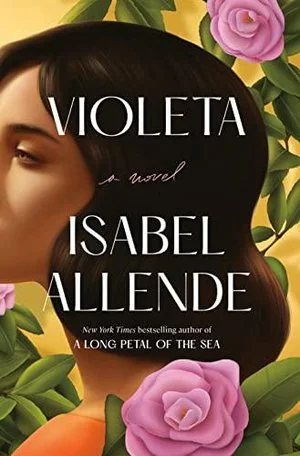
Violeta     Isabel Allende     (2022)  Translated from the Spanish by Frances Riddle. The fictional Violeta Del Valle tells her captivating life story in first person, from her birth in 1920 during one pandemic to her death in 2020 during another pandemic. The backdrop is the political upheaval in the history of an unnamed South American country that is very much like Chile.

The Plague in the Time of Shakespeare

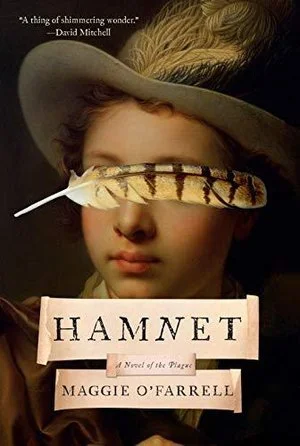
Hamnet: A Novel of the Plague     Maggie O’Farrell     (2020) There’s actually not an emphasis on contagion in this fictional imagining of William Shakespeare’s domestic travails. The title character is William’s son, Hamnet, whose name is an alternate spelling of Hamlet; you can make connections to the play of that name. And the writing in this novel . . . it’s just magical.  

Author Spotlight: Carys Davies

Yes, I know that this author’s given name is a variant spelling of my given name, but that’s not why I’m putting her in the spotlight for this post! Her novels are short, punchy, imaginative, and . . . strange. Her main characters are loners in lonely places or loners who have embarked on problematic journeys. She can set the scene with a few deft sentences, conjuring up the most outlandish sites. Oh, and she’s garnered a number of literary prizes.

Davies’ first novel, West, was published in 2018.

The plot is preposterous, the characters are peculiar, and the language is spare. Yet this book made my post “Favorite Reads of 2018.” Here’s a slightly condensed reprint of my review from that year:

Davies spins a tale that’s akin to ancient myth, set on the North American continent in about 1815. This was an era when the lure of the western frontier was irresistible to some people living in the East. One of these people is Cy Bellman, a mule breeder in central Pennsylvania, who reads in a newspaper about the discovery in Kentucky of the bones of gigantic animals. Cy convinces himself that living exemplars of these animals still roam in the farthest reaches of the continent, driven west by settlement. Cy, who is a widower, leaves his young daughter, Bess, in the care of his unmarried sister and sets off to the west. He hopes to find some amazing creatures if he ventures a ways off the paths that Lewis and Clark traversed in their 1804-06 expedition through the Louisiana Purchase.

The narrative of West alternates between the experiences of Cy in the wilderness (perils: hunger, animal attack, Indian attack, winter) and the experiences of Bess in Pennsylvania (perils: predatory men, clueless aunt, lack of education). Davies builds tension artfully. She pauses in her rapid narrative sweep for descriptions at moments that capture the extremity of the threats to both Cy and Bess. Here is Cy at the end of his first winter on the road: 

“One night he heard the ice booming and cracking in the river, and in the morning bright jewels of melting snow dripped from the feathery branches of the pines onto his cracked and blistered face, his blackened nose.” (21)

Despite the harsh conditions, Cy continues to be obsessed with getting a sighting of monstrous animals. But there’s also a general wanderlust at work. A central theme of European and American literature has always been the journey, the pilgrimage, the hero’s voyage. Cy’s trip is set against the dangers for stay-at-home Bess. And uniting these two stories is a third key character, who signs on as a guide for Cy: “An ill-favored, narrow-shouldered Shawnee boy who bore the unpromising name of Old Woman From A Distance.” (27)

I was hesitant to dip into this little novel because I was suspicious of a Brit writing about early America. Such foolish prejudice I displayed! Carys Davies has produced an amazing portrait of frontier life circa 1815, but that’s only the backdrop to her exploration of ambition, fear, lust, weariness, greed, and familial affection.

Davies’ next novel was The Mission House, in 2020.

The Mission House is set in contemporary India and features more of Davies’ unconventional characters:  a disabled orphan, a barber who aspires to be a country-Western singer, and a depressive British librarian taking a rest-cure. The Briton, Hilary Byrd, takes up temporary residence with a missionary in a remote hill station and interacts with locals in the household and in the neighborhood. The modern independent India becomes blurred with the old India, under the former British imperialist rule. Hilary seeks to escape England and yet ends up in a place with many British trappings. Beneath the surface, politics seethe.

Davies’ most recent novel is Clear, which came out in 2024.

For this one, I recommend reading the Author’s Note at the end of the book before starting the fiction. Davies explains the “Clearances” of the 18th and 19th centuries in Scotland: “Whole communities of the rural poor were forcibly removed from their homes by landowners in a relentless program of coercive and systematic dispossession to make way for crops, cattle, and—increasingly as time went on—sheep.”

The novel is set in the year 1843, when the Clearances coincided with a major upheaval in the Presbyterian Church in Scotland. A middle-aged clergyman, John Ferguson, unemployed and desperate, takes a fee-for-service job: evicting a lone tenant from a (fictitious) remote Scottish island in the North Sea, as part of the Clearances. The tenant, Ivar, is an unlettered recluse who speaks only Norn, a Germanic language nearly extinct at the time. Soon after being dropped off by a ship passing by the island, John falls down a cliff and is seriously injured. Ivar finds John and cares for him while he recovers, and the two form an uneasy bond, as John struggles with his assignment to remove Ivar from the island.

Meanwhile, back in mainland Scotland, John’s wife, Mary, who was never too keen on his taking the job, gets more and more uneasy. As with Davies’ other two novels, Clear comes rushing to a startling conclusion.

All of Carys Davies’ novels are best read in one sitting, so set aside a few hours to be swept away.

A Grab Bag of Recent Novels

Leaving     Roxana Robinson     (2024)  A man and a woman meet by chance at a performance of the opera Tosca in New York City. Sarah, retired and long divorced, volunteers in the art world. Warren, a practicing architect, is unhappily married. They were romantically involved nearly forty years before, when they were both in college, but have not seen each other since then. Flashes of remembrances and of possibilities ensue. Why did they break up? Were they really soulmates who should have been together all those years? Is there such a thing as “soulmates”? The personal and family complications that arise from their renewed liaison are presented in sensitive and devastating detail.

The Five-Star Weekend     Elin Hilderbrand     (2023)  Escape to the island of Nantucket, off the coast of Cape Cod, for another of Hilderbrand’s beach-based, gossipy escapades. This time, the recently widowed fifty-something Hollis Shaw gathers four friends (one from each phase of her life) for a weekend of companionship and gourmet dining, to help her move through her grief. All the friends have their own back stories and secrets, and their lives have intersected with Hollis’s life in surprising ways. I was inundated by the many references to designer clothes, pop music, fine wines, and Nantucket restaurants, but I still buzzed happily through this lightweight novel. I’ve reviewed a number of other Hilderbrand offerings, including 28 Summers, Summer of ’69, and Endless Summer.

Mercury     Amy Jo Burch     (2023)  Next, step into the rural western Pennsylvania town of Mercury in the 1990s and meet the Joseph family:

  • Mick (patriarch, expert roofer, weirdo)

  • Elise (matriarch, frustrated housewife)

  • Sons Bay, Way, and Shay (I’m not making this up)

  • Marley (who arrives in town as a teenager and becomes enmeshed in the lives of the Josephs)

The introspective musings of these characters can go on at length, but the family dynamics are fascinating, within a plot that takes many unexpected turns. There’s a subplot with Marley’s friend Jade, a dead body that causes lots of consternation, and a harrowing denouement. Questions that the novelist seems to be asking: Which family secrets do you keep and which do you reveal? What do you sacrifice as an individual to be part of a family? Where does love come in?

For Asian American and Pacific Islander Heritage Month

Over the past seven-plus years on this blog, I’ve posted about many novels by Asian American writers. Here are brief summaries of some of those books, with links to my full reviews.

The Tea Girl of Hummingbird Lane      Lisa See     (2017)  A moving tale of the collision of a traditional Chinese culture with the modern world. Click here for my full review.

The Tenth Muse     Catherine Chung     (2019)  The story of a female mathematician of extraordinary abilities in mid-20th-century Michigan. Click here for my full review.

Searching for Sylvie Lee     Jean Kwok     (2019)  A mystery that also follows an immigrant family in today’s highly mobile global economy. Click here for my full review.

Pachinko     Min Jin Lee     (2017)  A saga about four generations of a Korean family living in Japan in the twentieth century. Click here for my full review.

Chemistry     Weike Wang     (2017) A novel about the difficulties that women (of any race) face in choosing careers in the sciences, and about the tensions between the personal and the professional in the lives of talented people. Click here for my full review.

The Fortunes     Peter Ho Davies     (2016)  A heartbreaking metafictional novel, in four interlocking sections, about the experience of being Chinese American over the past 150 years.  Click here for my full review.

Little Fires Everywhere     Celeste Ng     (2017)  Teens in late-1990s Shaker Heights, Ohio, confront incendiary issues of the upper-middle-class: bigotry, greed, and a disdain for those who diverge from the norms set by their communities. Click here for my full review.

Finally, here’s my review of a very recent novel:

Lady Tan’s Circle of Women     Lisa See     (2023)  This fictional recreation of the life of Tan Yunxian, a woman born into an elite family of Chinese scholars and judges, is set in late-fifteenth-century China. A murder mystery is buried in the pages and unravels toward the end, but the primary focus is on Lady Tan’s development as a physician and on how she came to write a definitive medical treatise that has survived to this day. Given Lady Tan’s vocation—which was extremely rare for a female in this period—be prepared for descriptions of the medical conditions that she treats, especially related to pregnancy and childbirth. The patriarchal structures of medieval Chinese society (footbinding, concubines) are also prominent. Reading sometimes like nonfiction, Lady Tan’s Circle of Women immerses the reader in medieval China.

Author Spotlight: Alice McDermott

Alice McDermott has won so many literary prizes that the list would take up this entire post, so I’ll just mention that her novel Charming Billy won the National Book Award for fiction in 1998. Her novels have often been on the New York Times bestseller list, and her short fiction has been featured in such publications as the New Yorker.

McDermott can conjure up New York City in the early-to-mid twentieth century better than any other author I know, and within this area of historical fiction she specializes in creating characters who are Roman Catholic. She isn’t trying to convert her readers to Catholicism but rather to tease out complex ethical questions. How does an ordinary person pursue virtue and decency? How does a adopting a religious framework for one’s life affect this pursuit, for good or for ill? McDermott will make you think hard about questions of morality.

Here are two examples of McDermott’s work set in New York City:

Someone     Alice McDermott     (2013)  In this novel, McDermott gives us an intimate portrait of an Irish Catholic woman’s conventional life, from youth to old age. The beauty here lies in the simplicity and the lovely language.

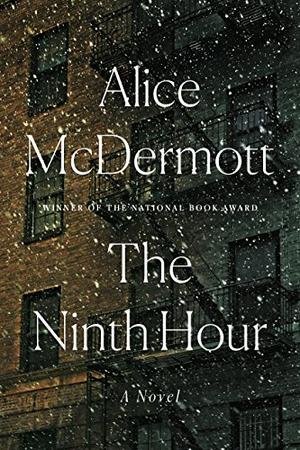
The Ninth Hour     Alice McDermott     (2017)  This book appears as a favorite of mine in several categories. With wonderfully resonant prose, McDermott presents the pros and cons of being Catholic in early twentieth-century Brooklyn. The neighborhood nuns are often heroines. Click here for my full review.

McDermott’s latest novel departs from her usual locale, with great success.

Absolution     Alice McDermott     (2023)  At the start of the war in Vietnam, the United States sent “advisors”—some of them civilian engineers and some of them military personnel—to southeast Asia. Those in the higher ranks of advisors brought their families with them to Saigon. (Even though I remember the Vietnam era vividly, this possibility had never occurred to me.) Absolution is a fictional story about those wives and children in Saigon in 1963. Tricia/Patsy is a naive young bride who is befriended by Charlene, a mother in her thirties. Charlene is a manipulative woman who dabbles in the black market, among other unsavory pursuits, and she pulls Tricia into her circle. Their story is narrated, looking back from the present day, first by a very elderly Tricia and then by Charlene’s daughter, Rainey. The racism and sexism of the period are presented in unvarnished and realistic detail, as the women muddle along on the edges of a momentous period in the history of both the United States and Southeast Asia. Alice McDermott is at the top of her game, so don’t miss Absolution.  

Boomer Tales

If the Baby Boomer generation (born 1946-1964) is not a demographic that interests you, feel free to skip to another post. But if you want to dive deep into the emotional territory of aging, here are some tales for you. Remember, we all become elderly eventually!

First up, a new review of a recent book by a seasoned and reliable author.

Baumgartner     Paul Auster     (2023)  The title character of this short novel is a seventy-something philosophy professor who, at the beginning of the book, is just about to retire from teaching at Princeton. Baumgartner’s wife has been dead for a decade, but he revisits his life with her through dreams, reminiscences, and perusal of the journals and poems that she left behind. Sensing the precarity of old age, he seeks to make the most of his time, continuing to write scholarly books and pursuing various romantic relationships. At the risk of revealing a spoiler, I’ll tell you that that ending is disturbing and not at all what you might expect. (For a review of another Auster novel, 4321, click here.)

Next, recaps of a few of my many reviews over the past seven years that feature elderly characters.

Our Souls at Night     Kent Haruf     (2015)  A widow and a widower, neighbors in a small Midwestern town, carve out their own version of happiness in spite of setbacks. Readers can tuck this story away as a tutorial in how to cope with the inevitability of mortality. (The 2017 movie of the same name starred Robert Redford and Jane Fonda.) Click here for my full review.

Olive, Again     Elizabeth Strout     (2019)  In thirteen linked short stories, the incomparable author Strout revisits Olive Kittredge, a character from her previous fiction. Olive, still living in rural Maine, is retired and declining in health, but she connects with other quirky characters as she fearlessly faces her future. Click here for my full review.

Midwinter Break     Bernard MacLaverty     (2017)  A couple in their seventies who live in Scotland take a short vacation to Amsterdam in this masterful study of the pleasures and trials of a very long marriage. Click here for my full review.

Henry, Himself     Stewart O’Nan     (2019)  This is a quiet, introspective portrait of a year in the life of Henry Maxwell, a retired engineer who lives in Pittsburgh with his wife, Emily. The novelist is able to turn everyday events into drama that drives his narrative in a highly effective way. Click here for my full review.

The Sense of an Ending     Julian Barnes     (2011)  Tony Webster, a retired Briton who is amicably divorced, receives an unusual legacy that brings to mind painful scenes from his time in secondary school and at university. This ruminative short novel about memory, regret, forgiveness, and revenge was made into a movie in 2017.

Violeta     Isabel Allende     (2022)  Translated from the Spanish by Frances Riddle. The fictional Violeta Del Valle tells her captivating life story in first person, from her birth in 1920 during one pandemic to her death in 2020 during another pandemic. The backdrop is the political upheaval in the history of an unnamed South American country that is very much like Chile.

Category Novels, Part Four: Family Sagas

In my continuing series of posts about various categories of novels that I review on this blog, I’m turning to Family Sagas. In the Family Saga category are novels focused on the lives of characters who are related to each other and who interact over a long period of time. Family Sagas also fall into my category of Historical Novels, since they span multiple generations. They tend to be lengthy novels, suitable for reading on a long weekend or a vacation trip.

Here are four Family Sagas, published between 2016 and 2019, that I especially loved. Click on the title to go to a full review.

Barkskins     Annie Proulx     (2016)  An expansive account of two French Canadian families and their relationship to the forests of North America over three centuries. Love all those trees!

Pachinko     Min Jin Lee     (2017)  A sweeping saga about the struggles of Korean immigrant families in Japan throughout the twentieth century.

Peculiar Ground     Lucy Hughes-Hallett     (2018)  A densely layered novel set on a fictional Oxfordshire estate in 1663, 1961, 1973, and 1989. Features walls—border walls, the Berlin Wall, walls of inclusion, walls of exclusion, and many others. 

The Seven or Eight Deaths of Stella Fortuna     Juliet Grames     (2019)   A boisterous Italian family’s 20th-century immigration saga, starring the women.  

And here is my brand-new review of a very recent Family Saga:

The Covenant of Water     Abraham Verghese     (2023) Take a deep breath and plunge into this sprawling, 715-page family saga. Don’t be daunted by the huge cast of characters and by the many words in the Malayalam language of southwest India. The river-rich, fertile Malabar coast is the glorious backdrop for the story of a girl who, in the year 1900, marries into a farming family in which, for centuries, someone has died from drowning every generation. The novelist is a physician who slowly uncovers the mystery of these drownings. He also weaves in numerous other medical matters by including among the characters a Scottish surgeon employed by the Indian Medical Service and a Swedish surgeon who oversees a colony of lepers. The narrative occasionally sags under its own weight, and under the weight of tragedies, but there’s also plenty of joy and love as the years roll on to 1977.


Mysteries That Are More Than Mysteries

As frequent readers of this blog know, I’m a fan of mystery novels. I shy away from dark thrillers, but a knotty plot with well-constructed red herrings will keep me up until 2 am. And I’ve read a number of multi-book mystery series in their entirety. Click here and here and here to see some of my past series reviews.

In this blog post, I offer new reviews of two recent mysteries, one set in 2020 and one set in 1958, that elevate the genre well beyond the solving of a puzzle.

Happiness Falls     Angie Kim     (2023)  At its most basic, this novel is a cracking good mystery, about the disappearance of Adam Parson, a middle-aged husband and father, at a park near Washington, DC. But Happiness Falls is much more than that, because the only witness to the disappearance of Adam is his teenage son Eugene, who has a genetic disability that impedes his motor control and renders him unable to speak. To complicate matters more, the action takes place in June of 2020, during COVID lockdown. Oh, and then there’s the fact that Adam’s family is biracial. Eugene’s college-age sister, Mia, narrates the story in first person, asking readers to consider how society treats disabled people and immigrants, and reflecting on happiness—its perception and its achievement. This novel was deservedly on many lists of the best of 2023.

The River We Remember     William Kent Krueger     (2023)  “In a town where the hatred from wars long past and wars more recent still had hooks set in so many hearts, was anyone safe?” (341) This sentence from Krueger’s latest mystery novel points to the broader themes underlying his text: the untreated trauma inflicted on millions of soldiers by combat, the racism endured by Japanese Americans after World War II, and the racism endured by Native Americans ever since colonizers arrived in North America. And yet, this novel is still a solid mystery, with many twists and turns. It’s set in the fictional small town of Jewel, in southern Minnesota, in 1958, and starts with the discovery of the body of Jimmy Quinn in the Alabaster River. The dead man had numerous enemies, so the job of the sheriff, Brody Dern, is complicated. The novelist takes us deep into the lives of many of the inhabitants of the town, deftly building character through dialog. A warning for the squeamish, among whom I count myself: the concluding chapters have some gory scenes.


For Black History Month

In honor of Black History Month in 2024, this post highlights some of my best-loved books by African American women.

First, a brand-new fiction review:

Company     Shannon Sanders    (2023)  The thirteen short stories in this volume are linked to each other through their characters, all of whom are members of the extended Collins family or friends of that family. The title also points to another linkage:  each story involves the arrival of a guest—“company”—in someone’s home. Settings include the District of Columbia, New York, and Atlanta, from the 1960s to the near-present. The characters are almost all African American, but they grapple with universal human issues, such as family obligations, sibling resentments, and workplace infighting. (The depiction of the nastiness of academic politics is spot on!) In sentences that are concentrated and sharp, Shannon Sanders gets to the heart of each of her characters, and by the end of the book you’ll have a full picture of a remarkable family.

Next, re-posts of my reviews of two novels:

The Kindest Lie     Nancy Johnson     (2021)  The racial tensions that trouble the United States play out through the stories of two families in the months near the 2008 election of Barack Obama. Ruth Tuttle, a successful Black engineer, can’t move forward with her life in Chicago until she finds the baby whom she was forced to give up when she gave birth at age 17 in an industrial town in Indiana. Her search reconnects her with her family and with the family of a young white boy nicknamed Midnight. The author tackles difficult issues of race, class, poverty, and social justice forthrightly and eloquently.

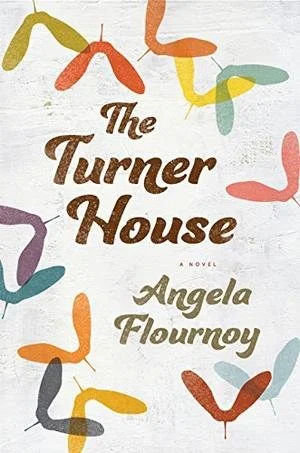
The Turner House     Angela Flournoy (2015) I’m pretty familiar with Detroit, so I can attest that Flournoy has captured the city in its gritty bleakness of the early 2000s as well as, through flashbacks, in its manufacturing glory of the mid-twentieth century. Her angle in is the varying fortunes of the African American Turner family, with thirteen children who were born in the better days and who are aging in the dying urban landscape. Although the cast of characters is huge, Flournoy keeps the plot manageable by developing primarily the stories of the oldest and youngest of this clan. The house that the Turners grew up in is depicted lovingly, as an organism in decline. The Turner House is about working class Detroiters of any race or ethnicity who are trying to maintain family bonds through tough times.

Finally, a re-post of my review of a famous memoir:

Becoming     Michelle Obama     (2018)  The former First Lady’s memoir is as engaging as a page-turner novel; I read it cover-to-cover in one day. This is the same Michelle Obama that you know from talk shows and interviews and from that slam-dunk speech that she gave at the 2016 Democratic National Convention. The cadence of the phrases is the same, the warmth is the same, the frankness is the same. For my full review, click here.

Category Novels, Part Three: Southern Novels

What are Category Novels? They’re fictional tales that I’ve grouped together to help my blog-followers zero in on their preferences. A category might be based on

Most novels fall into more than one of my categories. (To see all of them, on a desktop computer, scroll down and to the right to find the Archive of Book Reviews. On a mobile device, scroll way down.)

My category Southern Novels includes some of my all-time favorite books. Click on the titles below to see full reviews.

News of the World     Paulette Jiles     (2016)  In post-Civil-War Texas, a traveling performer agrees to make a dangerous journey to deliver an orphan to her aunt and uncle. (The film, with Tom Hanks, is also terrific.)

Where the Crawdads Sing     Delia Owens     (2018)  The Marsh Girl roams the lush swamps of coastal North Carolina and meets both friends and foes. Evocative nature prose and a devilish mystery.

Watershed     Mark Barr     (2019)  In 1930s rural western Tennessee, an impoverished agrarian community is confronted with technology that will profoundly change lives.

Heart of Palm     Laura Lee Smith  (2013)  A family tale populated with gun-totin’, hard-lovin’, rip-roarin’ Southerners—plus deftly developed story lines.  


And here is a very recent Southern Novel that I’ve read.

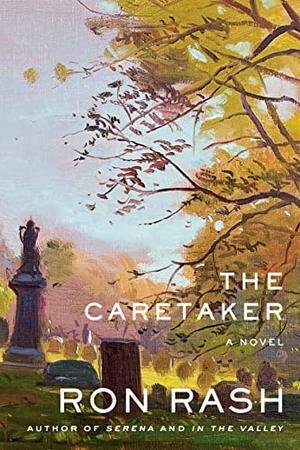
The Caretaker     Ron Rash     (2023) 

Jacob and Naomi Hampton have married against the wishes of Jacob’s well-off parents, who have disinherited him, and Naomi is pregnant when Jacob is drafted to serve in the Korean War. “Caretaker” has double meaning in this superb novel, set mainly in North Carolina. Blackburn Gant is the caretaker for the local cemetery in the small town of Blowing Rock, and he’s also watching out for Naomi while Jacob, his best friend, is off soldiering. The plot gets very thorny when Jacob is wounded in Korea. Novelist Ron Rash, writing in the tradition of John Steinbeck and Carson McCullers, makes you worry about all sorts of terrible denouements, and he adds enough mildly macabre elements to qualify this novel as Southern Gothic. The characters are skillfully drawn, and the language shines with beauty in its spareness.

Repeat Performances

In this post, I review contemporary novels by two authors—Tracey Lange and Dominic Smith—whose previous novels I enjoyed.

The Connellys of County Down     Tracey Lange     (2023)  Let’s clear up one thing right away:  This novel is not set in Ireland, even though I ordered it from my local library thinking it was. Instead, the action takes place in Port Chester, New York, about an hour’s drive northeast of Manhattan. Many of the characters are Irish Americans, and some of their relatives came from County Down in Ireland, hence the novel’s title. Irish folk tales and family stories weave through the narrative, but the main thread is a family-based mystery involving three adult siblings and their secrets. Geraldine, the oldest, is an accounting manager who is in over her head at work and who is still suffering from the effects of having spent her teen years raising her sister and brother. That brother, Eddie, sustained a traumatic brain injury in his youth and is struggling to raise a son as a single parent. But Tara is the sibling who elicits reader sympathy the most. She’s just out of prison, where she was serving a sentence for an offense that was really not her doing. These working-class Connellys live on the edge of poverty in a wealthy New York exurb. The novelist animates them lovingly, faults and all, and constructs a plot that had me racing to the denouement.

In 2022 I posted this brief summary of Lange’s previous novel: 

We Are the Brennans     Tracey Lange     (2021) Moving the plot along mostly through convincing dialog, Lange creates a vivid picture of the present-day Brennan family, pub owners in a town north of NYC. An estranged adult daughter comes home to recover after a serious car accident and gets retangled in family life, with some mystery and some romance enlivening things. The character names are odd, but the story is a winner. 

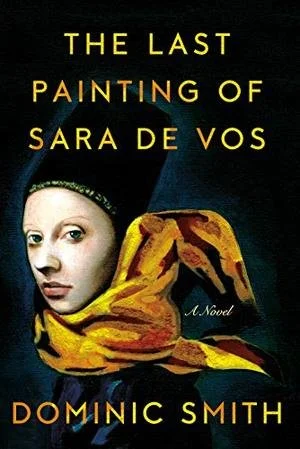
Return to Valetto Dominic Smith (2023) Hugh Fisher, a middle-aged history professor who studies abandoned villages in Italy, is himself Italian American. In his youth, he often visited the nearly deserted village of his ancestors, the (fictitious) Valetto, where his grandmother and widowed aunts, the Serafinos, still live. When Hugh arrives in Valetto on sabbatical in 2011, he finds that the cottage he inherited is already occupied, by Elisa Tomassi. She’s a chef from Milan who claims that the cottage was actually left to her family as thanks for the aid that they gave Hugh’s grandfather during World War II. From this beginning, the novel movingly explores many facets of grief and abandonment:  Hugh is a widower who has also recently lost his mother; Hugh’s grandfather left the family during the war and never returned; Elisa’s famed restaurant burned down, and her husband decamped to London with their son. Truths from Italy’s fascist past come to light and are dealt with at the celebration of Grandmother Serafino’s hundredth birthday. The themes of Return to Valetto overlap with those in another novel by the talented Dominic Smith, The Last Painting of Sara De Vos, which I reviewed at length in 2017.

Category Novels, Part Two--New York Novels

As I explained in my post titled Category Novels, Part One, you can explore any one of the 27 categories of books at I’ve reviewed on this blog, from Mysteries to Family Sagas to Chick Lit. Within these categories there are hundreds of choices! (To find the “Archive of Book Reviews” on a desktop computer, scroll down and to the right. On a mobile device, scroll way down.)

In today’s post, I’m highlighting New York Novels. Ever since I inaugurated my book review blog in early 2017, I’ve had a category with this title—those stories about self-absorbed, wealthy inhabitants of the largest city in the United States. New York City is a publishing hub, and New Yorkers write a lot, so the number of novels set in the city is enormous. I’ve posted 28 full-length reviews of New York novels, not to mention the many brief reviews that you’ll find in the Archive under Snappy Little Reviews.

Click on the titles below to read my extended reviews of three of my favorite historical New York Novels.

The World of Tomorrow by Brendan Mathews (2017)  Rollicking action at the fabulous New York World’s Fair, in June of 1939, when the Great Depression has eased and World War II was still unimaginable to Americans.

Manhattan Beach by Jennifer Egan (2017)  A noir novel with entangled plot lines, mobsters, and plenty of period detail from 1930s and 1940s New York City, especially the Brooklyn Naval Yard.  

The Ninth Hour by Alice McDermott (2017)  The pros and cons of being Catholic in early 20th-century Brooklyn. Exploring the intersections of morality, religion, and culture in resonant language.

And in this extended review from 2017, you can read my rather smug take on Jay McInerney’s contemporary NYC from my perch out in flyover country.

Here’s a brand new review of another novel that takes place in present-day New York City.

Pineapple Street     Jenny Jackson     (2023)  Pineapple Street actually exists in NYC’s Brooklyn Heights (just across the East River from Manhattan) and this novelist’s well-developed characters fit the NYC mold. Each chapter takes the viewpoint of one of three women in the affluent Stockton family. Darley had a high-powered finance job until she reluctantly decided to stay home with her two small children. Her younger sister, Georgiana, works at a nonprofit, despite her generous trust fund, and is ill-fated in love. Sasha, who has a successful graphic arts business, has recently married into the family and is tagged as a gold digger because of her middle-class background. The family story plays out with hilarity, sorrow, and satire. The conclusion of the book endowed some characters with more altruism than I thought was credible, but I nevertheless relished another glimpse into the glamor of NYC.


A Guide for Insomniacs

Hello Sleep: The Science and Art of Overcoming Insomnia Without Medications Jade Wu     (2023)

I’m breaking with the strong trend toward fiction in this blog to review this nonfiction title. I’ve read quite a few other books about sleep and insomnia, but I haven’t reviewed them here because they were either (a) unhelpful or (b) cruel.

I’ve also read countless online articles with recommendations for products or practices related to sleep. In response to these articles, I’ve installed a room-darkening shade, an air filter that doubles as a white noise machine, a highly-rated mattress, an expensive pillow, and an array of natural fiber blankets that can be layered on or peeled away. I’ve used eye masks, over-the-counter medications, and several types of ear plugs. I’ve practiced progressive relaxation, visualization, mindfulness meditation, and counting sheep. Some of these have helped my sleep marginally.  

Hello Sleep is a game changer. Dr Wu, who is a clinical psychologist and behavioral  sleep medicine specialist at Duke University, adopts a conversational tone as she explains how to establish a friendly—rather than an adversarial—relationship with sleep. I bounced around in her book before I then read it front to back, and I recommend reading it front to back, slowly and with attention.

Here are my key take-aways. Yours may be somewhat different, since Wu emphasizes individual differences in sleep.

  • Stop worrying that you are ruining your health because you have insomnia.

  • Distinguish tiredness from sleepiness. Sleep only when you are truly sleepy.

  • Establish set times for retiring and rising. Wu provides clear instructions for determining these times and for calculating your “sleep efficiency.”

  • If you wake in the night, get up and do something calm rather than tossing and turning. (Many other sleep books concur on this one.)

  • During the day, get some exercise and expose yourself to plenty of natural light.

  • Keep your brain from racing at night by spending time in the daytime to reflect on issues in your life. (I would add that handwritten lists help me avoid night-time ruminations.)

  • Don’t place too much trust in recommendations for merchandise that purports to help you sleep. Sure, it’s good to have a dark, cool room with good air circulation, but seeing sleep as your friend is more important.

Dr Wu also has chapters on prescription sleep medications and on medical conditions that can affect sleep.

If you are an insomniac, read this book. You can even read it at 3:00 am when you can’t sleep. Just ignore the lack of a comma in the title.