

November 2025 marked the fiftieth anniversary of the sinking of a very famous freighter in Lake Superior, which is the largest and most northerly of the Great Lakes. Recent nonfiction books about the tragedy include Wrecked: The Edmund Fitzgerald and the Sinking of the American Economy by Thomas M. Nelson and Jerald Podair, and John U Bacon’s bestselling The Gales of November: The Untold Story of the Edmund Fitzgerald. I’ve read excerpts from both these titles, and I recommend them to readers who want all the human-interest details and all the speculation about how the sinking could have been averted. Of course, with this anniversary, there’s also been a revival of Gordon Lightfoot’s classic 1976 folk-rock ballad “The Wreck of the Edmund Fitzgerald,” which can be heard here.
I offer below a review of a historical novel set on Lake Superior long before the Edmund Fitzgerald went down, with all her crew, on November 10, 1975.
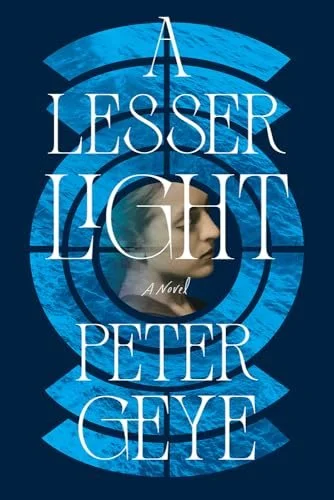
A Lesser Light Peter Geye (2025) I’ve driven and walked for many miles along the shores of Lake Superior, which is more like an inland sea than a lake, with brooding waters and ferocious waves. Lake Superior is this novel’s central character, dictating life and death. The year is 1910, and Theobald Sauer arrives on the south shore of the lake, east of Duluth, Minnesota, to take the post of master lighthouse keeper at a new lighthouse. With him is his bride, Willa, forced into the marriage by financial circumstances and totally unsuited to be Theo’s spouse. Although both Theo and Willa are highly educated, Theo trades in conspiracy theories and religiosity, while Willa looks to science for guidance. Rounding out the cast of characters living near the remote lighthouse are a girl who has “second sight,” her fisherman uncle, the assistant lighthouse keepers and their wives—and wolves. Lots of wolves. The narrative moves very, very slowly, so I’ll admit right here that I skimmed some of the chapters between pages 300 and 400. Still, the novelist’s prose is radiant and his characters, especially that lake, are convincing.