Among My Faves—McCall Smith

The No. 1 Ladies' Detective Agency Series     Alexander McCall Smith

Some of my friends seem abashed to admit that they read a “soft” author like Alexander McCall Smith. His novels run around 225 pages, with simple plots, mostly lovable characters, and generally happy endings. I can consume one in an evening, and I relish every minute of it.

McCall Smith writes most of his books in series, so you get to know the characters and want to find out the next events in their lives. You can, however, select any book from a series as your first foray, and McCall Smith will provide you enough background to get oriented. I’ve reviewed two of his series previously on this blog:  the Isabel Dalhousie series and 44 Scotland Street series. But the grandmother of them all is McCall Smith’s No. 1 Ladies’ Detective Agency series.

McCall Smith 3.jpg

The No. 1 Ladies Detective Agency series is set in Botswana, where McCall Smith taught law in the 1980s and for which he plainly has a great affection. After I’d read a couple of the Botswana novels, I educated myself about this nation in southern Africa (bordered by South Africa, Namibia, and Zimbabwe), to get some context. Since Botswana is at 24 degrees south of the equator, and since the Kalahari Desert makes up about 70% of its territory, you’ll find ample references in the novels to hot, dry, dusty, sunny weather conditions. Thanks to cattle farms and the mining of gemstones and precious metals, the economy of Botswana is especially strong, and residents enjoy a good standard of living, especially with respect to education and health care. Still, the AIDS epidemic has hit the country hard, so a recurring feature of McCall Smith’s books is an orphanage that shelters children whose parents have died from AIDS. The Tswana African people are the predominant ethnic group, and Christianity is the predominant religion. English is the official language of Botswana, but you’ll find honorifics in the Setswana language:  “Mma” for women and “Rra” for men. You’ll also find the English adjective “late,” referring to the deceased, used not only as a modifier (“her late father”)  but also as a predicate adjective (“her father was late”). 

Zooming in to the series, you’ll meet Precious Ramotswe, the owner of the No. 1 Ladies’ Detective Agency in the capital, Gabarone, a bustling city with a mix of Western amenities and traditional African dwellings and family affiliations. Precious, who is 34 at the start of the series, was raised primarily by her beloved Daddy, the cattle farmer Obed, in a rural village. Although she had a happy childhood, she married the musician Note Mokote, who physically abused her and then abandoned her, leaving her unable to bear children. When her father dies, Precious is able to sell some of his herd to launch her business, the first detective agency in Botswana. She hires the capable Grace Makutsi as her secretary and sets up an office near the auto repair shop of  JLB Matekoni, an excellent mechanic. The detective agency usually takes on cases that involve domestic or business problems—cheating spouses, thieving employees, missing persons, petty vandalism.

Although Mma Ramotswe does thorough surveillance and research, she also applies levelheaded thinking to solve the cases, and she encourages her clients to utilize compromise or forgiveness as part of the solutions. Readers have access to her thoughts as she ponders motives and ethical challenges. McCall Smith’s specialty in his years as a law professor was ethics, and through Mma Ramotswe’s cases he presents many moral quandaries. Is a legal approach or personal reconciliation preferable? What are appropriate punishments for various degrees of crime? How have societal views of women affected attitudes toward domestic violence? At a much lesser level, what should the response be to a coworker who is good hearted and efficient but irritating in manner? These are the kinds of tough questions that underlie the easygoing banter of McCall Smith’s dialogues. He paints scenes of kindness, but not without pushback on ethical issues. Oh, and there’s romance in some of the novels, too.

McCall Smith churns out writing at a prodigious rate. Remember that he’s publishing books in several other series at the same time as he’s writing more for The No. 1 Ladies’ Detective Agency series. In addition to the two series I’ve mentioned above, he has books in the Corduroy Mansions series and in the Portuguese Irregular Verbs series. He’s also written versions of African folk tales for children, and he’s produced half a dozen freestanding novels for adults. I’d recommend steering away from the freestanding novels, which vary in quality.

But the No. 1 Ladies’ Detective Agency series is highly recommended. I offer the list to date below. At your library or book store, be sure to look under “M” for “McCall Smith,” since that’s his full, unhyphenated surname.

  • The No. 1 Ladies’ Detective Agency (1998)
  • Tears of the Giraffe (2000)
  • Mortality for Beautiful Girls (2001)
  • The Kalahari Typing School for Men (2002)
  • The Full Cupboard of Life (2003)
  • In the Company of Cheerful Ladies (2004)
  • Blue Shoes and Happiness (2006)
  • The Good Husband of Zebra Drive (2007)
  • The Miracle at Speedy Motors (2008)
  • Tea Time for the Traditionally Built (2009)
  • The Double Comfort Safari Club (2010)
  • The Saturday Big Tent Wedding Party (2011)
  • The Limpopo Academy of Private Detection (2012)
  • The Minor Adjustment Beauty Salon (2013)
  • The Handsome Man’s Deluxe Café (2014)
  • The Woman Who Walked in Sunshine (2015)
  • Precious and Grace (2016)
  • The House of Unexpected Sisters (2017)

Video side note: In 2008-2009, BBC/HBO broadcast seven episodes of a  television series loosely based on the early books about The No. 1 Ladies’ Detective Agency. I found that these episodes, filmed in Botswana, admirably captured the spirit of the books. 

Bonus Post: A Woman in the Chem Lab

Chemistry     Weike Wang     (2017)

Wang.jpg

Don’t let this book fool you. The simple declarative sentences and frequent thematic tangents might lead you to believe that it’s the work of an unsophisticated novelist. Not so. Weike Wang makes her readers think hard about the role of immigrants in American society, about the difficulties that women (of any race) face in choosing careers in the sciences, and about the tensions between the personal and the professional in the lives of talented people.

No one in Chemistry except the narrator’s boyfriend, Eric, is given a name, which emphasizes the universality of this tale. The first-person narrator is a young woman who should be heading into her final year of a doctoral program in chemistry at a prestigious university—never named but presumably Harvard. She’s Chinese American, brought to the United States as a young child and raised by parents who would make Amy Chua of Tiger Mother fame seem tame. Boyfriend Eric is a paragon, a white guy who has had spectacular success in pursuing science degrees and who is just embarking on what will undoubtedly be a rewarding academic career. He wants to marry the narrator, but she demurs, worried about forfeiting her intellectual capacity. Added to this tension is a side plot about the narrator’s best friend, a physician in New York, who talks to the narrator frequently on the phone. On the edges of the novel are also students whom the narrator tutors in math and science topics.

Readers glimpse about two years of the narrator’s life, as she gets counseling to help with her decisions, eats a great deal of carryout pizza, drinks too much wine, and muses about scientific topics ranging from the details of electrical circuitry to the discovery of radium. Should she plow on with the doctorate even though the highly competitive lab work no longer gives her any joy? Should she marry Eric, a man very well suited to her personality and intelligence, even though he can never fully understand her family’s culture and language? If she doesn’t pursue chemistry, what should she do with her life? And if she moves to the Midwest to follow Eric, should she take her comical, untrainable dog with her?

The narrator touches on these questions, wanders off, and then circles back to them. Chemistry doesn’t give readers all the answers, but that’s it’s charm. And Weike Wang is an author to watch.

Brazil, Early 1960s

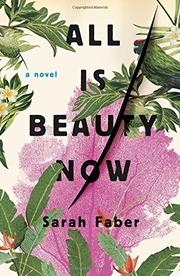
All Is Beauty Now     Sarah Faber     (2017)

Faber.jpg

Historical facts that I learned from this novel:  After the American Civil War, somewhere between 10,000 and 20,000 Southerners fled to Brazil, where slavery was still legal and where the Brazilian government offered them incentives to settle. These immigrants, called the Confederados, and their descendants lived in enclaves, mostly near Rio de Janeiro and Sấo Paulo. Although there was considerable intermarriage with Brazilians over the decades, Confederados were an identifiable ethnic group in Brazil as late as the 1960s and 1970s.

Dora, a descendant of Confederados, is married to Hugo, a handsome Canadian engineer. They live outside Rio and have three daughters. In the opening pages of All Is Beauty Now, the eldest daughter, Luiza, disappears while swimming in the South Atlantic in March 1962. Canadian novelist Susan Faber slowly unfolds the back story to this disappearance, probing deeply into the psyches of each of the five members of the family. The chapters move forward and backward in time and switch off among characters. It soon becomes apparent that Hugo’s mental illness is a catalyst for many other actions in the plot. Hugo would likely be diagnosed today as having bipolar disorder, but in the early 1960s the term did not exist, nor did effective treatments.

I dipped into All Is Beauty Now over a period of several weeks, soaking up descriptions of the white-sand beaches and lush gardens, the wild riotousness of Carnival, the extravagance of the nightclubs in Rio. Hugo finds that, compared with Canada, “Rio was a demented Eden, crackling with newness and feeling . . . Here, below the equator, as the Brazilians say, there is no sin.” (37)

Beneath the surface issue of Luiza’s presumed drowning, Faber analyzes, perhaps in too much detail, the effect of Hugo’s mental state on his family and on others around him. The question of drug treatment for Hugo is fraught. For example, in a flashback, Luiza asks herself, “What if the doctors stripped away his moods, then found there was nothing left?” (55) As the family prepares to move to Hugo’s native Canada to seek better care for him, Dora muses on the luxury of having servants in Brazil:  “When the Confederados arrived in Brazil, her father told her, they found cockroaches the size of a fist, and mosquitoes carrying dengue, malaria, encephalitis. A third of her ancestors died; a third went home, and accepted Northern rule; a third stayed, thrashed and coaxed the landscape. And now she, their descendant, can do almost nothing for herself, by herself. Some part of her is grateful that Canada will be hard. Perhaps all that labour will wash away the slick sheen of her advantages.” (260)

Faber’s prose ranges from languid to exotic in this melancholic novel. The pacing of this novel is very slow, totally unhurried, like a drowsy day on a magnificent beach. But the ocean can sweep anyone away with cruel rapidity.

Moral Quandaries in Berlin, Part I

Go, Went, Gone     Jenny Erpenbeck     (in German, 2015)

Translated by Sarah Bernofsky     (in English, 2017)

Erpenbeck.jpg

Richard is retiring from his position as a classics professor in Berlin. In his university office, he packs up books, clears out drawers, sorts stacks of papers. His next steps are somewhat unclear, both to him and to us as readers. Maybe he’ll write some journal articles. Maybe he’ll kick back and take his boat out on the lake on which his suburban house is situated. Richard is a widower with no children, no close family, and an ex-mistress who is no longer part of his life; he does have a good circle of friends.

By chance, Richard walks by some refugees who are protesting the poor living conditions in a ramshackle tent village in a city park. In Germany, the refugee crisis is not abstract but obvious from makeshift camps and from daily news reports. Ever the academic, Richard wonders about the backgrounds of the refugees flooding his country. He decides to do some background reading, particularly on conflict in African nations, and he draws up a list of questions to ask individual refugees from Africa. It’s unclear what the end product of this “research” will be. Will he produce some written piece? If so, will he come down as pro-refugee or anti-refugee?  Without much trouble, Richard gains access to a group of African refugees housed in an abandoned building near his home, and he starts working through his question list. (I’ll pass over the potential ethical issue of failing to seek permission for doing research on human subjects!)

Go, Went, Gone holds many layers of meaning, and as a reader you can unpeel as many of these as you want. For instance, as Richard gets more and more involved with the refugees, he’s reminded of lines in classical literature that speak to moral quandaries. He’s trying to figure out how Germans should respond to the situation, all the while Erpenbeck reminds us, by brief references to online forums, of a thriving racist element in German society.

The novel is set in the present day, but the fall of the Berlin Wall in 1989 has left residual tensions between West and East, between capitalism and communism. Richard lived for decades under an oppressive regime in East Berlin, so he’s receiving a pension that’s significantly less than that of his counterparts who worked in West Berlin. Still, in some ways he’s a beneficiary of the removal of the Wall:  “Who deserves credit for the fact that even the less affluent among their circle [in the former East Berlin] now have dishwashers in their kitchens, wine bottles on their shelves, and double-glazed windows? But if this prosperity couldn’t be attributed to their own personal merit, then by the same token the refugees weren’t to blame for their reduced circumstances. Things might have turned out the other way around. For a moment, this thought opens its jaws wide, displaying its frightening teeth.” (95)

As Richard’s views on the refugees are slowly, slowly developing, small incidents take on larger meaning. Here it’s windblown dust on leaves: “The Sirocco . . . came from Africa and across the Alps, sometimes even bringing a bit of desert sand along with it. And indeed, on the leaves of the grapevines you could see the fine, ruddy dust that had made its way from Africa. Richard had run his finger across one of the leaves and observed how this small gesture produced a sudden shift in his perspective and sense of scale. Now, too, he is experiencing such a moment; he is reminded that one person’s vantage point is just as valid as another’s, and in seeing, there is no right, no wrong.” (55) Bodies of water take on a liminal quality, marking some critical transition. Richard thinks often about the lake in his backyard, which holds the body, never found, of a man who presumably drowned a couple of months before the novel begins. This sad fact reminds Richard of the thousands of refugees who’ve drowned in dangerous crossings of the Mediterranean.

Novelist Erpenbeck could easily have slid into didacticism or preachiness, but she doesn’t. She juxtaposes the quotidian activities of Richard’s life (making toast, taking his car in for service) with his increasing existential concerns about the direction of his life and the direction of the world around him. She presents the refugees mostly as benign figures, victims of civil wars or sectarian repression in their native countries, but not every refugee is honest or honorable.

Sarah Berofsky’s translation of this novel is exceptionally good, especially considering the difficulties of dealing with characters who are presented as speaking in many different languages. Richard himself speaks German, English, Russian, and Italian, in addition to his fluency in ancient Greek and Latin. He communicates with the refugees mostly in English and Italian—many of them crossed the Mediterranean and landed first in Italy. They work hard to learn the language of each country they arrive in, with the hope of remaining. The “go, went, gone” of the title refers to their language learning, since the conjugation of the German verb for “to go” (gehen, ging, gegangen) is important to eventual fluency. The title also refers to the constant “going” of the refugees, their peregrinations from one European nation to another, from one government office to another, from one squalid camp to another, in hopes of finding asylum and work.

Very few books written in other languages get translated into English. I try to report on a few of them on this blog, to reveal non-Anglophone patterns of thought. Go, Went, Gone is a brilliant and profound novel that you should not miss.

Watch for my upcoming review of Here in Berlin by Cristina García, under the heading "Moral Quandaries in Berlin, Part 2."

20th-Century British Women

Freya     Anthony Quinn     (2017)

Quinn.jpg

My household has a treasured old photo of my husband’s parents in a restaurant on VE Day. My father-in-law is in Navy uniform, and a newspaper proclaiming “Victory in Europe” in World War II is on the table in front of the smiling couple. Roving photographers across the United States probably captured many scenes like this.

May 8, 1945, must have been even more joyous for the people of Great Britain, who had endured six years of war, including widespread bombings of civilian targets and the constant threat of German invasion. Anthony Quinn captures the exuberance of VE Day in London with the opening scenes of his novel Freya. In the celebratory crowd, the title character, Freya Wyley, meets Nancy Holdaway, and this meeting sets in motion a long and fraught friendship.

Freya is already a military veteran at age 20, having served for three years in the Wrens, the Women’s Royal Naval Service, as a radar plotter. This background is key to understanding her career motivations. She was entrusted with highly classified and complex tasks to further Britain’s war effort, often putting in fifteen-hour shifts, but at the end of the war, the need for women to perform such work evaporated. Civilian jobs went to male soldiers returning from battle. Freya had gotten a taste of high-powered career possibilities and had engaged in several brief affairs, so the prospect of attending tradition-steeped Oxford University, which had been holding a place for her, seems, in her words, “trivial.” (22)

“To her the undergraduate routine felt becalmed after the frenetic rhythms of wartime; she missed the perilous excitement of being always on-call in the Wrens. . . It was not the war she wanted back but the sense of a shared endeavor, of knowing her own role in the grander scheme and being good at it . . . It also disheartened her to realise that the age-old accommodations of male chauvinism had not been eradicated by war—merely displaced.” (108)

On that fateful VE Day in 1945, Nancy, at age 18, is fresh out of secondary school in the north of England and is thrilled to be headed to Oxford. To Freya, Nancy at first seems hopelessly naïve and introverted, but as the story unfolds, it’s clear that Nancy has a depth and solidity of character that Freya lacks. Freya is strong-willed and ambitious, priding herself on her verbal banter and profanity, traits that sometimes made me want to grab her by the shoulders and tell her to shut her sassy mouth. Both young women aspire to be writers—Freya as a journalist and Nancy as a novelist.  

In three segments, this novel traces the relationship between Freya and Nancy:  at Oxford right after the war, in London in the late 1950s, and again in London in the early 1960s. The power dynamic between the two women shifts back and forth as each builds her career. Freya senses this early on, as Quinn notes: “It was an enlivening sense of being admired, perhaps even adored, and in consequence a desire to justify that admiration by becoming a cleverer and wiser person than she actually was. She supposed this striving for a better self was rather like being in love.” (77)

Larger-than-life supporting characters enliven the tale, including the louche actor/writer Nate Fane, the dissolute photographer Jerry Dicks, and the befuddled young model Chrissie Effingham. The names of these characters alone will point you to their personalities—“fane” quite close to “fame”  and so on. Freya, Nancy, and the crew get involved in fictionalized versions of the British events of the era, including political sex scandals and criminal prosecutions of gay men. (Some of these events could have been lifted right out of the 1983 biography of Alan Turing by Andrew Hodges, made into the film The Imitation Game in 2014.) All along, Quinn dissects the roles of women in post-World War II Britain with surprising insight.

Freya is oversized in many ways, including its length (556 pages) and theatricality, so I consumed it in great gulps. Although the novel is dialogue driven, Quinn’s prose descriptors are arresting. Here’s one example:  “He was wearing an undershirt and grey trousers with thin braces pooling about his waist like the dropped strings of a marionette.” (258-9) The cover photograph, which does not at all resemble the Freya described in the text, is a disappointment. The publisher, Europa, tends to use vintage photos for its covers, usually with more success.

In recent years, several excellent BBC television series have been set in the 1950s and early 1960s, including Grantchester, The Hour, and Call the Midwife. If you’re a fan of any of these, you will likely enjoy the novel Freya as much as I did.

Lonely French Siblings

How to Behave in a Crowd     Camille Bordas     (2017)

Bordas.jpg

Isidore Mazal starts narrating this novel as a beleaguered eleven year old, and he tells us about the next couple of years of his life. He lives in France with five siblings; four of the siblings are in their twenties, working on advanced degrees, and they never come into sharp character focus. We do get a good picture of his sister Simone, who is only eighteen months older than Isidore but far ahead of him in school. Simone, like the rest of the family, calls her brother “Dory” despite his requests to be called “Izzy.”  She insists that he take notes for the biography of her that she assumes he will write once she’s famous. She comes right out and tells him, “I take it for granted that you’re gonna love me no matter what. I don’t do anything for it.” (101)

The five older children in the unusual Mazal family are academic prodigies, while Isidore is merely smart. He does fine in his grade level at school, but he’s also smart in ways that his family members don’t appreciate. He’s very observant of the situations around him. This is especially apparent during his many unsuccessful attempts to run away from home; his family scarcely notices that he’s left the house. When, early in the book, his father dies suddenly of a heart attack while on a business trip, Isidore catalogs the grief patterns of his mother and siblings. He tells us, “Because we never talked about the father—the fact that he was dead, the fact that he’d once been alive—saying the word dad itself felt out of place, or like I might’ve used it wrong.” (120) That’s a lot of alienation for a kid in adolescence.

You may notice in this quote about his parent that Isidore shies away from the term “dad,” using instead “the father.” This Francophone locution, found throughout the book, points up not just the estrangement that Isidore feels from his distant—and then deceased—father but also the mix of French and American language and cultural references  in the novel. I wasn’t bothered by it, but some other reviewers found it jarring. It may help to know that Bordas was born in France and has written two previous novels in French, but now lives in Chicago. She creates a generic France, perhaps from her memories.

Isidore’s observations, and his repeated attempts to offer his family an emotional compass for life, are poignant. Someone needs to help those friendless siblings, those pitiful sloggers in academia. In addition, Isidore does his best to cheer up Denise, a girl at his school who suffers from severe depression. His compassion is remarkable, given the cheerless atmosphere of his home. Simone explains to Isidore: “There’s a big drawback to being smarter than the rest, and I’ll tell you what it is, because I assume it will be in part responsible for the kind of person I’ll become: loneliness.” (50) Truly, most of the Mazal family does not know how to behave in a crowd.

I have a few reservations about this novel. Some of the witty repartee goes on too long, as do didactic components that don’t fit the flow of the narrative. For example, Isidore’s middle-school German class carries on a long discussion of Bertolt Brecht’s concept of the Verfremdungseffekt. (Don’t ask! Yawn, skip a page or two!) But novelist Bordas sparks up the story with side plots such as Simone’s unwanted pen pal and the town’s celebration of the oldest woman in the world. Overall, How to Behave in a Crowd is a pleasant little novel with an appealing hero.

A Connecticut Family

The Children     Ann Leary     (2017)

Oh, no, I thought—another fluffy tale of wacky, self-absorbed New England trust-fund kiddies seeking personal gratification at the expense of those around them. I almost sent The Children back to the library. But I kept reading and watched the plot twisting, folding back on itself, and finally turning dark, very dark. The fluff definitely receded.

Leary 2.jpeg

You have to pay close attention up front to sort out all the family connections in this novel. Charlotte Maynard, a 29-year-old single, agoraphobic woman, is one of the kiddies and is the narrator of The Children. She lives in a huge Connecticut house named Lakeside with her zany mother, Joan, who exercises excessively and pinches pennies ludicrously. Charlotte is involved intermittently with Everett, the groundskeeper at Lakeside. Charlotte’s sister is Sally, a gifted musician with mental health problems. Stepbrothers Spin and Perry Whitman are offspring from Charlotte’s stepfather’s first marriage, which ended acrimoniously when the stepfather, Whit Whitman, fell for Joan. As the novel opens, Whit has recently died, and the family dynamics are reshuffling. Got all that?

Spin, who teaches and lives at a nearby private school, arrives at Lakeside with a girlfriend, Laurel Atwood, who is preternaturally accomplished in skiing, fiction writing, and life hacks. Laurel’s life hacks veer daringly into illegal territory. Charlotte doesn’t see this as a problem, because she herself runs a profitable internet scam, a fake “mommy blog” with corporate sponsorship. But Sally, who is back at Lakeside from New York after losing her orchestra job, has serious reservations about Laurel.

This is the setup, but I won’t spoil the plot development for you. Author Ann Leary takes the basic framework  in directions you’d never expect, with characters who are believable despite—or maybe because of—their oddities. We see people and events through the eyes of Charlotte, which creates a layer of reportorial unreliability, since Charlotte is an admitted scammer. Through Charlotte, Leary pokes fun at several aspects of contemporary culture, especially internet culture. For example, Charlotte’s wildly successful blog revolves around children whom she’s invented (another reference to the novel’s title), and Leary revels in skewering the blog’s fervent mommy-followers. The technological references, which are up-to-the-minute as of 2017, may soon date this novel, but for now it’s trendy in a good way.

The pace of The Children is fast, the dialogue is clever and authentic, and the storyline is well executed. I see the novel as a work of warning about the consequences of seemingly innocuous lies and the seeming innocuousness of consequential lies. The human heart can have unexpectedly sinister depths. That’s the dark part. Yet Charlotte reminds us that we can always count on the stars, which are as stable as it gets in our universe. “Once you find Polaris, you’ve found true north. You can navigate anywhere from there.  Find a landmark . . . You have to find a hill or a house or a tree while it’s still dark; that way you’ll be oriented the next day, when the stars are gone.” (245)

Bonus Post: 2 International Novels

Spring Garden     Tomoka Shibasaki    (2014)

Translated from the Japanese by Polly Barton     (2017)

Shibasaki.jpeg

In bustling present-day Tokyo, Taro is a loner. He’s in his thirties, divorced, and living in an apartment building that will be torn down as soon as the leases of the last few tenants expire. Taro’s entire neighborhood is undergoing change, with other buildings slated for demolition and with constant construction work at the commuter train stations. As people in his building move out, the only remaining inhabitants besides Taro are a comic-book artist named Nishi and a retired woman whom Taro calls “Mrs. Snake,” after the zodiacal designation on her apartment door. Despite Taro’s resistance to social interaction, the three neighbors get to know each other, exchanging small gifts in the Japanese custom. Nishi reveals to Taro her obsession with a large sky-blue house nearby, and she gives him a copy of a photography book, called Spring Garden, that was published many years previously about the house. Very gradually, Taro also becomes interested in the house and its current residents. That’s the basic story, and every element of the plot’s unfolding is delicately and purposefully executed. 

The lovely house serves the purpose of getting Taro out of his isolation to some degree. Writer Tomoka Shibasaki is finding a way to tell us about Taro’s deep unhappiness. His beloved father has died, his marriage has collapsed, and even his physical surroundings are disintegrating. He’s so sad that he doesn’t realize that he’s sad. Even if you live in one of the world’s most exciting cities, even if you have a decent professional job and friendly colleagues and neighbors, you can feel alienated and depressed.

This wisp of a book—a novella really—won the prestigious Akutagawa Prize in Japan. It’s been artfully translated by Polly Barton, retaining the spare feel of a Japanese garden but rendering the dialogue in idiomatic English. You can read it in a couple of hours, but it will stay with you for a long time.

Three Floors Up     Eshkol Nevo     (2015)

Translated from the Hebrew by Sondra Silverston     (2017)

Nevo.jpg

From the suburbs of Toyko in the book reviewed above, we go to the suburbs of Tel Aviv for Three Floors Up, a trio of linked novellas about the residents of another apartment building. This is an upper-middle class neighborhood, mockingly called “Bourgeoisville” by some.

Arnon, on the first floor, is a businessman who is obsessed with the possibility that an elderly neighbor who often babysits for the family has sexually assaulted his young daughter. This obsession gets tangled up with Arnon’s relationship with his wife and his sexual attraction to the neighbor’s teenaged granddaughter.

Hani, on the second floor, worked as a graphic designer until her two children were born. Now she’s a stay-at-home mother who is stifled by the role, especially because her husband travels internationally for his work and is frequently away. The defining event for Hani is the appearance of her husband’s brother at her door, on the run from creditors and the police.

Devora, on the third floor, has recently been widowed and is estranged from her son. A retired judge, she’s casting about to find meaning for the remaining years of her life, so she marches in a political demonstration and meets characters who lead her in directions that she never anticipated. Devora has been reading Freud, and (speaking, of course, for the author) she gives us a Freudian interpretation of Three Floors Up:  “The first floor, which he [Freud] called the id, contains all our impulses and urges. The middle floor is the ego, which tries to mediate between our desires and reality. And the uppermost level, the third floor, is the domain of His Majesty, the superego, which calls us to order sternly and demands that we take into account the effects of our actions on society.” (211)

Each story in Three Floors Up is told in first person, with the person speaking to someone else—Arnon to an old Army buddy at a restaurant, Hani to a childhood friend in a long letter, and Devora to her late husband through an old answering machine. I found this approach somewhat contrived until I read the explanation, which is contained in Devora’s further analysis of Freud:  “I thought that he made one mistake. The three floors of the psyche do not exist inside us at all! Absolutely not! They exist in the air between us and someone else, in the space between our mouths and the ears we are telling our story to. And if there is no one there to listen—there is no story. . . . alone, a person has no idea which of the three floors he is on, and he is doomed to grope in the dark for the light switch.” (281)

I recommend that you read each segment of Three Floors Up in one sitting; ideally, read the entire book in one sitting so that you catch all the tiny links. Novelist Eshkol Nevo deftly probes the profound and yet tenuous connections between family members, neighbors, friends, and total strangers. At the end of the book, you may question how honest the three speakers were in telling their stories, you may think about what their next steps will be, and you may wonder how you would handle their predicaments.

Two Multi-Biographies

The Kelloggs:  The Battling Brothers of Battle Creek     Howard Markel     (2017)

Markel.jpg

In the small southwestern Michigan city of Battle Creek, two brothers distinguished themselves in separate but related arenas. John Harvey Kellogg (1852-1943), a physician and author, established the Battle Creek Sanitarium (“the San”) in 1878, treating thousands of patients and promoting some surprisingly prescient wellness regimens on both dietary and exercise fronts. Will Keith Kellogg (1860-1951) founded the Battle Creek Toasted Corn Flake Company (now the Kellogg Company) in 1906, revolutionizing breakfast foods through manipulation of ingredients and industrial mass production.

Both brothers were raised as Seventh-Day Adventists and sought, at least early in their careers, to advance the tenets of this faith, which encourages regular physical exercise and prohibits meat, tobacco, sugar, caffeine, and alcohol. John and Will experimented extensively to find food products that would be acceptable to Adventists and that would also encourage “biologic living” in the general population. Two strong-willed characters, they frequently clashed, and Will finally left his position as business manager of the San to go national with corn flakes, the cereal that seems to have been a joint invention. In the 1920s, John became involved with the eugenics movement and set up the Race Betterment Foundation; medical historian Howard Markel treats frankly the brutal racism inherent in eugenics theory, now scientifically discredited. Although John’s Sanitarium buildings were sold off in 1942, Will’s food empire continues to this day, as does the humanitarian WK Kellogg Foundation that he created with his massive profits.

In researching this book, Markel did not have access to the many private documents that Will Kellogg placed in a highly restricted archive at the WK Kellogg Foundation, yet this dual biography is exhaustive, drawing on numerous other archival sources. I was especially taken with Markel’s background information on nineteenth-century dietary, public health, and medical practices and with his explanations of the grain-processing machinery that the Kelloggs invented by trial and error. I decided to overlook occasional outlandish analogies. (One painful example: Will was “slower to pardon than most glaciers used to melt.” 336) The Kelloggs is not only a lively and fair-minded story about two dynamic, flawed men but also an absorbing chronicle of their era.

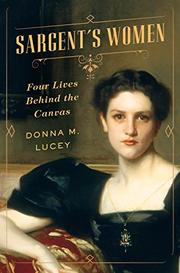
Sargent’s Women: Four Lives Behind the Canvas    Donna M. Lucey     (2017)

Lucey.jpg

If you like Gilded Age gossip, this is a multi-biography that you may want to read. I thought it would be focused primarily John Singer Sargent’s relationship with four of his female subjects, whose portraits are widely known and reproduced:  Elsie Palmer, Sally Fairchild, Elizabeth Chanler, and Isabella Stewart Gardner. (That’s Elizabeth Chanler on the cover of the book.) Sargent painted portraits of these wealthy American women between 1888 and 1922, but in fact his contact with them outside his professional role was fairly limited.

So . . . what this book does offer is a view into the excesses that the upper classes indulged in during a period of American industrial expansion and political corruption. Oddly, the chapter that is supposed to be about Sally Fairchild is devoted almost entirely to the biography of her sister, Lucia, whose portrait Sargent did not paint. My favorite section was the one on Isabella Stewart Gardner, whose private art collection became the famed art museum in Boston that bears her name. Do watch out for typos and small errors in this book as well as in the Kellogg book reviewed above.  

Bonus Post: Big Data

Everybody Lies:  Big Data, New Data, and What the Internet Can Tell Us about Who We Really Are     Seth Stephens-Davidowitz     (2017)

Davidowitz.jpg

Forget all those social science surveys that ask 200 people about their sexual preferences or their attitudes towards those outside their own racial group. Everybody lies, or at least enough people lie to make the results of such surveys highly suspect. We also lie to our families, to our friends, and to our doctors. This is the message from economist Seth Stephens-Davidowitz, who mines vast troves of anonymous data from Google searches, social media sites, and similar sources to try to get closer to the truth.

Stephens-Davidowitz has an engaging way of presenting the complex statistical analyses that he performs. He proceeds by topic, telling stories that uncover fallacies in our assumptions about subjects such as prejudice, child abuse, abortion, economic mobility, and basketball stardom. For example, there’s an assumption that African American boys from impoverished neighborhoods have a good chance of making it in the National Basketball Association. Stephens-Davidowitz crunches the Big Data and finds that it’s actually mostly middle-class African American boys who succeed in basketball, though there are notable exceptions, like LeBron James.

The analyses of Americans’ views on race—particularly in relation to the presidential elections of 2008, 2012, and 2016—are enlightening. Stephens-Davidowitz studied millions of Google searches for such topics as racist jokes, as well as the rise of the website Stormfront, which he describes as “America’s most popular online hate site” (137). He concludes, “Trump rode a wave of white nationalism. There is no evidence here that he created a wave of white nationalism. Obama’s election led to a surge in the white nationalist movement. Trump’s election seems to be a response to that.  . . .States disproportionately affected by the Great Recession saw no comparative increase in Google searches for Stormfront.” (139) In other words, racism has probably played a larger role than economic hardship in recent elections.

To his credit, Stephens-Davidowitz does not view everything through the lens of the internet. “The Big Data revolution is less about collecting more and more data. It is about collecting the right data. But the internet isn’t the only place where you can collect new data and where getting the right data can have profoundly disruptive results.” (62) He recounts the story of how one horse enthusiast’s meticulous data collection about the physical characteristics of race horses led to a highly accurate method for predicting winners.

Stephens-Davidowitz does touch on the issue of the ethics of tapping Big Data for understanding human nature, particularly with respect to financial transactions. “Do we want to live in a world in which companies use the words we write to predict whether we will pay back a loan? It is, at a minimum, creepy—and quite possibly, scary.” (260) He also has plenty of cautions against confusing correlation with causality. But I would have liked to see more discussion in this book about the ethical implications of using Big Data in the first place. Do we give up all our rights to privacy when we initiate a search on Google, even if big data is supposedly anonymous? Where are the protections for human subjects that are required in more conventional social science surveys? How can we be sure of the motives of the data seekers typing in those Google queries?

And what about corporate abuse of Big Data?  Stephens-Davidowitz says, “Data on the internet . . . can tell businesses which customers to avoid and which they can exploit. It can also tell customers the businesses they should avoid and who is trying to exploit them. Big Data to date has helped both sides in the struggle between consumers and corporations. We have to make sure it remains a fair fight.” (265) I’m skeptical that consumers can be protected against corporations in the current political climate. And the conclusions that Stephens-Davidowitz presents about Americans’ racial prejudices must be pretty disheartening to anyone interested in societal equity and social justice. All the more reason why you should read this important book, which explains an effective means of probing the truth beneath the lies that everybody tells.

This post was a mid-week bonus. Come back to the Cedar Park Book Blog on Friday for the regular post!

Two from the Bascombe Tetralogy

The Lay of the Land     Richard Ford     (2006)

Let Me Be Frank With You     Richard Ford     (2014)

These books are the third and fourth in Richard Ford’s tetralogy that follows the adult life of the character Frank Bascombe. Some background:

  • In the first novel of the series, The Sportswriter (1986), Frank is deep in grief over the death of his young son and his subsequent divorce from his wife. Although he had wanted to write fiction, he’s turned to writing about sports to support himself.
  • In Ford’s second offering, Independence Day (1995), Frank has changed careers and is selling real estate in New Jersey. This novel, which won both the Pulitzer Prize and the PEN/Faulkner Award for Fiction, is set at the titular American holiday.
  • Holiday celebrations, which often cause simmering family tensions to boil over, figure prominently in all four books about Frank. An Easter dinner is a key scene in The Sportswriter, and the two books that I’m reviewing here are set at Thanksgiving (The Lay of the Land) and during the Christmas season (Let Me Be Frank With You).
Ford Lay of Land.jpg

In The Lay of the Land, the political backdrop is the contested presidential election of 2000, which was still not decided by Thanksgiving of that year, so tension and accusation and fear are in the air. As always, Ford’s focus is on Frank Bascombe’s inner life, narrated in first person. Speaking to his adult daughter, Clarissa, Frank says, “I’ll commit suicide before I keep a fucking diary. Diaries are for weaklings and old queer professors. Which I’m not.” (240) And yet this entire novel is like a very detailed, highly reflective diary. Frank is now fifty-five and married to his second wife, Sally Caldwell. He’s recently been treated for prostate cancer at the Mayo Clinic. You might find Frank’s trips to the toilet tiresome, but his need to empty his bladder frequently is a constant reminder of the threat of death that hangs over him.

He calls this phase of his life “the Permanent Period—no fear of future, life not ruinable, the past generalized to a pleasant pinkish blur.” (249) There’s a fatalism to Frank’s categorization of late middle age in this way. He’s still selling real estate, though he does have occasional regrets about giving up his dream of writing fiction. He rationalizes: “Realtors share a basic industry with novelists, who make up importance from life-run-rampant just by choosing, changing and telling. Realtors make importance by selling, which is better-paying than the novelist’s deal and probably not as hard to do well.” (84)

The Lay of the Land is expansive, exhilarating, and sometimes exhausting. It’s the work of an accomplished prose stylist who gives us a view into an ordinary life on ordinary and non-so-ordinary days. The exquisite specificity with which Frank describes his surroundings contrasts with his inability to connect with some people. These people are sometimes fairly conventional—like Sally—and sometimes quite unusual—like the Tibetan Buddhist with the Americanized name, Mike Mahoney, “a five-foot-three-inch, forty-three-year-old realty dynamo” (14) who works for Frank’s real estate office on the Jersey Shore.                                 

Ford Frank with You.jpg

The theme of Frank’s relationships is developed further in the most recent volume of the tetralogy, Let Me Be Frank With You, four linked short stories in which Frank Bascombe meets with four different people from his past. The year 2012 is coming to an end, and New Jersey is reeling from the October onslaught of Hurricane Sandy. All around him is destruction, but Frank has survived that cancer diagnosis so far, and in retirement he’s withdrawn more into himself. “For months now—and this may seem strange at my late moment of life (sixty-eight)—I’ve been trying to jettison as many friends as I can, and am frankly surprised more people don’t do it as a simple and practical means of achieving well-earned, late-in-the-game clarity. Lived life, especially once you hit adulthood, is always a matter of superfluity leading on to less-ness.” (187) He provides a summation of how he sees his own character: “. . . a man who doesn’t lie (or rarely), who presumes nothing from the past, who takes the high, optimistic road (when available), who doesn’t envision the future, who streamlines his utterances (no embellishments), and in all instances acts nice.” (140-41) Well, Frank may think he’s always “nice,” but readers can catch him in some unkind deeds.

I found Let Me Be Frank With You less masterful than The Lay of the Land, and I noted a few discontinuities, such as Sally’s birthday moving from summer to near Christmas. Still, Ford’s trademark particularization pulls you in, letting you gape at the damage wrought by the hurricane (and by the previous collapse of the real estate market in 2008), letting you linger on the inevitable wrinkles in the aging faces of the characters.

The Frank Bascombe tetralogy is by turns hilarious and devastatingly serious, honest and deceptive, reflecting the life of one American man—and a slice of American history.

New York Noir, Plus

Manhattan Beach     Jennifer Egan     (2017)

Egan.jpg

Jennifer Egan won the Pulitzer Prize for her 2010 collection of linked short stories, A Visit from the Goon Squad. The form of her fiction before 2017 was unconventional, so critics seem shocked that Egan was capable of producing, with the publication of Manhattan Beach, a traditional historical novel, especially since such novels are not fashionable at the moment. I had never read anything else by Egan, so I approached Manhattan Beach as a seasoned reviewer of multitudes of historical novels, and it’s a good one.

The setting is New York City, first in the depths of the Great Depression and then in the midst of World War II. Keep your finger on the front or back endpapers of Manhattan Beach so that you can refer to the map of the Brooklyn Naval Yard as it existed during World War II. This may help you locate and picture the scenes of the novel that take place there.

The plot? I hesitate to reveal much, since one of the pleasures of this novel is the intricacy of the entangled story lines, which the reader unravels with every turn of the page. The central character is Anna Kerrigan, whom we first meet as a child in 1934, when she accompanies her down-at-the-heels father, Eddie, on a visit to a mobster’s home, which overlooks Manhattan Beach. Both this locale and the title of the book point to the prominence of bodies of water as recurrent images in Egan’s writing. The mobster is Dexter Styles, whose back story we’ll learn. We’ll follow Eddie, too, as well as Anna’s severely disabled younger sister, Lydia. The characters in Manhattan Beach have to confront organized crime, Wall Street bankers, Park Avenue doctors, and Nazi submarines. It ain’t dull!

The main line of interest, however, is Anna, who reaches the age of 19 during World War II and is able, like many women of the period, to secure war-related employment at the Brooklyn Naval Yard. She hates the tedium of taking quality control measurements of small parts and escapes on her lunchtimes to the piers that jut out into the East River. Gazing at the water, she sees a diver in a bulky canvas suit slipping below the surface, and she has an epiphany. “Jealousy and longing spasmed through her. . . she felt a seismic rearrangement within herself. It was clear to her now she had always wanted to be a diver, to walk along the bottom of the sea. But this certainty was fraught with worry that she would be denied.” (62-3) Anna single-mindedly and aggressively pursues her quest to become a diver, repairing the underwater portions of vessels heading out to war. Although Rosie-the-Riveter was welcomed in factories that turned out bombers, Anna-the-Diver has a tougher time convincing the male authorities at the ship yard to connect her to an air hose and let her clamber down the ladder into the depths.  

As Egan has explained in several author profiles (and as her acknowledgements at the end of the novel reveal), she exhaustively researched all the arcane detail in Manhattan Beach, learning not only about diving but also about the New York waterfront,  nightclubs, Irish Americans, gangsters, and merchant marine ships. At times, Egan seems so anxious to assure her readers of the historical authenticity of her novel that she piles on the data, listing, for instance, too many product brand names or too many seafaring terms. This is a small complaint, as is my sense that some turns of plot are clichéd and that the denouement of Manhattan Beach is somewhat abrupt. Still, I was left with the feeling that I’d like to know more about the later lives of the characters, and that’s always a sign that the novelist has done a very good job of constructing those characters.

Manhattan Beach has been touted as one of the great novels of the decade. I wouldn’t go that far in my praise, but I did find it very well-crafted and solidly entertaining. Check it out! And for more New York mystery/adventure, read my reviews of Brendan Mathews's The World of Tomorrow and of Colin Harrison's You Belong to Me.

A Refugee Fable

Exit West     Mohsin Hamid     (2017)

Hamid.jpg

Author Mohsin Hamid is known for his experimental prose: Moth Smoke (2000), The Reluctant Fundamentalist (2007), and How To Get Filthy Rich in Rising Asia (2013). His latest novel, Exit West, can appear to be a more conventional novel—that is, until you hit the magical doors. These doors whisk Hamid’s characters to another country, with some similarities to the door through which CS Lewis takes his characters to Narnia. But Hamid’s characters definitely do not end up in Narnia. They’re refugees, fleeing their native country, where “militants” cause increasing upheaval and danger.

Nadia and Saeed are middle-class, college-educated professionals, working for an insurance company and an advertising agency, respectively, and living in an unnamed large city in an unnamed country that seems to be in the Middle East. The story opens as these two are just getting to know each other romantically. In the background, terrorism gradually encroaches on their lives and the lives of their families. Buildings are bombed and militants haul away people considered to be dissidents. Nadia and Saeed try to maintain a semblance of routine at first. They continue to go to work, attend their evening class, meet for coffee. Eventually, as electricity and water are cut off and their places of employment are shuttered, they hunker down with hoarded supplies. They truly do not want to leave their country, the place of their birth, but if they want to stay alive, it becomes clear that they must flee.

Nadia and Saeed seek basic survival in three successive refugee encampments, in Greece, England, and then the United States. Even though these nations are named, Hamid transforms them into dystopias. The narrator of Exit West tells us that “the apocalypse appeared to have arrived and yet it was not apocalyptic, which is to say that while the changes were jarring they were not the end.” (245)

The frequent dislocation of their lives as refugees takes a toll on Nadia and Saeed’s relationship. “Every time a couple moves they begin, if their attention is still drawn to one another, to see each other differently, for personalities are not a single immutable color, like white or blue, but rather illuminated screens, and the shades we reflect depend much on what is around us.” (212)

Saeed, in particular, misses his home: “He was drawn to people from their country, both in the labor camp and online. It seemed to Nadia that the farther they moved from the city of their birth, through space and through time, the more he sought to strengthen his connection to it, tying ropes to the air of an era that for her was unambiguously gone.”  (213)

Mohsin Hamid was writing Exit West as the global refugee crisis was escalating, but he could not have foreseen world events of the year 2017, such as the travel bans instituted in the United States or the uptick in terrorist attacks in his native Pakistan. His prescient novel personalizes the plight of refugees—ordinary people who through no fault of their own are caught up in war and terrorism, who flee with great reluctance, leaving behind virtually all their possessions, clinging to the few family members who have not perished.

Near the end of Exit West, we hear from an “old woman” who has lived her entire life in Palo Alto, California:  “. . . it seemed to her that she too had migrated, that everyone migrates, even if we stay in the same houses our whole lives, because we can’t help it. We are all migrants through time.” (237)

There’s a very good reason why Exit West was on so many lists of the best books of the year 2017.

Guest Review: Trump's America

The review below was written by Paul R. Schwankl, who comments, "I am delighted to step in for a guest appearance on the Cedar Park Book Blog!"

One Nation after Trump: A Guide for the Perplexed, the Disillusioned, the Desperate, and the Not Yet Deported      E. J. Dionne Jr, Norman J. Ornstein, and Thomas E. Mann     (2017)

Dionne.jpg

New York Times columnist Maureen Dowd’s Republican brother Kevin included this gloat in his annual guest column for 2017: “[Concerning] Trump’s daily activity: I do not follow every move he makes. I counsel my Democratic friends to do the same, but they cannot help themselves.”

If you did not support Trump in the 2016 election, perhaps you’ve noticed that you’re taking in much more news and commentary than you did when Barack Obama was president. You may ask whether you’re doing so because you’re a morbidly curious person, like drivers gawking at a highway accident, or because you’re a patriot, keeping up that eternal vigilance that is the price of liberty. For both patriots and gawkers, I recommend One Nation after Trump, which deals in its two parts with (1) what is wrong about Trumpism and (2) what we can do about it.

Even if you know about all the outrages that come up in the first part of this book (I found no great surprises), it helps to hear them summarized and succinctly discussed by this trio of gracious writers who are famously and fervently fair to those who disagree with them. They have chapters for how Trump treats truth, his beyond-bad manners, his dictatorial tendencies, and his betrayal of the white working-class voters who some say are his true base.

Then the authors move on to “The Way Forward,” believing that, as their title says, there can be one nation after Trump. I don’t think that such a single nation is at all a sure thing, but some combination of what Dionne, Ornstein, and Mann advocate has something of a chance. They first call for a revived partnership between government and the private economy, pointing out that this approach led to our greatest prosperity in the past. Such a move could get past the Koch brothers’ rewriting of history, but it’s an uphill struggle.

Next they propose:

  • A new patriotism without today’s xenophobia and racism, under the slogan “Make America empathetic again.” Are there enough Americans who would rather be empathetic than “great”? I can only hope.
  • A revivified civil society, reversing some of the trends noted in Robert Putnam’s 2001 Bowling Alone. Civil society is a vast checkerboard of institutions that call for some allegiance that’s neither to family nor to government. The remedies involve everything from the Sierra Club to community colleges to national community service programs for youth. It occurs to me that it will be hard to boost civil society without attention to American workers’ lack of free time and free money. Again, better jobs are needed.
  • A new democracy. The enemies here include infringements on the right to vote, gerrymandering (being addressed very promisingly here in Michigan), the current Electoral College system, and counterproductive rules in Congress. I’m always amazed at how much lawyers can get done here—and how little can get down without lawyers!

The final chapter of One Nation after Trump urges readers to “show up, dive in, [and] stay in it.” Some great popular forces are moving as people get active (or more active), and there could be big party realignments. But after seeing Trumpism arise, I have no confidence in my ability to predict realignments. I hope that it will turn out mostly well, but I’m sure it will be quite a ride.


Irishmen at the 1939 World's Fair

The World of Tomorrow     Brendan Mathews     (2017)

Mathews.jpg

The cover of this novel depicts the key setting: New York in 1939, site of the World’s Fair, with its theme and slogan “The World of Tomorrow.” When you open the book, the endpapers offer a map of the fairgrounds, with the iconic trylon and perisphere structures, which are also on the back cover.

Brendan Mathews compresses almost all the action of his novel into one week in New York City in early June of 1939, a time when the Great Depression had eased, when the future in America seemed bright, when World War II was still unimaginable to most Americans, despite the actions of Hitler in Europe. Three Irish brothers are at the center of a large cast of characters. Francis Dempsey has fled Ireland after a prison break and a run-in with the Irish Republican Army that left him, unexpectedly, with a bundle of cash. With Francis is his brother Michael, a disenchanted seminarian who has been severely injured by an IRA bomb. Francis and Michael assume fake identities when they arrive in New York, but they do seek out the third brother, Martin, who is married to Rosemary and has two daughters. We learn about Rosemary’s complicated family history in New York, and we also pick up the stories of other characters who will cross paths with the Dempseys. Irish expatriate Tom Cronin is a retired hit man who is called back to the city to retrieve the cash that Francis lifted from the IRA. Lilly Bloch is a Jewish street photographer from Czechoslovakia who’s on a limited visa in New York but is hesitant to return to her home and her fiancé given the Nazi presence in Prague.

The plot can be as rollicking as a slapstick Laurel and Hardy movie of the period, and when Mathews is in this mode, the pages turn themselves, especially in the climatic final scenes at the World’s Fair. However, I did find Mathews’s supernatural elements sometimes hard to swallow. The shell-shocked Michael has long conversations with the ghost of the poet William Butler Yeats. This is a way for readers to know what Michael, who cannot speak, is thinking, but it can get tedious.

Quibbling aside, The World of Tomorrow is serious and well written historical fiction, weaving in the funding of IRA terrorism by Irish Americans, the role of women in the mid-twentieth century, the political corruption of New York, and the competitive jazz scene of the city. Here is Martin, dragging home at dawn from a jazz gig: “. . . the early-morning hours were his favorite. Walking a nearly vacant street, with only a couple slouched against each other in the distance, steam drifting lazily from a manhole, a splash of neon thrown into a puddle, an after-hours bar whose last diligent drinkers hunched over their highball glasses—this was the New York he had come seeking.” (45-46)

Hanging over all the narrative is the reader’s knowledge of what is to come:  “The World of Tomorrow” will be postponed until after a long, devastating war that stretched around the globe. In the closing pages of the novel, Mathews spells this out: “. . . the story of the months and years ahead would be broadcast in boldface headlines and urgent radio bulletins. It would be told in V-Mail and telegrams from the War Department and in prayers offered in church. More than they could know, it would be written in silences, absences, and empty spaces. But the story of those years would also be told in love letters saved and bundled in ribbon, and in songs dreamed up during nights in the barracks, and in the warmth of the spotlight before the first note was sung, and in sunlit hours when it was possible to believe that everyone you had lost was only late, and would be home soon enough.” (546)

FAQs at the One-Year Mark

The Cedar Park Book Blogger Answers Your Questions

book-bookcase-library.jpg

What are your goals in posting on the Cedar Park Book Blog?  I select and then discuss books that I hope my blog-followers will enjoy reading. I also want to draw attention to the activities of Cedar Park Press, which hosts the Cedar Park Book Blog. Plus, I find it helpful to my own future reading choices if I analyze a book once I reach the final page!

What genres do you review?  I review literary fiction, plus some social history and biography. Within literary fiction, I gravitate toward historical fiction and mysteries, but I review quite a few novels set in the present day, including some fiction in the subgenre known (unfortunately, I think) as chick lit. I avoid science fiction, fantasy, horror, thrillers, and graphic novels, so I don’t even crack open a great many of the books being published.

Why do you avoid reading and reviewing certain genres?  I find it amazing that today’s reading public eats up fiction that contains so many gruesome or violent scenes. When this fiction is well written, it can be so realistically scary that it gives me nightmares! Is this public taste for the grisly, the macabre, and the shocking a way for people to feel better about the difficult world we live in? In other words, does reading about a fictional world that is much worse than the actual world make the readers feel better somehow? I prefer books that treat the human predicament more subtly. I also admit that I’m a sucker for happy endings.

What about dystopian fiction?  Dystopian fiction can be part of the landscape of horror, as Jill Lepore wrote in an insightful piece for The New Yorker in 2017. I did venture to review the dystopian novel The Mandibles by Lionel Shriver, though I found it creepy at times. I don’t plan to pick up more books like that one.

Why do you review so many British and American books?  British and American publications are the ones most available to me, but in the blog mix you’ll find a fair number of novels by authors from other countries. In the Archive in the right-hand column, you can click on “Irish Novels,” “Australian Novels,” and “International Novels.” The “International Novels” section includes fiction written in English (like Stay with Me from Nigeria) and fiction translated into English (like Ties from Italy and A Man Called Ove from Sweden).

Do you review only books that were written recently?  I do focus primarily on books that have come out in the past few years. Sometimes, however, I’ll review a classic (like Pat Conroy’s 1986 The Prince of Tides) or a series of books that has continued to the present (like Alexander McCall Smith’s novels about Isabel Dalhousie). I’ve also reached back into the 1990s for reviews of some series of mystery novels that I’ve enjoyed (like Margaret Frazer’s series starring Dame Frevisse).

How do you decide if you’ll review a series of books?  If I find a book in a series that I particularly like, I may binge-read the entire series and then review it as a whole. More often, though, I’ve been following a series for a decade or more, and my review on the Cedar Park Book Blog is triggered by the publication of a new entry in the series. For example, I reviewed the Maisie Dobbs mystery series by Jacqueline Winspear when the latest title, In This Grave Hour, came out in 2017. I found this book the weakest of the series, but I recommended the series as a whole very highly.

Why do I see so many reviews of medieval mysteries on the blog?  This sub-genre is a special interest of mine, partially because of my academic background in medieval studies, so I’ve re-read some of my favorite titles from a decade or so ago and offered recommendations. I’ve also reviewed a good mystery series set in Tudor England, by CJ Sansom.

Within the genres that you review, how do you choose specific books?  I scan the New York Times and my local library’s lists of new books for titles. I read book blurbs, those brief summaries of plot put out by Publishers’ Weekly or Goodreads.com, to help me find suitable reads. I put off reading full reviews of a book until I’ve reviewed the book myself, so that I’m not swayed by the opinions of others. I’m surprised at how many reviews by others are positive. Often (often!) I’ve found a title execrable only to discover that many reviewers at places like the New York Times and the Guardian praised it to the heavens. Ben Yagoda echoed my thoughts in a good article for Slate.com called “The Reviewer’s Fallacy: When Critics Aren’t Critical Enough.” You can rest assured that I’m not receiving kickbacks from publishers or pressure from superiors to praise a book that’s poorly written!

Do you post a review for every book that you read?  I post a review for every book that I finish reading. Every week I haul home from the library six to ten books from my chosen genres. One by one, I stack them into the pile to go back to the library, most rejected after a few pages or a couple of chapters.

What would make you abandon reading a book?  Oh, disgust will do it. For example, I recently started to read Tom Perrotta’s 2017 bestseller, Mrs. Fletcher. Right away, there were sex scenes. I usually like the sex scenes in novels, and I review a lot of fiction with erotic components. But the exploitative sex in Mrs. Fletcher repulsed me so much that I gave up on this book. Scenes of extreme violence work the same way. And I’ll sometimes abandon a novel because the narrative line is murky, as in Jon McGregor's Reservoir 13. Even if a book has great lyricism,  I still want to be carried along by a solid plot, with well-developed characters. I fully understand that there are schools within modern fiction where traditional plotting is disdained. Sorry, friends, but humans have loved plots for thousands of years. I have stories in my life, and I like to relate to the stories in the lives of others.

Why don’t you use a “star” system for rating titles?  I find it deceptive to collapse assessments of plot, characters, descriptions, imagery, historical accuracy, and other aspects of a book into one rating. I addition, I think that star ratings tend to be inflated, that reviewers hedge by granting mediocre books three stars out of five. Instead of this system, I aim for nuanced and candid reviews, to help you decide if you’d want to read the book yourself. If I give a title a full review on the Cedar Park Book Blog, you can be assured that I found the book worth reading. If the book rises into my “favorites” category, I’ll tell you that in my post. If the book is worth reading but I have some caveats, I’ll tell you that, too. For example, check out the caveats in my review of Zadie Smith’s Swing Time.

What are you doing to celebrate the one-year anniversary of the Cedar Park Book Blog?  I’m reading more books! And I leave you with a wise sentence from Claudia Roth Pierpont, applicable to both writers and readers: “Words ordered on a page may supply some order for one’s life, may assuage and even redeem tragedy.” (The New Yorker, March 6, 2017)

Cedar Park Press is pleased to announce the publication of Adventures of a Girl Architect by Hazel Harzinger. Click here to purchase this title in digital or paperback format.

Ties that Bind

Ties     Domenico Starnone     (in Italian, 2014)

Translated by Jhumpa Lahiri     (in English, 2016)

Starnone.jpg

The marriage of Vanda and Aldo is the centerpiece of Ties, and novelist Domenico Starnone offers us multiple perspectives on that relationship without coming to any definitive conclusions about it. First, we have the texts of letters that Vanda wrote to Aldo in the 1970s, when he left her and their two young children to live with a much younger woman. Vanda rants and raves about Aldo’s departure, and her voice is totally believable. The next section of the novel is narrated by Aldo in the present day, some forty years later, with glances back to earlier phases of his life. In the final section, we hear from Vanda and Aldo’s adult daughter, Anna, who recounts conversations with her brother, Sandro, in the present day. As readers, we have to assess the reliability of these differing viewpoints, with their differing views of the marriage of Vanda and Aldo.

Aldo, speaking as an elderly man, tells us, “At my age, it’s easy to turn a suspicion into a valid hypothesis, a valid hypothesis into an absolute certainty, an absolute certainty into an obsession.” (114) This could be a warning for the reader of Ties: watch what you accept from the narrators, from Vanda and Aldo and Anna. All is not as it seems, and pure truth is elusive.

In her translator’s introduction to Ties, Jhumpa Lahiri, herself an accomplished author of fiction, writes about the complexity of Starnone’s themes: “The entire structure of this novel, in fact, seems to me a series of Chinese boxes, one element of the plot discretely and impeccably nestled within the next. There is no hole in the construction, no fissure.” (12)

There are physical boxes in Ties, including the “box” that is the apartment in Rome where Vanda and Aldo live. On a shelf in that apartment is a shiny blue decorative cube that Aldo bought in Prague. It has a hidden compartment that holds secrets. Other boxes turn up, such as the box that contains a medical device for Vanda. Starnone also seems to point to metaphorical boxes that people construct around themselves, such as marriage, family, job.

The cover of Ties has a picture, which you can see in the inset to this review, of tangled shoelaces on the shoes that a man is wearing. The drawing, selected by the author, points to another major metaphor of the novel: the ties between people. For instance, speaking to Sandro, Anna comments, “The only ties that counted for our parents were the ones they’ve tortured each other with their whole lives.” (135)

Our translator tells us that the Italian title for this novel, Lacci, is literally “shoelaces” but also has the connotation of “a means of bridling, of capturing something.” (17) Most literally, the title connects to the unconventional way that Aldo ties his shoelaces. Aldo taught his son, Sandro, to tie shoelaces in this way when Sandro was very young. Anna has always noticed this, and she comments, “It’s true, only the two of you tie your shoes like that.” (98)  Perhaps, like shoelaces, some of the ties between people are universal and others are unique.

I caught a few typos, but Lahiri’s translation is sparkling—idiomatic and accessible, unlike translations of some other Italian novels that I’ve tried. I don’t want to wade into the controversy about how autobiographical Ties might be. Domenico Starnone is married to Anita Raja, who is allegedly the author behind the pseudonym Elena Ferrante, the author of the four-volume Neapolitan Novels that are wildly popular all over the world. Like Starnone, Ferrante treats issues of marital infidelity and of the ties that bind families and friends together. But Starnone’s Ties stands on its own and is a delight to read.

An Embezzler in Brooklyn

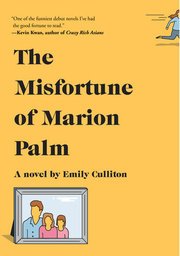
The Misfortune of Marion Palm     Emily Culliton     (2017)

When I tell you that this novel is set in contemporary New York, you may be thinking, “Not another story about bored rich people and their sad affairs!” Well, this one is different.

Culliton.jpg

Marion Palm, the central character in Emily Culliton’s The Misfortune of Marion Palm, is not a New Yorker you’d find in a Jay McInerney novel. She’s a college dropout who’s overweight, not very attractive, and keen on embezzlement. Yes, she lives in a pricey Brooklyn brownstone, but that’s only because she married Nathan, a clueless poet. His trust fund turns out to be smaller than Marion assumed, so Marion embezzles to bring the place up to standard and maintain their lifestyle. She has access to money because she’s a development officer, raising funds at the private school that her two daughters attend. Marion is very good at embezzling, but this school is run so haphazardly that stealing from the till is a piece of cake.

As the book opens, however, an IRS audit of the school is looming. So Marion takes off with a backpack full of cash, leaving Nathan and the young daughters. Marion is not as adept at running away as she is at embezzling, which leads to her involvement with Russian gangsters. Nathan, meanwhile, can barely order pizza delivery and get the girls out the door to the school bus.

Marion’s motivation for fleeing is not only the audit. She has a useless husband and no friends. As we learn in flashbacks, she’s had some raw deals in life. She’s disenchanted with her fake upper-middle-class life and the disdain with which she’s treated by the other parents at the school. She can see how wealthy New Yorkers squander their superfluous dollars, and she views her thefts as helping to correct financial inequality, Robin-Hood style. These issues outweigh Marion’s devotion to her children.  

Novelist Culliton’s prose is economical, her dialogue is rapid-fire, and her chapters are brief. Don’t assume that this means that her underlying themes aren’t serious. The plot moves along so speedily that I recommend reading The Misfortune of Marion Palm in one sitting, to get the full effect.

If you like The Misfortune of Marion Palm, you might want to pick up another mold-breaking Brooklyn novel, Lucinda Rosenfeld’s satiric Class, reviewed here. Novelist Maria Semple’s offerings also have a similar feel. Check out my review of Semple’s Today Will Be Different, set in Seattle, here. Like Culliton’s novel, these two also puncture the pretentiousness of the monied set. 

Sonata II: A Czech Musical Quest

 The Prague Sonata     Bradford Morrow     (2017)

Morrow.jpg

“Sonata” is the theme for this Bradford Morrow novel as well as for the novel I reviewed in a recent post, Rose Tremain’s The Gustav Sonata. Yet these two books are totally different in style and plot. 

The Prague Sonata centers on a fictional manuscript of a musical work from the late eighteenth century. Meta Taverner, a musicologist in New York City in the year 2000, is given one of the three movements of this unknown piano sonata by an elderly Czech woman who then promptly dies. Meta sets out on a mission, starting in the Czech Republic, to locate the remaining two movements of the sonata and to determine its composer.

The Prague Sonata is an amalgam of quest and mystery novel. There’s also a good chunk of historical fiction, as we travel back to Prague in the days before and during World War II to meet the woman who separated the three movements of the sonata in the face of the arrival of Nazi troops. Morrow explores the connections between the twentieth-century Czech owner of the manuscript and the twenty-first-century sonata seeker: “Had Meta herself been bequeathed a handwritten sonata from a fond, eccentric father, would she have had the guts and the wisdom to split it into three orphaned movements in hopes of protecting it from the enemy?” (70)

Classical musicians and lovers of classical music (among whom I count myself) will find much to enjoy in The Prague Sonata, which includes details of musical notation and rhapsodic descriptions of performances of the mysterious sonata. Trooping through the streets of Prague with Meta, I became genuinely interested in how the movements of the sonata might be reunited and how the composer might be ascertained. Occasionally, however, Morrow’s musical metaphors become strained:  “Despite her doubts about love at first sight . . . they’d been improvising a duet on either side of the river. A duet that wanted to evolve into a fugue. One whose harmonic and rhythmic structures moved toward the same resolution.” (231)

Morrow also wants to tell us a lot about Czech history, not only from the World War II era but also from the time of the Velvet Revolution against the Soviets in 1989. If these and other background paragraphs had been edited down, the pace of the novel would have picked up. A romance component does add spark to the narrative. Meta’s lawyer boyfriend, who remains behind in New York, is unsympathetic to her quest in the Czech Republic, leaving her open to forming a new relationship. I won’t reveal spoilers!

Late in The Prague Sonata a character brings up Willa Cather’s 1918 novel My Ántonia, arguably the best fictional depiction of Czech immigrants (called “Bohemians”) in the United States: “’This was written years ago, but the heartland of Nebraska and the Bohemians who settled there haven’t changed all that much. Time kind of stands still on the prairie.’” (385-6) I read My Ántonia recently and found this American classic to be surprisingly nuanced. Between My Ántonia and The Prague Sonata you can get a sense of the richness of Czech culture.