A Smart Mom in Seattle

Today Will Be Different     Maria Semple     (2016) 

She’s sassy, she’s manic, she’s self-absorbed. Eleanor Flood is a hot mess as Today Will Be Different opens. She’s resolving that she’ll do better, but the reader knows by about paragraph six that the day coming up will be different in ways that Eleanor does not expect.

I didn’t much like the personality of Eleanor, who’s a fifty-year-old animation artist living the dream in Seattle. Eleanor's supporting cast, however, is appealing. Her surgeon husband is a truly good guy, aptly named Joe. Their eight-year-old son is earnest and caring. The academic whom Eleanor hires to give her private poetry appreciation lessons has his own wacky and touching sub-plot. Even the dog is lovable in a we-put-up-with-his-foibles kind of way.

But Eleanor doesn’t get much sympathy from me. Maybe it’s because she’d prefer to live in Manhattan and is affecting Manhattan introspection and angst. 

The action does adhere pretty well to the Aristotelian unities that the author, Maria Semple, implicitly sets up by starting the novel with Eleanor’s resolutions for this one day in her life. We careen through the streets of Seattle, by car and on foot, as Eleanor abandons her self-improvement quest to instead solve a mystery about her husband. Semple weaves red herrings into this plot and fills in Eleanor’s family story with large sections of flashbacks, some set in New Orleans.  

The color drawings (done by Eric Chase Anderson) in the chapter called “The Flood Girls” are part of this slowly revealed backstory. These illustrations, presented as part of the fictional Eleanor’s art portfolio, fascinated me. I kept turning back to them as Eleanor referred in the text to the people depicted.  Because the character of Eleanor is an artist, this set of drawings didn’t come off as gimmicky.

I had some quibbles with the narrative voice in Today Will Be Different. Most of the book is in first person, with Eleanor narrating. Semple should stick with that so that the reader shares Eleanor’s lack of all the facts as she tries to solve the mystery. But toward the end of the book Semple veers off for scenes with Joe that Eleanor is not privy to. I consider this plot-cheating. I also found the ending of the book a let down, even though I enjoyed much of the ride to get there.

Today Will Be Different has some echoes of Semple’s 2012 novel, Where’d You Go, Bernadette. Both books satirize Seattle, specifically mocking the rich parents who send their children to elite private schools. Both take on the serious topic of how talented women married to talented men struggle to produce creative work when they also have to raise the children. Even if the husbands and the children are charming and supportive, it’s tough. 

Farmstead Economics

The Rise and Fall of American Growth: The US Standard of Living Since the Civil War    

Robert J Gordon     (2016)

Why in the world would I review a data-packed economics textbook on this blog? Hang with me for a paragraph of background.

Gordon.gif

My paternal grandparents, born in the 1890s, raised their seven children on a farm in northwestern Ohio. When I visited them as a child in the late 1950s, we usually sat talking in the kitchen, where Grandma cooked, winter and summer, on a huge cast-iron wood-fired stove. In a lean-to shed attached to the kitchen was a heavy-handled pump that provided all the water in the house. The toilet facility was an outdoor privy that terrified me, but at least I didn’t have to traipse down the path at night. Grandma provided a chamber pot under each bed. There was a wall-mounted party-line telephone and electric lighting on the main floor. I was a city-slicker kid who assumed that most rural Americans at that time lacked indoor plumbing, central heat, and modern appliances.

When I first dipped into Robert Gordon’s The Rise and Fall of American Growth, I was startled to find that my grandparents were outliers. By the late 1950s, fully 90% of all American households had running water and an indoor flush toilet. About 75% had a washing machine, and about 65% had central heat. Virtually all the houses lacking these conveniences were in the rural South. That Ohio farmhouse was at least twenty years out of sync with the rest of the nation. The only reason it even had electricity was the Rural Electrification Service of the New Deal. Well, now I had to read Gordon’s whole 762-page book.

The Rise and Fall of American Growth is a fascinating sociological and technological history of the United States over the past 145 years. Gordon’s central thesis is that the pace of improvements in the US standard of living between 1870 and 2015 had never before been witnessed in the history of the world and will never be seen again. He constructs his argument meticulously, teasing out the intricate details for what constitutes “the standard of living.” Some obvious components are food, clothing, housing, transportation, health care, and communication. But some didn’t immediately come to my mind: entertainment, workplace safety, and the availability of consumer credit and insurance.

In the first half of the book, Gordon traces the specifics of technological inventions in the US in the period 1870 to 1940. Revolutionary changes in individual lifestyle resulted from such innovations as electric lighting, urban sanitation, the telephone, and the internal combustion engine. Even the humble Mason jar (invented in 1859) was a huge advance, allowing women to preserve vegetables and fruits in the summer for consumption in the winter.

Gordon plays out the results of these developments with masses of statistics, demonstrating exactly how specific inventions changed everyday existence for hundreds of millions of ordinary people. For example, before the arrival of the infrastructure for running water, the typical adult female had to hand carry more than 36 tons of water in and out of her house over the course of a year, walking about 148 miles for this task alone. I didn’t know that before legislation in the early 1900s, almost all food consumed in American cities was adulterated, contaminated, or spoiled. Farmers had it slightly better because they grew their own food, but with backbreaking toil. Life in 1870 was brutal. Most Americans survived on fatty salt pork and cornmeal, and they died at an average age of 45.  

In the second half of the book, Gordon moves ahead to the period 1940 to 2015. He argues that the improvement in the standard of living in this period was partly due to policies of the New Deal during the Great Depression of the 1930s and partly due to the successful push for high factory productivity to meet the needs of World War II (1941-1945). Gordon has his own complex recalculations of the Gross Domestic Product, by which he shows that productivity growth slowed dramatically after 1970. A brief revival between 1996 and 2005 was probably due to the invention of the web, of search engines, and of e-commerce.

Stepping back for a broader view, Industrial Revolution #1 (1750-1870) is the generally accepted one, which produced such innovations as railroads. Industrial Revolution #2 (1870 to 1970) saw spectacular improvement in the US standard of living and in life expectancy. Industrial Revolution #3, the digital revolution, had its main spurt just in the years 1996-2004 and had much less effect on overall economic productivity growth. Some economists cite Moore’s Law, which states that that the power of computer chips will double every two years, to argue that the digital revolution will continue. But Gordon concludes that Moore’s Law has died out since 2006, since the expense to improve computer chips further isn’t justified.

The major factors that Gordon sees as militating against more growth in the US standard of living in the years ahead include rising income inequality, decreasing educational achievement, rising student college debt, the aging of the population, and growing debt at all levels of government. At the end of the book, he has some brief recommendations for policy directions that could improve productivity growth:

  • More progressive taxes
  • A higher minimum wage
  • Expansion of the Earned Income Tax Credit
  • Preschool education
  • Better public school funding
  • Income-contingent college loans
  • Selective reform of business regulations
  • Increased openness to skilled immigrants
  • Reform of the tax system

A key assertion of The Rise and Fall of American Growth is that Americans must not expect a continuation of improvement in our standard of living at the rate that occurred between 1870 and 2015, and certainly not at the phenomenal rate that occurred between 1920 and 1970. The inventions that spurred development in the US were one-time deals. Yes, there can be further enhancements to the technology already in place. Inventors can (and have) come up with more efficient light bulbs. But there cannot be another invention of electric lighting. Washing machines have become more energy efficient and have larger capacity and fancy electronic controls. But the basic washing machine concept has already permeated the United States. This is about all we’re going to get, folks, unless you want to place bets on Artificial Intelligence, which Gordon does not.

The Rise and Fall of American Growth is at once uplifting and sobering. Most Americans born in the first half of the twentieth century witnessed unprecedented improvement in their standard of living over the course of their lives. But Gordon is not sanguine about the future. It seems highly unlikely that, as a society, we’ll implement the policy changes needed to sustain growth and avoid stagnation.

There’s a lot of repetition in this book, as Gordon hammers his thesis home. So, unless you’re a data nerd, I suggest that you read it selectively:

  • Read the introduction to the book to get an overview
  • Pick the chapters that interest you—food/clothing, transportation, health care, whatever. Read these chapters in detail and enjoy all the startling nuggets of technological information.
  • Skip all the chapter introductions but skim the chapter conclusions.
  • Read Chapter 18, “Inequality and the Other Headwinds: Long-Run American Economic Growth Slows to a Crawl.”
  • Read the Postscript, “America’s Growth Achievement and the Path Ahead.”

As I plowed through The Rise and Fall of American Growth, I kept trying to figure out why my grandparents’ farmhouse was still so primitive in 1960. Was the soil on their farm inferior? No, it was rich flatland. Were they buffeted by extreme weather? No, Ohio has a more temperate climate than that on the Great Plains. Were these ancestors of mine lazy or stupid? No, they were a hardworking, successful farming family that valued education.

I think that my grandparents, having survived the Great Depression and two world wars, were frugal people. Instead of upgrading their home, they chose to put their resources into farm machinery with internal combustion engines. One result was that the six sons in the family all became mechanical wizards, and three of them made their adult careers in engineering. The lack of household amenities certainly loaded more domestic burdens onto my grandmother and her one daughter. But there were other investments. That farmhouse with no indoor toilet boasted a magnificent piano, a foot-pump organ, and several smaller musical instruments, including my Dad’s trumpet. Grandma’s piano sits in my own living room today. And as a child visiting their farmstead, I got a glimpse into a much earlier era of American history.

Those New York Novels

The Ramblers     Aidan Donnelley Rowley (2016)

(plus brief notes on novels by Adelle Waldman and Cynthia D'Aprix Sweeney)

First, a sidebar.

Maybe I should stop reading these inbred New York City novels. Maybe only New Yorkers can sense where the satire starts. But I read a lot of fiction, and I’ve taught fiction to a lot of college students, so I should be able to discern satire, right? Even if I’m a Midwesterner?

I look back at a couple of other New York novels. I’m pretty certain that Adelle Waldman’s The Love Affairs of Nathaniel P. (2013) is sardonically mocking the callous, self-satisfied male New Yorkers who wreak havoc on the psyches of brilliant, sensitive female New Yorkers. Waldman’s view into this world is morbidly fascinating but morbid nonetheless.

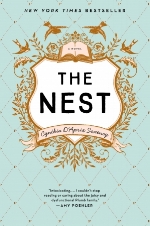
Cynthia D’Aprix Sweeney’s The Nest (2016) is less clear on the satire front. Four siblings fight over their inheritance, which has been greatly depleted by a payout to cover up a crime by one of the brothers. Should I care about the quarrels of these disagreeable, money-grubbing characters, even if the plot is a tight one? Am I supposed to care, or am I supposed to recoil in horror?

This issue is not settled, but let’s move on to the main review.

The Ramblers, by Aidan Donnelley Rowley (2016), brings us three more New Yorkers who have too much money and too many drinks. Admittedly, Clio Marsh was born middle class, but she’s pulled herself up by the proverbial bootstraps to earn a PhD in ornithology. And she lives nearly rent-free as roommate to Smith Anderson, a daughter of the 1% who declutters the Manhattan apartments of her private clients. The third profiled character is Tate Pennington, who has accidentally made a fortune in the tech world and retired to New York to take street photographs and escape his estranged wife in California.

All three are in their mid-30s, yet they prate endlessly about their undergraduate days together at Yale and enter into petty squabbles about the relative advantages of Princeton. Really? So you’ve read Foucault. I’m not impressed, though I think that the author, herself a Yalie, expects her readers to be.

Because the three protagonists are in their mid-thirties, they all long to be in committed relationships. This is a standard feature of the modern New York novel, though it’s usually only the women or the gay men who crave a long-lasting, monogamous marriage. The entire plot of The Ramblers revolves around the achievement of perfect domestic partnerships, but I couldn’t feel much sympathy for these three privileged strivers. They’re stock characters in a flat drama. Clio worries that the revelation of her mother’s mental illness and suicide will derail her affair with a wealthy bachelor fifteen years her senior. Smith won’t distance herself from her malicious father, even though this creepy father browbeat her fiancé into breaking up with her. And Tate salves the wounds made by his unfaithful wife with excessive amounts of alcohol, but he still shoots stunning photos.

The dialogue of the thirty-something women in The Ramblers does have sparkle, but when I hit some scenes with older women or with men (older or not), I found myself stopped mid-page by the inaptness of tone and the cliché-ridden sentences. Wait, I thought, is the author satirizing this character? We’re back to that issue of inadvertent satire again.

If I’m so irritated by these self-aggrandizing characters and their $30 bottles of organic hair conditioner, why do I keep reading New York novels? Why did I ever get past page 50 of The Ramblers? Simple: I have a weakness for the New York part.

For instance, the title of The Ramblers refers to an area in Central Park called The Ramble, a semi-wild nature area in the middle of Manhattan, popular for those seeking outdoor gay sex, which has also become a favored site for birdwatchers. The character Clio leads public birding tours through The Ramble on Sunday mornings and gets written up in the local press. Tate, meanwhile, is a walking guide book to the poetic and architectural history of the city, seeking out the haunts of Stanley Kunitz and Dylan Thomas. Smith’s sister gets married in the cavernous, barrel-vaulted St. Bart’s Episcopal Church, with the reception at the ultra-glamorous Waldorf. The action of the novel takes place during the week of Thanksgiving, so the author can call up glorious late autumn days as well as the edge of silver-bell cheeriness for the upcoming Christmas season. In sum, the NYC of The Ramblers is more vividly portrayed than its inhabitants.

True, for heavy New York atmosphere, you can’t beat author Jay McInerney, and I’ve acknowledged this in a recent blog post reviewing his 2016 novel Bright, Precious Days. I detect satire in some of McInerney’s characters, but he fleshes them out so well and surrounds them with so much New York detail that I tumble right into their lives nonetheless.

And for a weekly dose of New York, I turn to the New Yorker. I can imagine myself at the openings of art exhibits and plays listed at the front and then settle in for some serious journalism, not necessarily about New York, by writers like Adam Gopnik, Joan Acocella, Jill Lepore, Hilton Als, Larissa MacFarquhar, Elizabeth Kolbert, Kalefa Sanneh, Jane Mayer, and Ryan Lizza. Gotta love it.

Tasting the Moon with Chabon

Moonglow     Michael Chabon     (2016)

With a review of a work by Michael Chabon, it’s difficult to avoid gushing out superlatives. Bare superlatives, however, don’t give the readers of the review a taste of the specific delicacies that are on offer in the writing. And Moonglow has many delicious bites.

It’s not a spoiler if you know that the Michael Chabon who is the narrator of Moonglow is fictional and is not the same as the Michael Chabon who is the author of the novel. And Moonglow is truly a novel, though it’s set up as an autobiographical and biographical memoir. Chabon-the-author is expert at inducing you to believe that the fiction he’s creating is really the reconstructed history of his family.

In recent interviews, Chabon-the-author has made it clear that he’s used only brief incidents from his family history as sites from which he has leapt into the fictional worlds of Moonglow. He prefaces the book with a tongue-in-cheek “Author’s Note” in which he disclaims veracity for the “facts” he presents. But as a reader of Moonglow you keep wanting to believe that Chabon-the-narrator is Chabon-the-author, against all this evidence.

The underlying premise of Moonglow is straightforward. In 1989, Chabon-the-narrator sat at the bedside of his dying grandfather as the grandfather spoke about events of his life. He was a daredevil kid in Philadelphia, an engineer with tremendous inventive capacity, an intelligence officer in Europe at the tail end of World War II, an inmate in a minimum security prison in New York State in the 1950s, a snake-hunting retiree in Florida. The grandfather (who never has any other name in the novel) was passionately in love with his wife, a Jewish French refugee ravaged by the Holocaust, whom he met in 1947. The story of this grandmother weaves in and out of the novel about the grandfather.

As with Chabon’s  Pulitzer-winning The Amazing Adventures of Kavalier and Clay (2000), World War II hangs menacingly over the characters. Having wedged his grandfather in to the Allied mop-up operations in Germany in 1945, Chabon-the-author can explore alternate realities that never made it into the history books. What if, for example, a Jewish American officer with extensive knowledge of rocketry were to capture Nazi rocket scientist Wernher von Braun? What if that officer were to uncover the trove of documents revealing the secrets of the V-2 rocket?

Speculative history is a specialty of Chabon-the-author, most notably executed, I think, in The Yiddish Policemen’s Union (2007). In that novel, the alternate history is set up when Jews from around the world establish a homeland in Sitka, Alaska, in the 1940s, and the tale plays out for the next sixty years.

Jewish identity is a key theme for Chabon-the-author, but I see other themes also echoing through his writing: the malleability of fact, the raw beauty of the everyday, the strength of the human spirit in the face of evil (in other people or in the international order). A trademark stylistic device of his that I especially admire is what I call his “extended list,” in which he ranges through all the possibilities of a situation. Here he’s describing sleeping conditions for soldiers in war-torn Europe:

“My grandfather had shared all manner of billets: with dogfaces and officers, in misery and in comfort, in attack and in retreat, and pinned down by snow or German ordnance. He had bedded down under a bearskin in a schloss and in foxholes flecked pink with the tissue of previous occupants. If an hour’s sleep were to be had, he seized it, in the bedrooms or basements of elegant townhouses, in ravaged hotels, on clean straw and straw that crawled with vermin, on featherbeds and canvas webbing slung across the bed of a half-track, on mud, sandbags, and raw pine planks.”

Mimicking the discursive flow of reminiscence, Moonglow see-saws through the life of the grandfather, constantly shifting time and place, occasionally returning to the 1989 scene of the grandson feeding Jello to the dying man. Chabon-the-narrator does not set down his grandfather’s words verbatim but rather casts the episodes he recounts in third person. This technique allows Chabon-the-author to insert astonishing detail. One of my favorite scenes has the grandfather, who does not usually observe religious rites, stopping at a Reform temple on a Friday to pray the kaddish, the prayer of mourning. The congregation is housed in a building that was formerly an International House of Pancakes. As the service goes on, the grandfather feels distant from the other worshipers:

“They might have been strangers in a bus station, solo travelers bound for all points. They might have been separate parties at a pancake house, awash in the syrup emerging from a Wurlitzer organ, played by an old Jew with a Shinola-black pompadour, dressed in a curious tan coverall or jumpsuit and platform saddle shoes.”

Oh, that’s just a taste. You should savor the entire book.

Gentle Swedish Novels

Although the international taste for Nordic Noir is strong, not all the books coming out of Sweden are dark thrillers. The novels reviewed below may not suit you if your taste runs to authors Stieg Larsson (with sleuths Mikael Blomkvist and Lisbeth Salander) and Henning Mankell (with detective Kurt Wallander). I harbor a fascination with Scandinavian culture, so I embrace a wide range of titles from the land of Volvos, fjords, aurora borealis, and IKEA. Here are two gentle offerings from the Swedes.  

Review #1

The Readers of Broken Wheel Recommend     Katarina Bivald     (2016)

Translated from Swedish by Alice Menzies

A stranger comes to town:  it’s an ancient and oft-used storyline, maybe because it has built-in plot development potential. The stranger learns the ways of the town. The town learns the ways of the stranger. The author can add to this mix some conflict, some romance, or some comical misunderstanding. Debut novelist Katarina Bivald takes advantage of all the plot possibilities in The Readers of Broken Wheel Recommend.

Bivald.gif

Sara Lindqvist arrives in Broken Wheel, Iowa, one August day in 2011 to visit her pen pal, Amy Harris. Sara and Amy have in common that they’re voracious readers.  Over a couple of years, Sara has gotten Amy to read Swedish bestsellers like The Girl with the Dragon Tattoo, and Amy has introduced Sara to American classics like To Kill a Mockingbird.  Sara, who’s in her late 20s, has never traveled outside her native Sweden, but when she gets laid off from her job as a bookstore clerk, she decides to use her savings to take an extended trip to Iowa. Sara’s fluent in English, but she’s not prepared for small-town America still in the grips of a major recession. Not to mention that she arrives on the very day of the elderly Amy’s funeral.

The residents of Broken Wheel include all the stock characters. A gay couple owns the saloon, and an unemployed schoolteacher is the local busybody. A semi-reformed alcoholic with a sad family history serves as Sara’s chauffeur. The loud-mouthed, overweight proprietor of the diner keeps Sara fed. Amy’s handsome nephew Tom becomes Sara’s love interest.

Sara has a talent for finding just the right book, from Amy’s extensive collection, for each resident of Broken Wheel. As the Iowans embrace their European waif, the story plays out with the involvement of befuddled US immigration officials. The premise of Bivald’s novel has become more far-fetched since the 2016 American election, when anti-immigrant sentiment in the United States elected Trump, who is especially popular in Iowa. Bivald not only romanticizes rural America but also hits on many clichés.

Still, I don’t want to disparage this book. Bivald’s character Sara has wide-ranging literary tastes. She adores Helen Fielding’s Bridget Jones novels, but she also knows her Jane Austen backward and forward. She’d just as soon pick up a book by Goethe or Annie Proulx as one by Fannie Flagg. I’m more of a book snob than Sara—I draw the line at The Bridges of Madison County. But Sara’s encounter with the Americans of Broken Wheel cheered my heart for a while.

Review #2

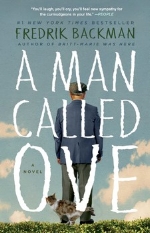
A Man Called Ove     Fredrik Backman (2014)

Translated from Swedish by Henning Koch

Good luck with finding a definitive pronunciation for “Ove.” I pronounce it something like “oo-vuh,” but I don’t speak Swedish.

No matter how the name sounds in your head, Ove is a Swedish curmudgeon in late middle age, and he’s not an endearing one. We meet him making his rounds as self-appointed, and unwelcome, policing agent for his neighborhood. He’s also figuring out how to commit suicide, which is perhaps a nod to that Nordic Noir tradition. The other characters in this novel are pretty much stereotypes: the saintly wife, the vivacious neighbor, the unfeeling government official, the malicious cat.

Backmann.jpg

Over the course of the novel, we gradually get Ove’s life story, and we come to be more sympathetic to him. The ending is not exactly happily-ever-after, but there’s satisfying plot resolution for a number of the characters.

A Man Called Ove and The Readers of Broken Wheel Recommend are not "literary fiction," true. However, they present optimism in the face of difficult circumstances, which many readers may welcome in this troubled world. There’s also in each novel a refreshing societal acceptance of cultural outsiders. I think that both books have some affinity with the work of that prolific Scot Alexander McCall Smith. I read McCall Smith’s books in one sitting, and I always arise feeling a bit better about life.

McInerney's Manhattan Excess

Bright, Precious Days     Jay McInerney     (2016)

O, Russell! O, Corrine! O, pet ferret!  Bright, Precious Days, the third installment of the Russell-and-Corrine-story (readable as a standalone), finds them hitting age 50, with a TriBeCa loft that’s too expensive and too small for a family with school-age twins and a pet ferret. And note that TriBeCa always has those internal capital letters, so that you’re looking to the etymology and the map, knowing that Russell and Corrine, having consumed another absurdly extravagant and exotic restaurant meal, are heading home to the Triangle Below Canal Street.

The landmarks of Manhattan are as much characters in McInerney’s novels as the human actors. His New York City dazzles with all the expected urbanity and glitz and pop culture references. His descriptions of the turning of the seasons are particularly striking in their tropes of nostalgia. I’m there, at the top of the Empire State Building, wind in my hair, taking in the view.

I do need my regular dose of Manhattan hauteur and pomposity, if only to reassure myself that I’m content as a boring Midwesterner. McInerney delivers Manhattan full throttle: the wine snobs, the gourmands, the anorexics, the cab drivers, the gala attendees, the trophy wives, the crazed artists, the cocaine snorters. Good Lord, how do people ingest that much cocaine and live to tell the story? Well, some of them don’t live, that’s true.

From the beginning, the reader cringes with the knowledge that Russell’s publishing business is not thriving. Print books were in decline even in the mid-aughts, when the book opens, and although Russell may be the Max Perkins of the twenty-first century, his editing skills don’t translate to business savvy. The reader also has the advantage of knowing that the recession of 2008 is looming.

Corrine—who saw the light, sort of, after 9/11—has taken a job in the nonprofit sector, gleaning discarded vegetables to distribute to the poor, so she doesn’t contribute much income to the family. Corrine’s job does allow McInerney to give us a brief view of the 99% in New York City, with descriptions of the long lines of hungry people waiting to receive a dole of carrots or cabbages.

You don’t have to be an avid reader of mystery novels to guess how the storyline involving Russell’s business will play out in Bright Precious Days. The marital storyline is another matter. R-and-C have been married for twenty-five years, during which time they’ve both repeatedly cheated on and lied to each other. I want to shake them and tell them how selfish they are, how superficial and cliché-ridden their conversations are. I want to tell Corrine that to keep her weight down she should reduce her consumption of alcoholic beverages, not diet on lettuce and canned salmon. R-and-C live up to their surname, “Calloway,” in their adolescent ingenuousness and self-centeredness. The coincidences in the marital storyline strain belief, and the characters are on the edge of becoming caricatures. But I understand many of their flaws and want to know their next steps. I love to despise them.

And I love gazing on that Manhattan excess from afar. 

Proulx and the Forest

Barkskins     Annie Proulx     (2016)

In the year 1693, we meet the original “barkskins” of Annie Proulx’s gigantic novel.  René Sel and Charles Duquet are poor young Frenchmen who take their chances in agreeing to cross the Atlantic and serve for three years as loggers in return for a promise of land of their own. Arriving in the maritime regions of New France (now Canada), René and Charles are stunned by the brutal weather, the vicious mosquitoes, and the virgin forests of unimaginable magnitude.

Proulx.jpg

The two axe-wielders take divergent paths in the wilderness. René Sel sticks with his backbreaking job, reluctantly marries a native Mi’kmaq woman, and dooms his descendants to lives of hard labor in the forests to which they are constantly drawn. The Sel family gets stuck in a racial borderland between European and indigenous cultures and never thrives.

Charles Duquet, however, quickly abandons the tree felling and makes his fortune, first in furs and then in lumber, changing his name to Duke along the way. Charles is the consummate shark, founding a dynasty and a business empire.

Over the three hundred years that Proulx follows these two fictional families, both the Dukes and the Sels exploit the forests—the Dukes through land deals and the Sels by actually chopping down tree after tree after tree. The branches of their families occasionally brush against each other. (The characters are so numerous that I needed to flip frequently to the genealogical charts at the back of the book.) Sometimes Proulx pauses and develops a character in depth. At other times she tosses out names and moves on with her plot.

In the end, the main character of Barkskins is the forest—that vast forest that stretches across much of the North American continent at the beginning of the book. Although the species vary as the barkskins and lumber barons move westward, clearing the land, I think Proulx sees all the trees of North America as part of one mystical body. She’s at her most eloquent in describing this character.

When the surveyors in her story get to what will become the state of Michigan, they find sugar maple, beech, yellow birch, oak, hickory, pine, hemlock, spruce, and fir in forests so dense that the paths of the Native Americans are almost impossible to follow. The huge diameters of the trees are a challenge to the technology of the period. I pored over the descriptions of my home state’s trees, in awe of Proulx’s rich language.

She is, in effect, writing a eulogy for the North American forest, which has become a victim of human depredation, part of a global destruction of the environment. As Proulx takes us through the centuries, we see the respect that native hunter-gatherer societies had for the natural world give way to the Europeans’ demands for tillable land and space for cities. Feeding and housing hordes of immigrants increasingly take priority. The forest sighs, weeps, groans, and dies.

The human toll exacted by the felling of those hundreds of millions of trees is not ignored by Proulx. Gruesome deaths, either directly or indirectly related to the timber industry, abound. I found these deaths difficult to stomach; picture the possibilities with axes, lumber mill saws, huge jams of logs rolling through river rapids, and the menacing branches of toppling trees.

This is a glorious but tragic novel, a moral statement about the failure of humans to be stewards of our planet’s abundance. Yes, Proulx’s ending is weak, her narrative seeming to dwindle like the forest itself. In 1693 no one could imagine that the North American forest would ever end. The tragedy that Proulx documents is not one cataclysmic event that's easily recognized. Rather, it’s the loss of one tree after another, until the forest is gone.

Conroy, a Poetic Prince

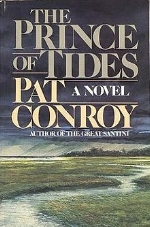
The Prince of Tides      Pat Conroy  (1986)

When Pat Conroy died in March 2016, I ran across many heartfelt tributes to his writing. I felt guilty. How had I missed reading an author so beloved by so many readers?

With a few clicks, I figured it out. Conroy wrote about the American South and about the experience of being a male Southerner who was subjected to brutality in both family and school environments. I find much fiction about the South painfully depressing. In high school, when Carson McCullers was assigned, I ate up The Heart is a Lonely Hunter but then had nightmares for weeks. Heretical as it sounds, I’ve never been enthralled by William Faulkner or Flannery O’Connor.

I decided, however, to give the South another chance by reading Conroy’s The Prince of Tides. It took me several days, since this is a long—and longwinded—novel. I kept thinking how some of the lengthy dialogues could have been edited down considerably without diluting the power of the story. The narrative is complex, certainly, and I was willing to follow it to the end, but I was tempted to skip entire sections just to get on with the plot.

Briefly, that plot follows about forty years in the lives of the three Wingo siblings, who were born in the South Carolina sea islands during World War II. Their father is a successful shrimper who wastes all his earnings on get-rich-quick schemes. He flies into rages and beats his wife and children. That’s the least of the horrors that the Wingo kids endure. Slowly, very slowly, the reader gets the full picture as Tom Wingo, the first-person narrator, explains the family history to a psychiatrist who’s treating his suicidal sister, Savannah, in New York City in the early 1980s.

Despite the hundreds of scenes in this novel that feature Tom Wingo, I didn’t ever grasp his personality in full. Tom is a jokey guy, often spouting self-deprecating retorts and constantly whining about male Southerners with a grim fatalism. He reads widely and finds fulfillment in coaching adolescents in sports. But when he opens his mouth, ridiculous statements spew out.  I never figured out Tom’s mother, either. Is her repeated repression of trauma a form of abuse or of self-preservation or both? Does she exploit or regret her renowned beauty? Isn’t Conroy’s portrait of her as a young mother inconsistent with his portrait of her as an older woman? And Tom describes his brother, Luke, as a hero who’s much larger than life, which is perhaps Conroy’s way of showing how much Tom worshiped Luke.

All that aside, I found much to admire in The Prince of Tides. Conroy’s vocabulary is enormous, and his words are deployed to great effect in evoking the fragile glories of the semitropical saltwater marshes of the South Carolina coast. He tosses off striking metaphors with ease and moves actions forward with powerful verbs. He doesn’t use an ordinary noun when a fanciful one can be found; a song becomes a “canticle,” which will be the exactly right term for that sentence. The smells of the Low Country fishing industry often have metallic descriptors that succeed in recreating the place. The flora and fauna thriving in the thick, humid atmosphere are portrayed with particularity and reverence.

Conroy gives his character Savannah Wingo the vocation of poet, and he seems to envy the way Savannah can transform the stories of her troubled youth into paeans for a disappearing way of life. You can read The Prince of Tides if you want a sprawling Southern melodrama. I read The Prince of Tides for the poetry of the language.