Men. Hunting. Way Up North

Hunter’s Moon     Philip Caputo     (2019)

Caputo.jpg

In seven linked short stories, Philip Caputo summons up the wild allure of the far northern regions of the United States. Six of the seven stories take place in Michigan’s Upper Peninsula, which hovers around the 46th parallel of latitude, and the seventh is set even farther north, in Alaska. Hunting and fishing are the prime attractions of Caputo’s settings. Each story revolves in some way around these outdoor sports: the appeal of rugged terrain, the terror of getting lost, and (yes) the reality of weapons violence.

I don’t hunt, and I don’t understand the technicalities of rifles, but as you read Hunter’s Moon you can set those components aside and revel in Caputo’s descriptions of the natural world, like these: 

  • “The sky lightens from the gray of old asphalt to oyster and snuffs out the stars one by one until all are hidden in a canopy of brilliant blue. A hoarfrost glitters on the brown bracken fern matting the clearing across which the white pine’s shadow lies like a fallen spear.” (61)

  • “This is a silence never broken by humanity’s clatter; it is layered, dense, virgin, alien—a disquieting quiet, if you will. All the otherness of the natural world is in it—a world complete unto itself, independent of man’s endeavor’s and conflicts, his plans, schemes, joys, griefs, his egoistic certainty that he is a child of God.” (133)

You can move past the brief scenes of violence in Hunter’s Moon, but you can’t escape Caputo’s exploration of distressing aspects of male experience. Characters include military veterans who suffer PTSD from combat and fathers and sons who have fraught relationships. Here’s one father, speaking about his son, who is on a hunting trip in Alaska after having been expelled from college: 

  • “Being a male of the old school, the kind who prefers back slaps to bro hugs, I would welcome a mood of active aggressiveness, an air-clearing, spleen-blowing flight, albeit one that doesn’t turn physical. . . I’m a fifty-six-year-old Russian literature professor who hasn’t been in a scrap since I was his age, and maybe younger.” (113)

One particular character, Will Treadwell, appears in five of the seven stories and lends a unifying presence as he transitions from owning a small-town bar and craft brewery into retirement. Only one female character, appearing in two of the seven stories, has a substantial role, but I’m okay with that. Caputo’s understanding of his male characters is deep and rich. And, along with the best nature writers, he captures the very feel of those remote northern forests.   

For similar themes and settings, read my reviews of Susan Bernhard’s Winter Loon, Leif Enger’s Virgil Wander, and Nickolas Butler’s The Hearts of Men.

More by Elizabeth Strout

Olive, Again     Elizabeth Strout     (2019)

Strout.jpg

Olive is back, and you won’t want to miss her return.

Elizabeth Strout, the queen of linked short stories, has produced a sequel that matches or exceeds her Pulitzer-winning Olive Kitteridge of 2008. In thirteen succinct stories, each of which can absolutely stand alone, Strout unpeels life in the fictional rural town of Crosby, Maine. The crusty, candid Olive—a character in most of the stories—is sometimes intolerant and cranky but often kind. When her kindness is awkwardly expressed and causes offense, she’s surprised, and she tries to rectify her behavior. She’s mellowed as she’s aged.

The other characters in Olive, Again are townspeople whom Olive interacts with in some way. Their lives are intertwined with each other and with the inevitable sadnesses and transgressions and occasional triumphs of living on this Earth. There’s unfaithfulness, pedophilia, disease, and death (especially by suicide) aplenty. The surroundings of the town can reflect the despair of the inhabitants:

  • “Around them a sudden gust of wind sent a few twigs swirling, and muddy plastic bag that had been run over a number of times rose slightly, then dropped back to the ground among slushy car tracks from the old snow.”(120)

  • “As Denny approached the river, and could see in the moonlight how the river was moving quickly, he felt as though his life had been a piece of bark on that river, just going along, not thinking at all. Headed toward the waterfall.” (142)

Yet it’s not all bleakness. Strout's characters can also connect with the natural world in a way that lifts their spirits, if only briefly:

  • “The field was darkening, the trees behind it were like pieces of black canvas, but the sky still sent down the sun, which sliced gently across the grass on the far end of the field.” (17)

The stories, which take place the very recent past, span more than a decade of Olive’s retirement from her school-teaching job. Early in the book, when she’s still mourning the loss of her husband, she marries for a second time. I was shocked by this plot development, not the least because Olive did not seem to me like someone who’d be considered a prize mate. I could hear Strout gently chiding me for my belittling thought. Though Olive doesn’t possess physical beauty and can be irksome in her bluntness, she is unfailingly honest. Honesty is a rare trait, and her second husband recognizes this.

Please read this book. It will open your eyes to components of the human condition that you’ve never thought about before. 

#####

I’ve reviewed two other excellent Strout linked-story novels: My Name is Lucy Barton (2016) and its sequel, Anything is Possible (2017), set in New York City and rural Illinois respectively.

Another Great Horowitz Mystery

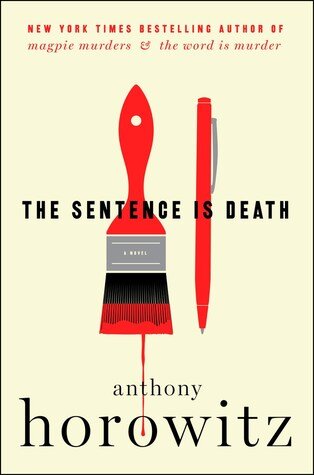
The Sentence Is Death     Anthony Horowitz     (2019)

horowitz.jpg

I’m unabashedly a fan of Anthony Horowitz’s mystery novels. On this blog I’ve reviewed his 2017 offering, Magpie Murders, as well as the first of his metafictional Daniel Hawthorne mysteries, The Word is Murder (2018). With The Sentence Is Death, Horowitz presents the second volume that features the private detective Hawthorne, a former police officer now hired by the police to help on particularly challenging murder cases.

As with The Word is Murder, The Sentence Is Death features as first-person narrator a character named Anthony Horowitz, who bears a startling resemblance to the real-life Anthony Horowitz in his work life and in his family configuration—hence, metafiction. Watch for zingers that play off the insertion of the author into his own fiction. For example, the fictional Horowitz notes that Jill Green, actual wife of the author Horowitz, “has made it clear that she’s uncomfortable being a character in my book. Unfortunately, truth is what it’s all about.” (303) Uh, “truth” in this case is a fictional narrative about a fictional murder.

The case involves the murder of a prominent divorce lawyer in London, with red herrings and potential suspects abounding. Key clues include an overheard doorway conversation shortly before the murder and the number “182” painted on the wall near the corpse. Throughout his writing career the author Horowitz has been captivated by word play—mistaken similar names, anagrams, homonyms, crosswords, multiple meanings, and such. Word play often has an important plot function in the episodes of Foyle’s War, the World War II mystery series (2002-2015) that he wrote for British television. Fictional Horowitz also loves words, as he transcribes the details of the murder case that Hawthorne is investigating in The Sentence Is Death. Hawthorne says to fictional Horowitz, “You’ll choose all the right words and you’ll make it come to life. There’s no way I could do anything like that. Which is why it’s such a great partnership. I do the legwork. You do the rest.” (358)

Fictional Horowitz also chastises writers who break the “fair-play rule” of mysteries:  “Whenever Hawthorne saw anything or worked something out, he deliberately kept it from me as if the whole thing was some sort of game. This is often the case in detective stories and I always find it infuriating . . .” (164-65) Of course, author Horowitz leads his readers down many cul-de-sacs before he reveals the solution to the crime. This is despite his avowed approach:  ”In a museum, a department store, a theatre, a Tube station, I’ll find myself wondering what goes on behind those locked doors. I sometimes think that it’s actually a good definition of creative writing: to unlock doors and take readers through to the other side.” (131) Multiple doors in The Sentence Is Death open and shut and then open again.

Mystery lovers, don’t miss this one.  

Loneliness in London

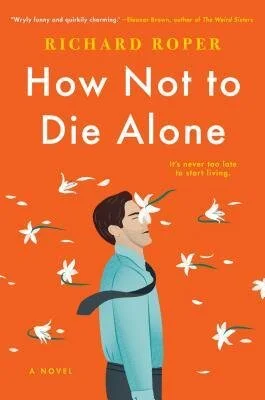
How Not to Die Alone     Richard Roper     (2019)

In 2017, I posted a review of Gail Honeyman’s Eleanor Oliphant Is Completely Fine, and that novel also made it to my exclusive list of favorite books of the year. In Honeyman’s story, an awkward and abused woman in present-day Glasgow faces her demons and seeks to change her life.

Roper.jpg

Richard Roper’s How Not to Die Alone, set in London, has as its central character the forty-two-year-old Andrew Smith, who is another lonely soul, desperate for connection with other human beings. Although the premises of the two novels are similar, Roper’s book is by no means a clone of Honeyman’s. His narrative voice is distinctive and powerful, treating the issue of trauma and its resultant isolating consequences. Roper also succeeds in making How Not to Die Alone uproariously funny.

Andrew is employed in an unusual civil service job: he searches the dwellings of deceased people who have no known family, trying to find any evidence of relatives who can (1) be notified of the death and (2) pay for disposition of the body. If he can’t find anyone related to the deceased, the local government must foot the bill for a basic funeral and cremation. As you might expect, the bodies of people who die alone are sometimes not discovered until long after they expire. The coroner removes these bodies before Andrew shows up to comb through the possessions of the deceased, but the sites of death are often grim—cluttered, filthy, and malodorous. Nevertheless, Andrew seems to get satisfaction from his work, even going the extra mile by attending the funerals of those who have no discoverable relatives.

The novel opens at one of these funerals, and we immediately get a picture of Andrew’s fragile mental state. He has an obvious case of PTSD—with terrifying episodes being triggered whenever he hears the song Blue Moon—but we don’t learn about the initial traumatic event until late in the book. Meanwhile, Andrew becomes friendly with Peggy, a new employee who joins the eccentric Death Administration staff. Peggy could be Andrew’s ticket to better mental health, but unfortunately a longstanding lie on Andrew’s part blocks romance. As Andrew explains, “It came from a misunderstanding, but then I kept the lie going, and the longer I did the harder it was to tell the truth.” (245)

As the tension resulting from Andrew’s lie grows, the novelist injects humor that defuses the morbid aspects of the death scenes. Roper also has some lovely descriptive passages, like this one: “She’d fiddled with one of her earrings so much that it came free in her hand and bounced onto the table like a little blue tear that had frozen as it fell.” (245)  And I found Andrew’s obsessions with model trains and with the discography of Ella Fitzgerald endearing.

As the novel wraps up, Andrew observes, “Life, just sometimes, can be wonderfully, beautifully simple.” (308) By this point I was really rooting for ol’ Andrew, wanting a sequel to How Not to Die Alone, to find out what the next chapter would bring for this forlorn yet appealing character.

A Cross-Atlantic Immigrant Mystery

Searching for Sylvie Lee     Jean Kwok     (2019)

Kwok.jpg

Jean Kwok sets up a tantalizing mystery while at the same time constructing a moving story about an immigrant family in today’s highly mobile global economy.

The mystery:  Successful 30-something New Yorker Sylvie Lee has disappeared on a trip to the Netherlands to visit her dying grandmother. Her younger sister, Amy, flies to Amsterdam to look for her. This mystery component keeps the pages turning as chapters skip back and forth in time, presenting alternating narrators.

The immigrant family:  Originally from China, the extended Lee and Tan families emigrated to the Netherlands and to the United States more than a quarter century ago. Members of the younger generation are assimilated and fluent in multiple languages but still face bigotry in both countries. As one Chinese American character puts it, “I think that wherever you are, to live in the world as a white person is a completely different experience than a person of color. Discrimination is invisible to them because it does not affect them. They are truly shocked.” (227)

The dual settings (Amsterdam and NYC) add a layer of interest, since the attitudes toward immigrants have both similarities and differences. Social class is another factor. Even though Sylvie attended all the right schools and landed high-paying jobs, she laments, “I never mastered the art of the graceful shrug, the careless indifference of those who summered on private islands and tied clove hitches on sailboats.” (198)

I found the syntax and word choice in this novel particularly arresting. With each chapter, the language changes to suit the narrator of that chapter. So, when Ma, the mother of Sylvie and Amy, narrates, the sentences are shorter, with nouns often lacking articles, because Ma speaks very little English. The invoking of proverbs—such as “Those who wish to eat honey must suffer the sting of the bees” (198)—also varies. Ma’s narrative is chock full of traditional sayings, but the more Westernized Sylvie and Amy cite proverbs somewhat less often. The characters whose native language is Dutch speak in sentences that mimic the patterns of that language. Of course, we’re reading the words of fictional Dutch speakers, who are speaking Dutch that has been “translated” by Jean Kwok into English.

The fine character development in Searching for Sylvie Lee overshadows any deficiencies in the plot department, so I won’t downgrade the novel for its few melodramatic twists. In the end, Amy concludes: “How my knowledge of Sylvie, of Ma, of myself has changed. We had all been hidden behind the curtain of language and culture: from each other, from ourselves. I have learned that though the curtains in the Netherlands are always open, there is much that can be concealed in broad daylight.” (312)

For reviews of other fiction about immigrants, click on Immigrant Stories in the Archive column on the right. For another novel that combines mystery with the immigrant experience, see my post reviewing The Other Americans by Laila Lalami.

Jury Duty Intrigue

The Body in Question     Jill Ciment     (2019)

Ciment.jpg

If you read this novel, you may never want to be selected as a jury member on a serious criminal case. In fact, you may get several ideas for how to disqualify yourself, so that you don’t have to deal with confusing and contradictory evidence, seemingly capricious legal rulings, morbidly curious spectators in the gallery, members of the press trying to get a story, and fellow jurors who are disinterested or foolish or rude. You may squirm at the thought of being a jury member on a sensational case and being sequestered for the duration of the trial with your fellow citizens. Oh, and you may vow that, even if one day you do end up on a jury, you will not, under any circumstances, enter into a sexual liaison with a fellow juror.

Jill Ciment draws out all these thoughts in the 174 pages of this novel/novella, as she chronicles the experience of jurors C2 and F17, who are asked to decide a case of murder: a teenager is accused of killing her infant brother by setting him on fire. The details of the death are gruesome, laid out dispassionately in courtroom scenes by the witnesses who come forward to testify. The murder case is by no means straightforward, as the actions of the teen’s identical twin sister and of that twin’s boyfriend are revealed.

The behind-the-scenes affair between C2 and F17 (whose names we don’t learn until late in the book) is also complicated. Juror C2 is a highly successful photographer, age 52, who is married to a renowned journalist 33 years her senior. F17 is a professor of anatomy in his early forties, unattached at the time of the trial. C2 and F17 are immediately attracted to each other during the jury selection process, and they go on to have an affair that they must hide from the other jury members and from the officers of the court. This isn’t easy, since the jury members are under constant surveillance—in the courtroom, in the greasy spoons where they’re fed, and at the seedy motel where they’re kept isolated from the press and from the public at large.

As C2’s backstory is revealed, we learn that her marriage is strained by the increasing frailty and neediness of her elderly husband. She’s been tending to him, but this very caregiving points out to her the indignities of old age, which she herself will have to face eventually. Perhaps this is why she decides to have a fling with F17—to assert her own attractiveness and vigor. Perhaps the challenge of keeping the affair secret during a lengthy jury sequestration makes the sex more titillating. 

With spare language and a driving plot, Jill Ciment gives readers a ring-side seat in the courtroom and in the motel room. Read this riveting book in one sitting, and remember your civic responsibility if you’re called for jury duty.  

Mental Illness in the Family

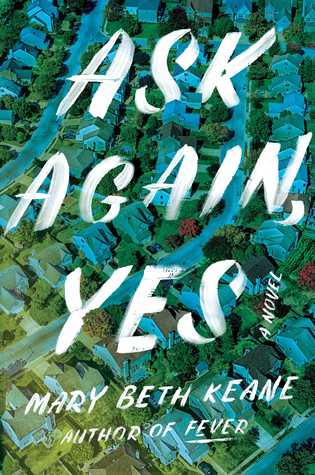
Ask Again, Yes     Mary Beth Keane     (2019)

Keane.jpg

Francis Gleeson and Brian Stanhope meet in the police academy in New York City in the early 1970s. After they each marry, they end up buying adjoining houses in a leafy suburb, commuting to the city to pursue their cop careers. This could become a pretty idyllic tale, especially when Kate, one of Francis’s three daughters, forms a deep childhood friendship with Peter, Brian’s only child. But mental illness is no respecter of happy endings.

We know from the start that Brian’s wife, Anne, is unconventional and taciturn, and Brian “always seemed to want to defuse things by agreeing with her.” (73) After Anne loses a baby, her mental state becomes dangerously explosive. (A word of warning that Anne’s turn to violence results in a distressing scene, though it’s very brief.) Anne’s actions have long-term consequences for both families: the teenage Kate and Peter are torn apart, and adult careers are shattered.

The novelist gives her story a long arc of many decades and handles it with sensitivity. Anne is not cast as a villain but rather as a suffering soul whose mental illness needs treatment, not contempt. Her actions are hurtful to others, physically and emotionally, but these actions don’t arise out of malice.

Despite the difficult subject matter, the tone of the novel is steady and even, probing family interactions with subtlety, holding the attachment of Kate and Peter as a spark of hope.

What about that title? The phrase “Ask again, yes” is plucked from an exchange, late in the book, between Kate and Peter, and it hints, from the time that you first see the cover, that they may eventually be reunited. Other than that, I didn’t find the title particularly illuminating. Still, my need to learn how life turned out for the members of the Gleeson and Stanhope families kept me moving from chapter to chapter in this immersive, well-wrought novel.

Brexit's Effects on Britons

Middle England     Jonathan Coe     (2018)

Coe.jpg

The Brexit crisis in the United Kingdom fascinates me. I’ve been following all the convoluted negotiations by reading the Guardian news online, and I’ve learned more about arcane parliamentary practices than I ever thought possible. So when I noticed that a recent novel by Jonathan Coe was billed as a satire on Brexit, I immediately reserved it at my local public library.

Fear not, however, if you have little interest in Britain’s attempts to leave the European Union. Since Coe is an accomplished writer, Middle England is a perfectly fine family drama, set against the background of contemporary British cultural and political events. (The extended Trotter family and their friends have been the subject of two previous novels by Coe, but it isn’t necessary that you read those novels to follow the family dynamics.) The 50-something siblings Benjamin and Lois Trotter are depressive types even in the best of times, and Coe’s exploration of their relationships is compassionate.

Starting in 2010, Coe traces eight years in the lives of Britons of all political stripes, from bigoted, anti-immigration Brexiteers to self-righteous left-wing crusaders. He skewers them all, even as he demonstrates how the Brexit issue has divided people and damaged relationships. Friendships are shattered, and one married couple in the novel actually separate because of their political differences. Yet other characters refuse to allow Brexit to enter their bedrooms. Some scenes in Middle England are played straight, and others are piercingly satirical. The chapters that feature a left-wing newspaper writer interviewing an obfuscating communications staffer from the office of former Conservative Prime Minister David Cameron had me laughing out loud.

In current British political writing, “Middle England” is somewhat analogous to “Middle America,” referring to middle-class and lower-middle class citizens who do not live in urban centers—in this case, London. Some find that “Middle England” also refers to a geographic region in the Midlands region of England. For me, the title of Coe’s work has additional resonances:

  • JRR Tolkien’s Middle Earth (mentioned several times in the novel)

  • Political moderation (as distinct from rabid right-wing or left wing stances)

  • Middle English from the Middle Ages (evoking the glorious literary heritage of Britain, hence nostalgic nationalism, hence isolationism, hence Brexit)

Jonathan Coe writes in a British tradition of razor sharp observers of the contemporary human condition. If you like his approach, you might also like the work of Penelope Lively or Margaret Drabble or Joanna Trollope. Or use the new Search Box at the top of this page to find all the British novels I’ve reviewed.

Pies and Brews in the Upper Midwest

The Lager Queen of Minnesota     J Ryan Stradal     (2019) Midweek Bonus Post!

Stradal.jpg

Stereotypes are by definition oversimplified and formulaic, and stereotyping of any large population is particularly problematic, since variability among individuals is much more likely than conformity. Still, we all know what’s meant, for example, by “Southern hospitality,” even if not every person who lives in the southern United States is hospitable.

In The Lager Queen of Minnesota, J Ryan Stradal gives us a good portrait of “Minnesota nice,” the stereotype of that state’s residents that includes characteristics such as avoidance of conflict, social reticence, and a surface politeness that can mask passive aggressiveness. Of course, not all Minnesotans fit this profile, but the fictional Edith Magnusson certainly does. In 2003, when the fruit pies that she bakes at a rural nursing home garner statewide attention and paying dinner guests, the 64-year-old Edith shrugs off fame and is afraid to ask for a wage increase. Over the ensuing years, she doesn’t parlay her culinary genius into a job that can pay the bills, even when she has to take over raising her teenage granddaughter, Diana.

Edith’s struggles seem grossly unfair, considering that her estranged sister, Helen, inherited all the proceeds of their family farm years before and used the money to launch a successful brewery. That’s the setup of this novel, which gently pokes fun both at Minnesotans and at the currently trendy craft brewery phenomenon. The supposedly evil Helen’s non-craft  brewery is named  “Blotz,” with echoes of the slang term for drunk, “blotto.” The craft brewery where the young Diana works part-time is named “Heartlander,” with echoes of beloved farmland and amber waves of grain.

In much the same vein as Stradal’s previous novel, Kitchens of the Great Midwest, The Lager Queen of Minnesota features strong women who survive and thrive in business despite the appalling family situations that they have to contend with. In Kitchens, the arena for success is hyper-gourmet pop-up restaurants. In Lager Queen, it’s breweries. In a delightful twist, several of the successful female entrepreneurs portrayed in Lager Queen are well past the age when they’d qualify for Social Security. Pies might have been a more conventional route for Edith to achieve financial salvation, but Lager Queen doesn’t take the predictable plot turns. In the end, Stradal finds a way to combine Edith’s pie-baking and beer-brewing talents.

Yeah, it’s a quirky book, but the quirks are droll and entertaining. If you’re a Midwesterner or a friend of a Midwesterner, check it out. And if you’d like to read reviews of other books set in Minnesota, try the new Search Box at the top of this page!

A Classic Russo Novel

Chances Are . . .     Richard Russo     (2019)

Russo Chances.jpg

Novelist Richard Russo was born in 1949, so he has first-hand knowledge of the worlds of his characters who were also born in 1949 and who are turning 66 in the year 2015. That’s when Chances Are . . . opens, as three friends—Lincoln, Teddy, and Mickey—get together on Martha’s Vineyard over Labor Day weekend. Haunting them is the unsolved disappearance of Jacy, a young woman they all went to college with. Jacy has not been seen since Memorial Day weekend of 1971, right after the four graduated from the fictional Minerva College in Connecticut.

The 1957 pop hit from Johnny Mathis, “Chances Are,” threads its way through this novel. The song itself is mentioned several times, but the operation of sheer chance also affects each of the characters.

For example, males who were born in 1949 were subject to the first national draft lottery, which occurred on December 1, 1969. This spectacle, which was broadcast live on television, determined which men would be inducted into the military, and its primary purpose was to provide soldiers for the escalating Vietnam War while also responding to complaints that wealthier, more educated young men received preferential treatment in required military service. The lottery was a wrenching event for those whose birthdays were being drawn, supposedly randomly. Men who had a low number among the 366 birthdays would be drafted and very likely sent to a brutal jungle war zone in southeast Asia. Those who had a high number were spared. Those with a number somewhere in between didn’t know what direction their lives would take.

Lincoln, Teddy, and Mickey learn their draft fates in front of a grainy black and white television set on that day in 1969. But other chance encounters and near-misses also shape this story, which moves effortlessly between the late 1960s-early 1970s and May of 2015. Russo is masterful in portraying the interior states of contemporary American men—unsparing in revealing their weaknesses but also unapologetic in showing their strengths. All three men in Chances Are . . . were in love with Jacy, and inevitably their return to the site of her disappearance stirs up memories both painful and sublime.

The final resolution and revelation of the Jacy mystery is a little more pat than I usually expect from Russo, but the character studies in this novel demonstrate complete command. He situates Lincoln, Teddy, and Mickey on a gorgeous island, hangs over them some ugly unknowns, and then shows how these ordinary though distinctive guys react.

Richard Russo is one of my favorite authors; you can read my reviews of some of his other works here.

Spiritual Renewal in Palm Springs

The Family Tabor     Cherise Wolas     (2018)

Wolas.jpg

Harry Tabor, the current patriarch of the Tabor family, hears a voice. It might be his conscience speaking to him, commenting on long-repressed memories. It might be God calling him to account for his life. It might be an ancestor speaking from the grave, or maybe it’s dementia.

Harry is 70 years old and about to be crowned Man of the Decade by the good people of Palm Springs, where he has long resided with his adored and adoring wife, Roma, doing the philanthropic work of resettling Jewish refugees from around the world. As the novel begins, Harry is at the top of his game, feeling healthy, proud, and deserving of all the praise that is being heaped upon him. Then that voice comes, on the very day of the Man of the Decade presentation event, which will be attended by 800 people decked out in their best. Harry was brought up as a Jew, but throughout his adult life he’s embraced the cultural aspects of Judaism more than the spiritual. Sure, he and Roma attend synagogue for the High Holy Days, but Harry doesn’t really buy into the concept of a deity and doesn’t, for example, truly repent his sins.

All that is about to change, and Harry’s seemingly perfect family life is about to explode also. Harry and Roma’s three adult children are traveling to Palm Springs to celebrate with their father, and the novelist takes us into each of their lives, revealing disturbing problems. Meanwhile, Roma, who is a child psychologist, is struggling with a particularly difficult case. Can Roma help her own children face their demons? Can a return to heartfelt religious observance heal these wounded people? Or can they at least embrace honesty in their relationships?

Novelist Cherise Wolas is only moderately successful in crafting the story of the Tabors. Some of the characters’ interactions feel forced, and the wrap-up of the book is abrupt and awkward. But Wolas deserves to be commended for tackling an exploration of the role of the spiritual in twenty-first-century life. Full-scale adherence to the rules and rituals of a particular faith is an option, and although Judaism is the faith that Wolas presents in most detail, one character seems to be testing a return to the Roman Catholicism of her youth. Being part of a community whose members share values and support each other in worship and in daily life works for some people. For others, spiritual renewal might mean a commitment to complete honesty in personal and professional interactions. Honesty can serve as a foundation for building a moral code upon which to base a fulfilling life, with or without a component involving organized religion. Harry Tabor has been a generous man and has done great good works for decades, but the voice that speaks to him makes clear that Henry’s philanthropy isn’t enough. He needs to face some serious failures and betrayals that he’d rather forget.  

The Family Tabor addresses tough moral and ethical questions in an era when the value of adherence to moral and ethical standards is being severely tested. If these issues concern you, take a look at what Cherise Wolas has to say.

More Than a Mystery

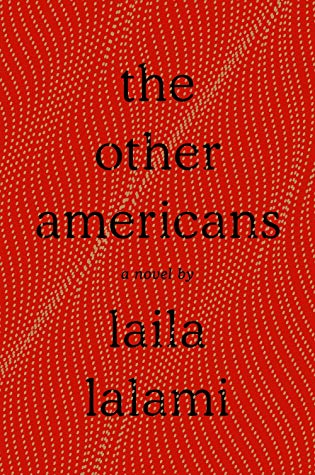
The Other Americans     Laila Lalami     (2019)

Exactly who are “the other Americans” in Laila Lalami’s novel of that title? She introduces multiple narrators, each of whom could be categorized as “other.”

Lalami.jpg
  • Driss, a Moroccan immigrant who runs a diner, is a ghostly presence in many ways. On the first page he dies in a late-night hit-and-run accident, yet we get his back story piecemeal in chapters throughout the book.

  • Efraín, a Mexican doing landscaping in this California desert town, witnesses the accident but is afraid to come forward because of his undocumented status. We follow his crisis of conscience over many weeks.

  • Anderson, a prime suspect in the accident case, is an elderly white guy who runs the bowling alley next door to Driss’s diner. He sees himself as ostracized in a corporatized and increasingly diverse society.

  • Nora, Driss’s adult daughter, is convinced that her father was not killed accidentally but murdered, and she pushes the police to dig deeper into the evidence. As a musician, she finds some acceptance in the jazz community, despite her brown skin.

  • Coleman, an African American police detective, is assigned to the accident case. She’s smart and savvy, but she struggles at home in raising her teen stepson.

  • Jeremy, another police officer, is a veteran of the Iraq War who clearly suffers from PTSD. Early in the novel he becomes Nora’s boyfriend, and their relationship anchors a significant sub-plot.

The list of characters goes on, and Lalami integrates the disparate narrative perspectives smoothly as she disentangles the mystery of Driss’s death. All her characters (even Anderson in his way) are outsiders, with personal histories that define them in opposition to the people around them. A sense of otherness can arise from many sources, including race, ethnicity, religion, gender, immigration status, woundedness, or occupation.

Although the ensemble cast of The Other Americans is very large, the characters are fully fleshed out, with distinct voices. I really wanted Lalami to broaden each of their stories, although I know that this would have cluttered the novel and distracted from the main plot. She does provide a brief and tantalizing wrapup of the hit-and-run accident, several years out, from Nora’s point of view.

I got to know these Americans; I sympathized with many of them and wished them well. Good novels do that to a reader.

Coming of Age in the New Ireland

Normal People     Sally Rooney     (2018)

Rooney.jpg

As we grow older, each of us carries memories from the years that we’ve lived through. Some of us also carry wisdom gained from reflection on our past actions. And a few of us can dissect the decisions and motivations of decades gone by.

Irish novelist Sally Rooney, who is in her late twenties, has an uncanny understanding of contemporary men and women in their late teens who are navigating relationships, developing their own worldviews in perilous times, wrestling with their demons, and exploring the directions that their talents might take them. She explores the emotions of emerging adulthood with exquisite sensitivity and nuance in Normal People, her second novel, following on the highly successful Conversations with Friends from 2017.

In 2011, Connell Waldron and Marianne Sheridan are classmates in a small town in County Sligo, in the rural west of Ireland. Connell’s mother, a loving but impoverished single parent, works as a housecleaner for the wealthy Sheridans. Connell and Marianne, the two brightest students at the local secondary school, are drawn to each other. He’s a popular athlete, with several good friends. She’s a loner with a miserable home life. This being the New Ireland (not the Old Ireland of hidebound Catholicism), plenty of sex scenes ensue, handled with great care by the author, though still sometimes cringe-worthy. Connell and Marianne keep their liaison secret, each for different reasons.

When the pair head off to attend Trinity College, their roles are somewhat reversed. Connell struggles to adjust as a “culchie” (a country bumpkin) in the cosmopolitan Dublin, whereas Marianne, freed from her nasty mother and brother, slides right into a smart social set. Over a period of four years, they break up, get back together, break up again . . . and readers are pulled one way and another.

The plot is not especially original, but Rooney exploits it deftly to probe the thoughts of Connell and Marianne as they grow toward adulthood. Despite their different family situations, they hold much in common, including exceptional intelligence, proficiency in the academic enterprise, interest in global politics, and basic loneliness. 

Connell muses: “Marianne had a wildness that got into him for a while and made him feel that he was like her, that they had the same unnameable spiritual injury, and that neither of them could ever fit into the world. But he was never damaged like she was. She just made him feel that way.” (175)

Marianne illuminates the title of the novel in a scene late in the book: “I don’t know what’s wrong with me, says Marianne. I don’t know why I can’t be like normal people. Her voice sounds oddly cool and distant, like a recording of her voice played after she herself has gone away or departed from somewhere else. In what way? he says. I don’t know why I can’t make people love me. I think there was something wrong with me when I was born.” (187)  (The lack of punctuation is Rooney’s—a feature that I accepted despite its irritation factor.)

As if laying bare all aspects of adolescent angst isn’t enough, Rooney also manages some good digs at literary pretentiousness. Here’s Connell considering an author event  he’s just attended in Dublin: “He knows that a lot of the literary people in college see books primarily as a way of appearing cultured.  . . .It was culture as a class performance, literature fetishized for its ability to take educated people on false emotional journeys, so that they might afterward feel superior to the uneducated people whose emotional journeys they liked to read about. Even if the writer himself was a good person, and even if his book really was insightful, all books were ultimately marketed as status symbols, and all writers participated to some degree in this marketing. Presumably this was how the industry made money. Literature, in the way it appeared at these public readings, had no potential as a form of resistance to anything.” (228)

Sally Rooney nails it with this insightful and intense book. 


Coming of Age in the North Woods

Winter Loon     Susan Bernhard     (2019)

Bernhard.jpg

The loon, a large migratory aquatic bird, can be spotted in the far northern reaches of Minnesota,  Wisconsin, and Michigan (and up into Canada) only in the height of summer. The cry of a loon echoing across a lake is haunting and unforgettable, emblematic of long days in the North Woods. But if you spot a loon in these parts in the winter, the bird is probably injured and is unlikely to survive.

Wes Ballot, the teenage first-person narrator of this novel, is perhaps like a winter loon in rural Minnesota—disoriented, separated from his family, facing grim odds for survival. On the very first page, Wes’s mother falls through the ice of a semi-frozen Minnesota lake and drowns, just out of the reach of Wes’s outstretched arm. If you’re a reader who, like me, has a hard time with fictional death scenes, you may waver in committing to the story, but I’d encourage you to read on, as the path of Wes’s life winds twistingly toward adulthood.

When Wes’s father deserts him, supposedly to find work, Wes is left to live with his insensitive maternal grandparents. A local Native American family is sympathetic toward him, and Wes is smitten with a member of this clan, Jolene, who’s also had a tough life.  “She smiled at me then, a funny, crooked, closed-mouth sideways smile that I would later try to imitate in the mirror. It was like she could see something in me that I didn’t know about, and I wanted to try on that expression so I could know it, too.” (98)

Although Wes has plenty of setbacks, he keeps seeking to learn the facts about his troubled parents, particularly on classic road trips through the American West. “I tried to organize my thoughts, but the miles I’d traveled logged in my veins and I could feel the tire treads rumbling the marrow like I was still driving.” (279)

Some of the people Wes Ballot meets are selfish and cruel. Well, no, a lot of the people he meets are selfish and cruel, and sadly, many teens around the globe find this to be the case. But a few people are generous and kind. Wes doesn’t give up looking for the people who will affirm his worth.


California Dreamin'

The Golden State     Lydia Kiesling    (2018)

Kiesling.jpg

Daphne, the first-person narrator and main character in this novel, is the mother of a sixteen-month-old girl nicknamed Honey. She’s also the wife of Engin, who was wrongly deported to his native Turkey eight months before the story begins. And she’s an administrator at the fictional university-based Institute for the Study of Islamic Societies and Civilizations in San Francisco.

After a devastating incident at the Institute, Daphne is at the end of her rope on both the career and parenting fronts. She packs up Honey and heads to a remote rural area in northern California, to a small house that she’s inherited. The people she meets there include a 92-year-old woman on a personal quest and a group of libertarians who want the region to secede from the state of California. Tapping into unreliable internet connections, Daphne sends email excuses to her boss back in San Francisco and phones her husband in Turkey, all the while trying to figure out what path she wants to take for the rest of her life.

Novelist Lydia Kiesling pokes at and deflates a number of contemporary cultural beliefs in this candid novel.

  • The total bliss of early motherhood? Jab. Daphne feeds Honey, diapers her, reads to her, bathes her, kisses her, soothes her when she falls on her face, and straps her into car seats and strollers as she strenuously resists being strapped in. The sentences in which these activities appear are often lengthy and lacking punctuation. With this writing technique, Kiesling is conveying the unremitting and often overwhelming demands of child care.

  • The purity of purpose at major universities? Jab. A sample: “The more education you have the more removed you are from the ineluctable yawning core of work at the University, which is not in fact teaching but is the filling out and submission and resubmission of forms, the creation of scheduling Doodles, the collection of receipts and the phoning of caterers, the issuing of letters and the ordering of supplies and the tallying of points in poorly formatted spreadsheets.” (38)

  • The basic fairness of American immigration enforcement? Jab.

  • The universal good-heartedness of rural Americans? Jab.

  • The excellence of off-the-beaten-path diners? Jab.

The “golden state” of the title clearly refers to California, and Kiesling provides lovely scenes of areas in California that seldom appear in fiction. But it’s also possible that this title is obliquely referring to the representation of motherhood as golden, or of our American political system as golden. Check it out, through the eyes of Daphne.


Retirement in Pittsburgh? Don't Yawn!

Henry, Himself     Stewart O’Nan     (2019)

O'Nan.jpg

Stewart O’Nan offers no rootin’ tootin’ action in this novel, no daring heroes, no grisly violence. Henry, Himself is a quiet, introspective portrait of a year in the life of Henry Maxwell, a retired engineer in his 70s who lives in Pittsburgh. If you’re already yawning, stop that for a moment and read this review.  

Somehow, novelist O’Nan is able to turn everyday events into drama that drives his narrative in a highly effective way. I haven’t yet figured out how he does this. It could be the naturalistic dialogue. Henry’s conversations with his wife of nearly fifty years, Emily, can be hilarious. The two have well-worn phrases that they toss back and forth, parrying each other’s comments. 

Maybe the novel works because the hundreds of minor quotidian events are enlivened by actions beyond the edges of the main story, such as the troubled marriage of Margaret, Henry and Emily’s alcoholic daughter.  

It’s also possible that I see my own life in O’Nan’s prose because I’m in the same age range as Henry and Emily. But O’Nan is a decade younger, so I don’t know how he’s able to depict the attitudes and approaches of the elderly so astutely. He’s simply a fine novelist.  

So, what exactly does the character Henry do? He may be retired, but he certainly keeps busy every day, well beyond walking the dog. At his basement workbench he re-glues a kitchen drawer because he can’t afford new cabinets. He makes innumerable trips to his local Home Depot store to buy supplies for his fix-it projects, and in his home office he keeps meticulous records of household expenses. Despite his multiple health challenges (which he manages with an array of prescription medications), he golfs with his old pals, trading barbs in camaraderie. Henry’s beloved wife Emily is always in the picture also, and he takes pains to please her with dinner dates for Valentine’s Day and Mothers’ Day. The two of them escape Pittsburgh in the summer for Chautauqua, New York, where they meet up with their children and grandchildren at their lakefront house.  

In the midst of these ordinary activities, Henry mentally retraces significant events of his past—a passionate but doomed youthful love affair, his searing combat experience in World War II, his fulfilling career in aeronautics. His companionable marriage to Emily anchors him even as he is baffled by the animosity between Emily and the wife of their son. The unhappy life of daughter Margaret comes to Henry’s mind frequently, as he assesses whether he has failed her as a father. He muses, ”Late in life, after his mother had died, his father cried at baptisms and funerals and sappy movies on TV, age stripping away a final protective layer. Now Henry could feel the same softening taking place inside him, a helpless grief for the past and boundless pity for the world, and that was right too. No fool like an old fool.” (72)

You can get more of the Maxwell family in two other O’Nan novels that I also highly recommend:  Wish You Were Here (published 2002) and Emily, Alone (published 2011). Both are set after Henry, Himself, which makes Henry, Himself a prequel. I can also vouch for two stand-alone O’Nan novels that probe interpersonal relations in a warmhearted way: Last Night at the Lobster and The Odds. Be aware, however, that O’Nan has also written terrifying thrillers that I have stayed far away from!

For other novels about Rust Belt places like Pittsburgh, check out Anne Tyler (Baltimore), Richard Russo (upstate New York), and Leif Enger (northern Minnesota). For other introspective novels, try Kent Haruf or James Wood or Bernard MacLaverty. You can click the links for my reviews.

A Cautionary Novel about Cults

Little Faith     Nickolas Butler     (2019)

Butler.jpg

In the title to this blog post, I don’t use the word “cult” lightly. I use it to mean a group professing a religious belief that they claim provides exclusive access to salvation. But this alone would not distinguish a cult from many mainstream religious groups. Cults often have arcane rules about conduct of life—rules that can be secretive. In addition, a cult demands absolute obedience to a leader, usually a charismatic man, and urges total allegiance to the group, alienating members from family and indeed from the greater society. The risk of exploitation of members by the cult’s leader is high.

I’ve noticed that the media don’t much use the term “cult” lately, rather giving these groups the benefit of the doubt as “new sects” or “alternative religious movements.” I was raised in the 1960s in a religious splinter group that fell short of being a cult but that could also have been given one of these more benign labels. I see a distinct tipping point between “new sect” and “cult”: When a member’s fervent adherence to the group leads the member to perform destructive (including self-destructive) acts that are widely recognized by civil society as unacceptable or even criminal, to me that group is clearly a cult.

Now, to get the novel at hand, Little Faith. In present-day rural Wisconsin, a retired couple, Lyle and Peg Hovde, are delighted when their long-estranged adult daughter, Shiloh, comes to live with them again. Shiloh brings with her Isaac, her five-year-old son. The Hovdes don’t ask about Isaac’s father; they’re just reveling in their newfound grandparenthood. And Isaac is a bright, sweet child.

The knot of this novel, however, arises when we find that Shiloh has become a member of a cult. True, Shiloh calls the group that she joins her “church,” but it has all the hallmarks of a cult. Lyle and Peg try to be respectful of Shiloh’s beliefs, not the least because they’re desperate to have good relationships with their only child and only grandchild. But the deceptive and damaging aspects of Shiloh’s beliefs become more and more apparent as the story wends through the seasons of a year. Lyle’s own struggles with religious belief weave in and out of the narrative.

Nickolas Butler’s prose is straightforward but occasionally lyrical, his characters are beautifully developed, and his plot is achingly tragic. I challenge any reader of Little Faith not to weep at the ending of the novel, which I will not spoil with a full revelation of the plot. An Author’s Note tells us that part of the story is based on an actual 2008 incident in Wisconsin, where Butler lives. Thus, Little Faith becomes a cautionary tale about the dangers of extremist, authoritarian groups that entrap needy souls in the name of religion.

Click here for my review of another of Nickolas Butler’s novels, The Hearts of Men.

Cozy Mysteries in Maine

The Mainely Needlepoint Mysteries     Lea Wait    (2015-present)

Wait.jpg

I’ve recently dipped into this popular American cozy mystery series. In the initial book, Twisted Threads, we learn that the first-person narrator, Angie Curtis, was raised in Maine by her grandmother (“Gram”) after the disappearance of Angie’s mother. When the mother’s body is found after 17 years, 27-year-old Angie heads back to Maine from Arizona, where she’s been working as an assistant to a private detective. Angie’s skills come in handy with the investigation into her mother’s death and other mysteries in the small Maine tourist town of Haven Harbor. After these are solved, Angie agrees to stay on for six months to help Gram run her home-based business, Mainely Needlepoint, which produces high-end custom pillows, chair covers, and wall hangings.

Of course, in subsequent books in the series, other crimes in Haven Harbor bubble to the surface for Angie to tackle. She finds herself pretty happy to be back in Maine with her delightful Gram, the eccentric cast of needle crafters who work for Mainely Needlepoint, and potential romantic partners.

The dialogue in these novels is realistic, and the plots move quickly, resolving in the final few pages, though I did detect signs of haste in the writing. The setting on the coast of Maine comes to life with descriptions of ocean views and luscious seafood. I guessed some of the perpetrators of crimes early on, but I liked learning more about Angie as she weighs whether to stay on in her native Maine or return to the sunny Southwest.

You can read the books in any order, but chronologically works best. The series titles are

Twisted Threads (2015)

Threads of Evidence (2015)

Thread and Gone (2015)

Dangling by a Thread (2016)

Tightening the Threads (2017)

Thread the Halls (2017)

Thread Herrings (2018)

Thread on Arrival (2019)

For other cozy mysteries, see my reviews of Alexander McCall Smith’s novels (also here).

Graham Norton’s Holding is another great cozy, reviewed here.

A Novel about a Nasty Novelist

A Ladder to the Sky     John Boyne     (2018)

Boyne.jpg

 “Nasty, nasty, and nasty” are the words that come to mind to describe the character Maurice Swift in this latest novel by Irish author John Boyne. Maurice wants to be a writer, and not just any writer but a world-renowned one. He will stop at nothing to achieve his goal, though he himself says that ambition is “like setting a ladder to the sky. A pointless waste of energy.” (309) He also admits that he has absolutely no talent for plot, though if he’s given a plot he can hang words on it fairly well. 

We first meet the slick, handsome Maurice in 1988, when he’s a young ex-pat Yorkshireman working as a waiter in Berlin. He charms Erich Ackermann, a novelist on a book tour. Then we jump ahead a few years to another European locale: the stunning home of (the real-life author) Gore Vidal on the Amalfi Coast. In this segment, Maurice is even more confident—no, brazen—as he arrives to visit Vidal in the company of Dash Hardy, another of his conquests. Although Maurice doesn’t fool the savvy Vidal, his literary star is rising. The next episode takes place in Norwich, England, in 2000-2001, with Maurice now married to Edith, who has recently published a successful novel. Then, after a stint in New York running a literary magazine, Maurice ends up in present-day London, meeting with young Theo Field, who interviews him for a proposed biography. With each successive segment of the novel, told from various narrative perspectives, we get a fuller picture of the true evil that lies in the heart of Maurice Swift.   

The blurbs and reviews of this book have focused on Maurice’s theft of intellectual property in the form of plots and plot components. I don’t really see these appropriations of his as criminal. In fact, before the modern era, originality in plot was not a literary skill that was highly prized. Chaucer and Shakespeare rarely came up with original plots. And some stories have been mined for centuries: the Arthurian legends have been reworked by countless greats, from Malory to Tennyson to Lerner and Loewe. Some contemporary genres are all about reused plot elements—autofiction, for instance, is constructed out of pieces of the novelist’s own life history. I could offer countless other examples. So, no, I don’t see plot thievery as Maurice’s sin. Instead, his sin is ambition. His overweening desire to be a famous novelist leads him to steal more than just plots and to commit many other increasingly heinous crimes.  

As Maurice’s wife, Edith, says to him: “’You’re not a writer at all, Maurice. You’re desperate to be but you don’t have the talent. You never did have. That’s why you’ve always attached yourself to people more successful than yourself, pretended to be their friend and then dropped them when they were no longer of any use to you.’” (215) Maurice’s pretense of friendship is only the half of it.  

With Maurice Swift, Boyne has created a character who plays the game of contemporary fiction shrewdly, vying for the attention of agents and publishers and making the rounds of all the book festivals. Maurice cultivates those who can advance his career, using his natural good looks and sensuality to seduce both men and women. In this multi-layered novel, Boyne is not only offering a portrait of an unscrupulous writer but also skewering the entire current-day system by which writers must climb the ladder of literary success, which does not reach the sky but which is propped against a shaky edifice.  

[I’ve also reviewed another, quite different, novel by John Boyne, The Heart’s Invisible Furies.]