The Popularity of Historical Novels, Part 1

If you look beyond science fiction, fantasy, and horror novels (as the Cedar Park Book Blog does), your options for current fiction reading are weighted heavily toward the historical. Why? This podcast from On the Media suggests a few possible reasons. For example, fiction can draw attention to neglected parts of history. And some authors want their work to be more timeless, not dated by references to modern technology, which changes rapidly.

So it isn’t just my imagination that historical novels have been proliferating for the past two decades! In my scanning of book-lovers’ sites such as The New York Times, BookPage, and Goodreads, I’ve found that history is hot. In particular, there’s recently been a glut of novels about women spies during World War II. I haven’t reviewed many of these spy novels because they’ve proved too violent or sad for my taste—plus I don’t like to get stuck in one time period with my reading.

Over the past six years, I’ve featured a wide range of historical novels and historical mysteries, set from ancient times up into the 20th century. This week, I scoured the Cedar Park Book Blog archives to highlight some of my best-loved historical reads, in random order. Click on the title to be taken to my full review!
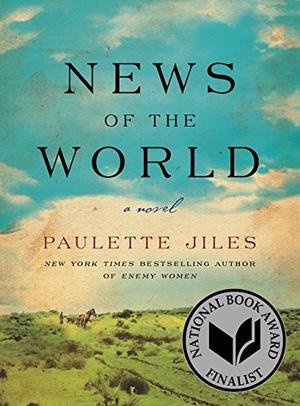
News of the World Paulette Jiles     (2016) In post-Civil-War Texas, a traveling performer agrees to make a dangerous journey to deliver an orphan to her aunt and uncle. (The film, with Tom Hanks, is also terrific.)

The Hearts of Men     Nickolas Butler     (2017) Starting in 1962 at a Boy Scout camp in northern Wisconsin, this novel follows a boy’s difficult life in a complex United States.

Where the Crawdads Sing     Delia Owens     (2018) The Marsh Girl roams the lush swamps of coastal North Carolina and meets both friends and foes. Evocative nature prose and a devilish mystery.
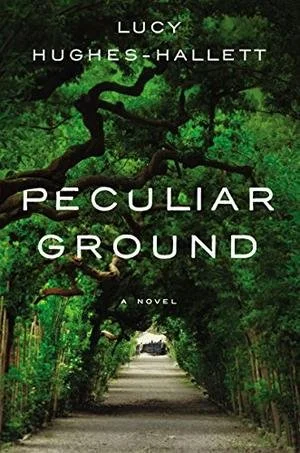
Peculiar Ground     Lucy Hughes-Hallett     (2018) A densely layered novel set on a fictional Oxfordshire estate in 1663, 1961, 1973, and 1989. Features walls—border walls, the Berlin Wall, walls of inclusion, walls of exclusion, and many others. 

The Light Between Oceans     ML Stedman     (2012) In the 1920s, a lighthouse keeper and his wife, on a remote island off the coast of Western Australia, find an infant in a boat that washes ashore.  Melodramatic but worth the anguish.

The Golden Age Joan London     (2014) In 1953, two adolescents with polio meet in a rehabilitation center in Perth. A moving story that won top prizes in Australia.

The World Of Tomorrow     Brendan Mathews     (2017) Rollicking action at the fabulous New York World’s Fair, in June of 1939, when the Great Depression has eased and World War II was still unimaginable to Americans.

The Ninth Hour     Alice McDermott      (2017) The pros and cons of being Catholic in early 20th-century Brooklyn. Exploring the intersections of morality, religion, and culture in resonant language.

Little Fires Everywhere     Celeste Ng     (2018) Teens in late-1990s Shaker Heights, Ohio, confront incendiary issues of the upper-middle-class: bigotry, greed, and a disdain for those who diverge from the norms set by their communities. 

Pachinko     Min Jin Lee     (2017) A sweeping saga about the struggles of Korean immigrant families in Japan throughout the twentieth century.

A Gentleman in Moscow     Amor Towles     (2016) The amazing adventures of a Russian aristocrat under house arrest in a Moscow hotel from 1922 to 1954.

The Last Painting of Sarah de Vos     Dominic Smith     (2016) The story of a painting and its impact on families in three settings:  The Netherlands 1636-49 (dark, burgher-ruled); New York, 1957-8 (shiny, jazz-filled); and Sydney, 2000 (sunny, cosmopolitan).

West     Carys Davies     (2018) Preposterous plot, peculiar characters, spare language, in a tale that’s akin to ancient myth, set on the North American continent in about 1815.

Barkskins     Annie Proulx     (2016) An expansive account of two French Canadian families and their relationship to the forests of North America over three centuries. Love all those trees!

Watershed     Mark Barr     (2019) In 1930s rural western Tennessee, an impoverished agrarian community is confronted with technology that will profoundly change lives.

Varina     Charles Frazier     (2018) A fictionalized version of the troubled life of the second wife of Jefferson Davis, set in the aftermath of the American Civil War.

The Vineyard     María Dueñas     (2017)     Translated from the Spanish by Nick Caistor and Lorenza García A swashbuckling historical romance that travels to Mexico, Cuba, and Spain in 1861.

The Fortunes     Peter Ho Davies     (2016) Interlocking stories about the experiences of Chinese immigrants in America over the past century.

In a special category, four historical murder mystery series:

The Marco Didius Falco Mystery Series and the sequel Flavia Albia Mystery Series     Lindsey Davis     (1989-present) Complex, fast-paced, satirical, and outrageously funny mysteries set in first-century Rome. Bonus: Learn some Roman history and geography.
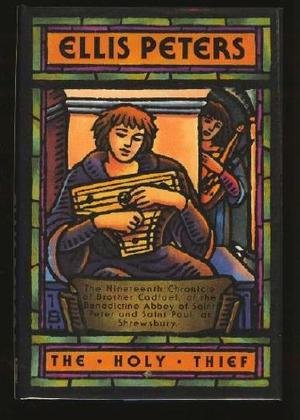
The Brother Cadfael Mystery Series     Ellis Peters     (1977-1994) Meet the brilliant and compassionate monk Cadfael, who lives in a monastery in 12th-century Shrewsbury, England, tending his herb garden and rooting out evil.

The Dame Frevisse Mystery Series     Margaret Frazer     (1992-2008) Dame Frevisse, a nun at a fictional Oxfordshire convent in the 15th century, is a practical and clever sleuth, solving personality clashes as well as crimes.

The Roger the Chapman Mystery Series     Kate Sedley     (1991 to 2013) Roger is an engaging, burly fellow with a large backpack of wares. He tramps all around England in the 15th century, unravelling mysteries. 

My recent posts on this blog have also had lots of short reviews of historical fiction. For example:

Historical Fiction, 7th Century to 20th Century

Strong Women of Yore

Historical Fiction Sequels That Can Stand Alone

Among My Faves: Tessa Hadley

British author Tessa Hadley’s writing just keeps getting better with each successive book that she produces. Her plots focus on families, marital relationships, friendship, and the impact of grief. Her characters are primarily middle-class or upper-middle-class British people who are artists or writers or teachers. I find her prose to be both lucid and rich in its deep searches into motivation, desire, and personality. In this review, I take a look at two of Hadley’s books.

Bad Dreams and Other Stories (2017) is a collection of ten short stories, seven of which appeared previously in the New Yorker magazine. To give you a sense of Hadley’s writing, here are selected quotes from four of the stories:

From “An Abduction” 

“Something was revealed in her that was normally hidden: an auburn light in her face, her freckles startling as the camouflage of an animal, blotting up against her lips and eyelids. . . Her family called her pudgy, but she just looked soft, as if she were longing to nestle.” (9) 

From “Bad Dreams” 

“In the lounge, the child paddled her toes in the hair of the white goatskin rug. Gleaming, uncanny, half reverted to its animal past, the rug yearned to the moon, which was balanced on top of the wall at the back of the paved yard.” (118) 

From “Under the Sign of the Moon”

“All the time he was setting out these platitudes with such solemnity, Greta felt sure that they weren’t the real content of his thoughts, just as her own sceptical, condescending cleverness when she argued with him wasn’t the real content of her thoughts either. This conversation took place on the surface, while their real lives were hidden underground beneath it, crouching, listening out, mutely attentive.” (185) 

From “Silk Brocade”

“.  . . on the white walls there were prints of paintings by Klee and Utrillo and a gilt antique mirror with a plant trailing round it. Morning light waited, importantly empty, in the cheval glass.” (205) 

In Hadley’s 2019 novel, Late in the Day, two couples have been friends for decades and are now in their fifties. At the beginning of the book, Lydia’s husband, Zachary, dies suddenly. In deep shock and grief, Lydia comes to stay with Alex and Christine. Hadley explores how each of the three misses Zachary desperately, but she also delves into the interpersonal relationships of all four characters—relationships that have evolved through many changes in their lives. For this she shifts back and forth in time, looking at pivotal events. Again, I offer some key quotations:

“Marriage simply meant that you hung on to each other through the succession of metamorphoses. Or failed to.” (118)

“Both women felt some balance of power in their lives had been restored in relation to their men, after the initial blow of becoming mother to young babies, which had knocked them back; now their children filled them out rather than depleting them.” (161) 

“And we were terribly bored by the Manifesto, couldn’t understand a word of it, we preferred historical novels, really. (236) 

Earlier short story collections by Tessa Hadley include Sunstroke and Other Stories (2007) and Married Love and Other Stories (2013). Earlier novels are Accidents in the Home (2002), Everything Will Be All Right (2003), The Master Bedroom (2007), The London Train (2011), Clever Girl (2013), The Past (2015), and Free Love (2022). I’ve reviewed Free Love on this blog.

Add some of these titles to your list of books to buy or to request from your library!


Favorite Reads of 2019

Favorite Reads of 2019

photo by Ed Robertson

photo by Ed Robertson

I’m a finicky reader. About 80% of the books that I check out from my local library never get a review, after undergoing my 50-page test. (To be honest, some don’t make it past page 10.) Reasons that I send books back unfinished and unreviewed? Oh, too much violence or an insipid plot or characters who are so disgusting that I don’t want to get involved with them. And remember, I don’t even check out books in the genres of horror or science fiction or fantasy.

In 2019 I reviewed 72 books on the Cedar Park Book Blog, and picking my favorites was a challenge. The sixteen below are the best of the best! Contemporary fiction rose to the top this year, with eight of the sixteen titles that I selected.

Here are the winners, in alphabetical order by title. The brief descriptions with each are totally insufficient, so be sure to click on the title to go to my full review.  

Becoming by Michelle Obama   The former First Lady recounts her remarkable life as if she’s sitting right in the room with you. MEMOIR

The Body in Question by Jill Ciment   In spare prose, the story of an affair between two jurors sequestered for a sensational murder trial. CONTEMPORARY FICTION

Everything I Never Told You by Celeste Ng   An intimate family tale wrapped around a tragic death, probing racism and sexism in 20th-century America.  HISTORICAL NOVEL

The Golden State by Lydia Kiesling   Deftly deflates cultural beliefs about immigration law, motherhood, and rural California.  CONTEMPORARY FICTION

Henry, Himself by Stewart O’Nan   An introspective, naturalistic portrait of a retired engineer in Pittsburgh.  CONTEMPORARY FICTION

How Not To Die Alone by Richard Roper   A forlorn civil servant in London has a job searching the homes of the deceased for evidence of family. Can he find happiness?  CONTEMPORARY FICTION

The Lager Queen of Minnesota by J Ryan Stradal   A quirky take on the craft brewery phenomenon, featuring feisty women of the upper Midwest. CONTEMPORARY FICTION

Little Faith by Nickolas Butler   A family in rural Wisconsin becomes involved with a religious cult as they try to sort out their relationships. Poignant portraits of varying beliefs.  CONTEMPORARY FICTION

Normal People by Sally Rooney   Coming of age, falling in love, and confronting societal constraints, by Ireland’s hottest new novelist.  CONTEMPORARY FICTION

Olive, Again by Elizabeth Strout   Don’t miss this sequel to the Pulitzer-winning novel Olive Kitteridge. Linked short stories by a truly gifted American writer. CONTEMPORARY FICTION

Once Upon a River by Diane Setterfield   A nearly drowned young girl is the center of a magical mystery that unwinds along the Thames in the 19th century. HISTORICAL MYSTERY

The Right Sort of Man by Allison Montclair   In post-WWII London, two bright women start a marriage bureau and end up solving a crime. Spunky and sparkly. HISTORICAL MYSTERY

The Seven or Eight Deaths of Stella Fortuna by Juliet Grames   A boisterous Italian family’s 20th-century immigration saga, starring the women. HISTORICAL NOVEL

Where the Crawdads Sing by Delia Owens   A “Marsh Girl” roams the lush swamps of coastal North Carolina and meets both friends and foes. Evocative prose. HISTORICAL MYSTERY

The Winter Soldier by Daniel Mason   A medical student assigned to an eastern European field hospital confronts the physical and mental damages of WWI. A bleak but rewarding read. HISTORICAL NOVEL

The Word Is Murder by Anthony Horowitz   An invented version of the author Horowitz helps solve a crime in this spritely metafictional British whodunit.  MYSTERY

Happy reading in 2020!  Check back with the Cedar Park Book Blog every Friday for curated recommendations of historical novels, mysteries, and contemporary fiction, plus an occasional social history and memoir. Follow the blog on Facebook to get a reminder.

For more Blogger Favorites, click in the right-hand column.


Among My Faves: Mystery Series

Once I find a mystery series I like, I read every installment that’s published. The characters in the series become my friends, whom I want to check in on, whose life adventures I want to follow.

Peters.jpg

I’ve profiled a number of these series already on this blog. In the medieval mystery sub-category, my favorite is Ellis Peters’s classic Brother Cadfael Series, centered on a monastery in 12th-century Shrewsbury, England. In 21 books published between 1977 and 1994, Peters developed the brilliant and compassionate character Cadfael, with excellent historic authenticity.

Among authors of contemporary mystery series, Alexander McCall Smith stands in a category of prolificacy all his own. I’ve reviewed his No. 1 Ladies' Detective Agency Series, set in Botswana (1998-present) and his Isabel Dalhousie Series, set in Edinburgh (2004-present).  Both series feature female detectives who investigate primarily non-violent crimes. These novels are definitely not thrillers!

Other mystery series that I’ve reviewed in the past are listed at the end of this post. Here are some new reviews:

Davis.jpg

The Marco Didius Falco Mystery Series and the sequel Flavia Albia Mystery Series by Lindsey Davis (1989-present). 

Falco is a private investigator of thoroughly modern sensibilities who lives in the first-century Roman Empire. By the time he retires after 20 books, his adopted daughter, Flavia Albia, is ready to move into detective work. Many of the novels in these two series take place up and down the seven hills of Rome, but the remarkable mobility of Roman citizens allows the author to set a number of the tales in far-flung provinces of the empire.

Early on, the plebian Falco acquires a patrician girlfriend, Helena Justina, the daughter of a Roman senator. Falco also has an old Army buddy, Lucius Petronius Longus, and a large extended family who figure prominently. The books are best read in sequence, so that you can keep track of the interpersonal relationships that evolve over several decades. Start with Silver Pigs (also published as The Silver Pigs).

The stories are complex, fast-paced, satirical, and outrageously funny. I love how the characters curse, as in this bit from The Third Nero (2017): “Perella exploded with exasperation. ‘Venus and her golden girdle! I can’t leave them alone for a moment without the idle barmpots getting in a twist.’” And I love how Davis portrays the Roman bureaucracy that Falco has to wade through as he takes on assignments from various emperors. People wonder how the Roman Empire can be managed so successfully. As any scribe would tell you, this is how. Emperors may come and go, bringing more or less chaos, but the bureaucrats keep the wheels turning.”

If you know a little Latin and a little Roman history, you’ll catch a few more of the jokes, but you definitely don’t need a degree in classics to appreciate this series. If you’re familiar with I, Claudius (the 1934 novel by Robert Graves adapted into a 1976 BBC television series), you’ll recognize Davis’s flagrantly anachronistic technique of transposing modern British social constructs to the ancient world.

I grab every one of these books the minute they hit the library shelves.

The Rev. Clare Fergusson and Russ Van Alstyne Series by Julia Spencer-Fleming (2002-2013, possibly ongoing)

Fleming.jpg

For several years now, fans of Julia Spencer-Fleming have been waiting breathlessly for the next installment in this contemporary mystery series, set in upstate New York.

The character Clare Fergusson served as a combat helicopter pilot in the Army but finds her true vocation as an Episcopal priest. Russ Van Alstyne is the police chief in the small town in which Clare arrives to minister to a faltering congregation. Clare is in bad shape emotionally from her military service; Russ, who is also a veteran, has his own demons. The electricity between these two is crackling from their very first meeting. And did I mention that Russ is married?

I confess that the crimes that occur in the Clare/Russ Series are not the main attraction for me. There are violent scenes that I have to glide past, particularly when they involve fresh human blood on snow banks. I’ve read this series primarily for the interactions of Clare and Russ and for the Episcopal humor. I laughed out loud when Russ came to discuss a case privately with Clare late one spring evening and was shocked to find the church filled with worshipers attending an Easter Vigil service. The non-believer Russ has to learn a lot about Christian customs and has to accept that Clare is going to intervene in his murder cases when she feels a moral obligation to do so. Clare, who is a Southerner, has to get used to both the snowbound winters and hidebound mindsets of rural New York State.

Spencer-Fleming uses dialogue extensively in building her characters, and the dialogue in the Clare/Russ Series is snappy and authentic. The setting is depicted generously and with elegant detail, helping readers feel the biting cold winds of a blizzard, the treacherous slippage of tires on ice-slicked roads. Indeed, the first novel in the series is In the Bleak Midwinter, taking its title from a Christmas carol. Subsequent books are also titled with lines from various hymns, all beloved by Episcopalians.

Be sure to read the eight novels in the series in order, and maybe send Spencer-Fleming a Facebook message, encouraging her to get going on the ninth installment.

& & & & &

My reviews of medieval mystery series:

My reviews of other historical mysteries set in Britain:

My reviews of contemporary mystery series:

My reviews of standalone mystery novels are too numerous to list, but you can click on “Mysteries” in the right-hand column to scroll through them all.

Favorite Reads of 2018

photo: Stanislav Kondratiev

photo: Stanislav Kondratiev

I reviewed 72 books on the Cedar Park Book Blog in the calendar year 2018, and I hosted two additional reviews by a guest blogger. The 15 selections listed here were standouts for me in a year of exceptionally fine reading. You’ll notice that these books are all fiction and are mostly historical fiction. This year, no biographies or social histories made my list of favorites.  

Bear in mind that I never review horror, science fiction, fantasy, or novels with scenes of excessive violence. I haul eight or ten books home from the library every week and reject most of them by page 50. So here are the best of the best, in alphabetical order by title. Click on the title to go to my full review.  

Freya  Anthony Quinn (2017)  HISTORICAL FICTION The friendship of two British women, traced from the end of World War II through the 1960s, with insights into feminism, marriage, and culture. 

Heart of Palm  Laura Lee Smith  (2013)  CONTEMPORARY FICTION A family tale populated with gun-totin’, hard-lovin’, rip-roarin’ Southerners—plus deftly developed story lines.  

Holding Graham Norton (2017)  MYSTERY A village in the west of Ireland, a human skeleton unearthed at a building site, gossip about old love triangles, and a bumbling local police sergeant:  all the ingredients for a classic cozy mystery, but this one goes beyond the genre. 

The Italian Party  Christina Lynch  (2018)  HISTORICAL FICTION As effervescent and rosy as the Campari-and-soda drinks that the characters order constantly, but the sunny picture darkens as we learn the many secrets of an American couple living in Siena, Italy, in 1956.  

The Italian Teacher  Tom Rachman  (2018)  CONTEMPORARY FICTION An inquiry into how to live a meaningful life, centering on the fraught relationship between a famous visual artist and one of his sons. 

Little Fires Everywhere  Celeste Ng  (2018)  HISTORICAL FICTION A story about adolescents in late-1990s Shaker Heights, Ohio, tackles incendiary issues of upper-middle-class Americans: bigotry, greed, and a general disdain for those who diverge in any way from the norms set by their communities. 

Manhattan.jpg

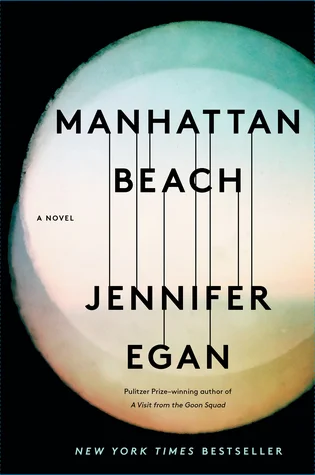
Manhattan Beach  Jennifer Egan  (2017)  HISTORICAL FICTION A noir novel with entangled plot lines, mobsters, and plenty of period detail from 1930s and 1940s New York City, especially the Brooklyn Naval Yard.  

Midwinter Break  Bernard MacLaverty  (2017)  CONTEMPORARY FICTION A masterful study, by an eminent Irish author, of the pleasures and trials of a very long marriage, set in Scotland and the Netherlands. 

The Ninth Hour  Alice McDermott  (2017)  HISTORICAL FICTION Wonderfully resonant prose about the pros and cons of being Catholic in early 20th-century Brooklyn, exploring the intersections of morality, religion, and culture.  

Peculiar Ground  Lucy Hughes-Hallett (2018)  HISTORICAL FICTION A densely layered novel set on a fictional Oxfordshire estate in 1663, 1961, 1973, and 1989, featuring walls—border walls, the Berlin Wall, walls of inclusion, walls of exclusion, and many others. 

Radio Free Vermont  Bill McKibben (2017)  CONTEMPORARY FICTION A local radio show host stumbles into becoming the leader of a movement for Vermont to secede from the United States in this uproarious fable about Trump’s America. 

The Strays  Emily Bitto  (2014/2017)  HISTORICAL FICTION Set in Australia in the 1930s and then the 1980s, a piercingly moving first-person narrative about loneliness, friendship, the art world, and the choices we make.  

Virgil Wander Leif Enger (2018) CONTEMPORARY FICTION In a dying mining town in far northern Minnesota the title character, aided by an ensemble cast, is recovering from a terrible accident. The prose of this novel is quietly dazzling.

West.jpg

West  Carys Davies  (2018)  HISTORICAL FICTION Preposterous plot, peculiar characters, spare language, in a tale that’s akin to ancient myth, set on the North American continent in about 1815, a time when the lure of the western frontier was irresistible.

The World of Tomorrow  Brendan Mathews  (2017)  HISTORICAL FICTION Rollicking action at the fabulous New York World’s Fair, in June of 1939, when the Great Depression has eased and World War II is still unimaginable.

Happy reading in 2019! Keep checking the Cedar Park Book Blog for recommendations!


Among My Faves—McCall Smith

The No. 1 Ladies' Detective Agency Series     Alexander McCall Smith

Some of my friends seem abashed to admit that they read a “soft” author like Alexander McCall Smith. His novels run around 225 pages, with simple plots, mostly lovable characters, and generally happy endings. I can consume one in an evening, and I relish every minute of it.

McCall Smith writes most of his books in series, so you get to know the characters and want to find out the next events in their lives. You can, however, select any book from a series as your first foray, and McCall Smith will provide you enough background to get oriented. I’ve reviewed two of his series previously on this blog:  the Isabel Dalhousie series and 44 Scotland Street series. But the grandmother of them all is McCall Smith’s No. 1 Ladies’ Detective Agency series.

McCall Smith 3.jpg

The No. 1 Ladies Detective Agency series is set in Botswana, where McCall Smith taught law in the 1980s and for which he plainly has a great affection. After I’d read a couple of the Botswana novels, I educated myself about this nation in southern Africa (bordered by South Africa, Namibia, and Zimbabwe), to get some context. Since Botswana is at 24 degrees south of the equator, and since the Kalahari Desert makes up about 70% of its territory, you’ll find ample references in the novels to hot, dry, dusty, sunny weather conditions. Thanks to cattle farms and the mining of gemstones and precious metals, the economy of Botswana is especially strong, and residents enjoy a good standard of living, especially with respect to education and health care. Still, the AIDS epidemic has hit the country hard, so a recurring feature of McCall Smith’s books is an orphanage that shelters children whose parents have died from AIDS. The Tswana African people are the predominant ethnic group, and Christianity is the predominant religion. English is the official language of Botswana, but you’ll find honorifics in the Setswana language:  “Mma” for women and “Rra” for men. You’ll also find the English adjective “late,” referring to the deceased, used not only as a modifier (“her late father”)  but also as a predicate adjective (“her father was late”). 

Zooming in to the series, you’ll meet Precious Ramotswe, the owner of the No. 1 Ladies’ Detective Agency in the capital, Gabarone, a bustling city with a mix of Western amenities and traditional African dwellings and family affiliations. Precious, who is 34 at the start of the series, was raised primarily by her beloved Daddy, the cattle farmer Obed, in a rural village. Although she had a happy childhood, she married the musician Note Mokote, who physically abused her and then abandoned her, leaving her unable to bear children. When her father dies, Precious is able to sell some of his herd to launch her business, the first detective agency in Botswana. She hires the capable Grace Makutsi as her secretary and sets up an office near the auto repair shop of  JLB Matekoni, an excellent mechanic. The detective agency usually takes on cases that involve domestic or business problems—cheating spouses, thieving employees, missing persons, petty vandalism.

Although Mma Ramotswe does thorough surveillance and research, she also applies levelheaded thinking to solve the cases, and she encourages her clients to utilize compromise or forgiveness as part of the solutions. Readers have access to her thoughts as she ponders motives and ethical challenges. McCall Smith’s specialty in his years as a law professor was ethics, and through Mma Ramotswe’s cases he presents many moral quandaries. Is a legal approach or personal reconciliation preferable? What are appropriate punishments for various degrees of crime? How have societal views of women affected attitudes toward domestic violence? At a much lesser level, what should the response be to a coworker who is good hearted and efficient but irritating in manner? These are the kinds of tough questions that underlie the easygoing banter of McCall Smith’s dialogues. He paints scenes of kindness, but not without pushback on ethical issues. Oh, and there’s romance in some of the novels, too.

McCall Smith churns out writing at a prodigious rate. Remember that he’s publishing books in several other series at the same time as he’s writing more for The No. 1 Ladies’ Detective Agency series. In addition to the two series I’ve mentioned above, he has books in the Corduroy Mansions series and in the Portuguese Irregular Verbs series. He’s also written versions of African folk tales for children, and he’s produced half a dozen freestanding novels for adults. I’d recommend steering away from the freestanding novels, which vary in quality.

But the No. 1 Ladies’ Detective Agency series is highly recommended. I offer the list to date below. At your library or book store, be sure to look under “M” for “McCall Smith,” since that’s his full, unhyphenated surname.

  • The No. 1 Ladies’ Detective Agency (1998)
  • Tears of the Giraffe (2000)
  • Mortality for Beautiful Girls (2001)
  • The Kalahari Typing School for Men (2002)
  • The Full Cupboard of Life (2003)
  • In the Company of Cheerful Ladies (2004)
  • Blue Shoes and Happiness (2006)
  • The Good Husband of Zebra Drive (2007)
  • The Miracle at Speedy Motors (2008)
  • Tea Time for the Traditionally Built (2009)
  • The Double Comfort Safari Club (2010)
  • The Saturday Big Tent Wedding Party (2011)
  • The Limpopo Academy of Private Detection (2012)
  • The Minor Adjustment Beauty Salon (2013)
  • The Handsome Man’s Deluxe Café (2014)
  • The Woman Who Walked in Sunshine (2015)
  • Precious and Grace (2016)
  • The House of Unexpected Sisters (2017)

Video side note: In 2008-2009, BBC/HBO broadcast seven episodes of a  television series loosely based on the early books about The No. 1 Ladies’ Detective Agency. I found that these episodes, filmed in Botswana, admirably captured the spirit of the books. 

Favorite Reads of 2017

I’ve reviewed 101 books on the Cedar Park Book Blog in the calendar year 2017, counting reviews of book series as one book. Thirteen individual titles, listed below, stand out as favorites of mine. Not all were published in 2017, but all were reviewed on my blog in 2017.

Cedar branch.jpg

Pre-eliminated from this list are titles from categories that I don’t read—science fiction, fantasy, thriller, and horror. I also abandon fiction that turns out to have what I consider to be too many scenes of extreme violence. So this list of my favorites is heavy on historical fiction, family sagas, and introspective novels. I was surprised that none of the many mystery novels that I reviewed stood out for me as top choices for the year. I think of myself as loving mysteries, especially historical mysteries, but in selecting favorites I gravitated toward non-mysteries that presented ethical challenges and complex family dynamics. I occasionally review biographies and social histories, and one social/economic history, The Rise and Fall of American Growth, made my list of favorites.

The brief blurbs here do not begin to do justice to these books. Click on the title to go to my full review! Here are my favorite reads of 2017, in alphabetical order by title:

  • Anything Is Possible by Elizabeth Strout. Interconnected short stories about families in a rural Illinois town; sort of a sequel to My Name is Lucy Barton.

  • Barkskins by Annie Proulx. A sweeping three-century saga of two French Canadian families and their relationship to the forests of North America.

  • The Dark Flood Rises by Margaret Drabble. Looking at mortality and the environment through the lens of a contemporary British family.

  • Eleanor Oliphant Is Completely Fine by Gail Honeyman. An awkward and abused woman in Glasgow faces her demons and seeks to change her life.

  • The Fortunes by Peter Ho Davies. Interlocking stories about the experiences of Chinese immigrants in America over the past century.

  • A Gentleman in Moscow by Amor Towles. Adventures of a Russian aristocrat under house arrest in a Moscow hotel from 1922 to 1954.

  • The Golden Age by Joan London. Two young polio victims grow up in a convalescent home in Australia in the 1950s.

  • The Last Painting of Sarah de Vos by Dominic Smith. Visiting a painting and its impact on families in the Netherlands (1636-1649), in New York (1957-1958), and in Sydney (2000).

  • Moonglow by Michael Chabon. The fictional biography of a Jewish engineer, recounted by his grandson, touching on key events of the twentieth century.

  • Our Souls at Night by Kent Haruf. Two neighbors in their 70s find companionship and tackle difficulties together.

  • Pachinko by Min Jin Lee. The struggles of Korean immigrant families in Japan during the twentieth century.

  • The Rise and Fall of American Growth: The US Standard of Living Since the Civil War by Robert J. Gordon. A huge and detailed nonfiction book, with emphasis on food, housing, sanitation, and consumer goods that have shaped the economy.

  • The Women in the Castle by Jessica Shattuck. Hardscrabble life in Germany in the aftermath of World War II, with reflections on the rise of Hitler.

Eight of the titles that I reviewed in 2017 appeared in the New York Times list of “100 Notable Books of 2017.” This list has some overlap with the above list of my own favorites:

I’m looking forward to many more great books in 2018!


Among My Faves: David Sedaris

Among My Faves:  David Sedaris

Sedaris.jpg

In 2017, David Sedaris published Theft by Finding:  Diaries 1977-2002. This book of excerpts from Sedaris’s extensive diaries is for serious Sedaris buffs, and I count myself as one. If you’ve never read any work by David Sedaris, do *not* start with Theft by Finding, because it will seem rambling and possibly ridiculous. First go read several of Sedaris’s collections of essays or stories. I especially recommend the following:  

  • Me Talk Pretty One Day (2000) has two sections of essays—one about Sedaris’s youth in Raleigh, North Carolina, and one about his move to France as an adult, with his partner, Hugh Hamrick. The essays about Sedaris’s attempts to learn to speak French are so hilarious that I laughed until tears obscured the words on the page.
  • Dress Your Family in Corduroy and Denim (2004) has widely-ranging essays, with a focus on family relationships. Sedaris’s realization that he’s gay is presented frankly and yet with comic self-deprecation.
  • When You Are Engulfed in Flames (2008) includes one of my favorite Sedaris humor pieces: the story of his trip to Japan to try to quit smoking. His idea was to get far away from his usual haunts to break his habit, but he found that smoking is very common in Japan.
  • Squirrel Seeks Chipmunk:  A Modest Bestiary (2010) is a collection of animal fables, a departure from the usual Sedaris essay form.
  • Let’s Explore Diabetes with Owls (2013) continues with Sedaris’s droll observations on humanity. Of particular note is the essay about Europeans’ reaction to the election of President Obama in 2008.

If we have all these other books about David Sedaris’s upbringing and family members and encounters with odd strangers, why do we need to read his diaries? Well, Theft by Finding provides insights into the creative process that produced so many excellently sardonic essays and stories. For example, there are entries that give the background to Sedaris’s most famous piece, “SantaLand Diaries,” about his experiences working as an elf at Macy’s in New York during the Christmas season. “SantaLand Diaries” appears in his 1994 book, Barrel Fever, and also in his 1997 book, Holidays on Ice, but Theft by Finding records the day in December 1992 when Sedaris first read this essay on National Public Radio and caused a sensation among listeners.   

Theft by Finding also includes entries for important events in history, so that you can read Sedaris’s first notice of the AIDS epidemic, as well as his reaction to the attacks on September 11, 2001, while he was living in France. In Theft by Finding you can watch the development of Sedaris’s style, from jotted observations to more expanded commentary on those observations. Sedaris notices absolutely everything and is a master at capturing offbeat, ridiculous, and sometimes illegal activities occurring around him. In his twenties, his existence on the fringes of life, in crime-ridden neighborhoods, put him in the company of panhandlers, drunks, and drug addicts. In mid-life, his expanding celebrity status exposed him to the rich and famous, who can be equally absurd. From reading the diaries, you can see how Sedaris blurs the line between fiction and nonfiction, taking scenes from real life, amplifying them, and surrounding them with extraordinary contextualizations.

For years, David Sedaris scrimped by on odd jobs—refinishing furniture, cleaning apartments. He kicked his meth habit, cut out alcohol and tobacco, and by sheer hard work became one of the most celebrated humor essayists in the English language. He’s among my favorites.