Prolix But Successful

The Nix     Nathan Hill     (2016)

Nathan Hill has written an excellent book. Remember this as you read my petty complaints, which I’m going to get out of the way first:

Hill.jpg

1—There are at least four separate novels crammed into The Nix, centered on (a) Samuel Andresen-Anderson, a college professor and failed writer who was abandoned by his mother, Faye, in 1988; (b) Faye Andresen-Anderson, a sweet Iowa girl who got involved with anti-war activists in 1968 Chicago; (c) Pwnage, a video-game addict who plays online with Samuel in 2011; and (d) Laura Pottsdam, a “college sophomore and habitual, perpetual cheater” in 2011. Plus there are several sub-plots. All that said, Hill pulls these disparate pieces together well.

2—About 100 pages could have been cut out of the 620 pages of The Nix. For example, in sections about video games, Hill goes out too far on the verbosity limb. The wordiness does tend to amplify Pwnage’s obsessions, but my head was swimming for many pages.

3—The Nix fudges the dates of the 1968 Democratic National Convention. Yes, yes, I know about authorial privilege in creating a fictional universe, but it really messes up readers’ engagement with the story when the novelist plays loose with significant historic events in a novel that’s firmly entrenched in a particular period. (I’m fine with fudging obscure events.)

4—The title of The Nix refers to a Norwegian house spirit that appears at pivotal points in life. I like this conceit a lot, but I found Hill’s invocation of the nix sometimes strained.

So why do I still think that The Nix is an excellent novel? Hill’s vocabulary range is astounding, and his sentence structure is mesmerizing, recalling for me the work of much more seasoned writers, such as Michael Chabon. Hill can make the most mundane description remarkable, as in this riff on traffic in Chicago: “The closer he gets to the city, the more the highway feels malicious and warlike—wild zigzagging drivers cutting people off, tailgating, honking horns, flashing their lights, all their private traumas now publicly enlarged. Samuel travels with the crush of traffic in a slow sluggish mass of hate. He feels that low-level constant anxiety about not being able to get over into the turn lane when his exit is near. There’s that thing where drivers next to him speed up when they see his turn signal, to eliminate the space he intended to occupy. There is no place less communal in America—no place less cooperative and brotherly, no place with fewer feelings of shared sacrifice—than a rush-hour freeway in Chicago.”

Hill can even pontificate in a way that isn’t offensive. He examines the motivations of his character Faye at length. Here is a brief excerpt: “She knew that way down deep she was a phony, just your average normal girl. If it seemed like she had abilities that no one else did, it was only because she worked harder, she thought, and all it would take for the rest of the world to see the real Faye, the true Faye, was one failure. So she never failed. And the distance between the real Faye and the fake Faye, in her mind, kept widening, like a ship leaving the dock and slowly losing sight of home. This was not without cost. The flip side of being a person who never fails at anything is that you never do anything you could fail at. You never do anything risky. There’s a certain essential lack of courage among people who seem to be good at everything.”

Hill captures the mood and texture of historical periods exceptionally well, even though he’s too young to have had direct experience of those periods. His home economics classroom in 1968 Iowa, for instance, is priceless and spot-on. Even minor characters in The Nix come alive. Readers can, for example, deduce quite a bit about Faye’s college friend Alice from this description of Alice as an older woman: “She’d decided that about eighty percent of what you believe about yourself when you’re twenty turns out to be wrong. The problem is you don’t know what your small true part is until much later. . . She grew up and bought a house and found a lover and got some dogs and stewarded her land and tried to fill her home with love and life and she realized her earlier error: That these things did not make you small. In fact, these things seemed to enlarge her. That by choosing a few very private concerns and pouring herself into them, she had never felt so expanded. That, paradoxically, narrowing her concerns had made her more capable of love and generosity and empathy and, yes, even peace and justice.”

This sprawling, ambitious novel about small choices that have enormous consequences is definitely worth your time, and Nathan Hill is a novelist to watch.
Books in Brief, Part 4

Here are short reviews of three books that I buzzed through recently.

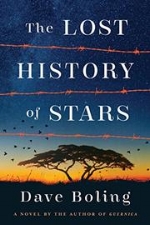
The Lost History of Stars     Dave Boling     (2017)

The background: The Second Anglo-Boer War (often known as the Boer War, 1899-1902) was fought to determine control of rich gold and diamond mines in southern areas of the African continent. The British Empire sent troops against the Boers, who were mostly descended from Dutch settlers in the region. The outnumbered Boers waged a guerrilla war that outraged the British, who expected to win easily. The British responded by burning Boer farms and herding the women and children from those farms into concentration camps. Twenty-seven thousand of them died. The Lost History of Stars tells of one fictional family’s horrific experiences during this period. I skipped over large chunks of this novel because the story, though well told, became too painful for me. Author Boling has illuminated a “lost history” of terrible suffering, in which the stars of the southern hemisphere and the love of family are among the few bright spots for the characters.

Difficult Women     Roxane Gay     (2017)

My husband prefers philosophy to fiction, but he picked up Difficult Women from the bedside table because he’d heard about Roxane Gay’s 2014 book of essays, Bad Feminist. Here’s his take on Difficult Women: “I used to think that the legislative bodies in the US would work to defeat rape culture and racism. Now we’re relying on fiction writers to draw our attention to the violence and bigotry in our society. These stories are grim—very dark. Almost all the male characters are creepy, and both the male and the female characters are obsessed with sex.” Of the 21 stories in this collection, I read a half dozen, recommended by my husband as the least brutal. For example, “Bone Density” is about a married couple who both have affairs. “The Sacrifice of Darkness” is a moving fable—or maybe a parable—about a miner who can no longer stand underground darkness and flies into the sun, with devastating consequences. Gay’s writing is sharp and slashing. 

Saints for All Occasions     J. Courtney Sullivan     (2017)

The plot of this novel is pretty predictable: Two young Irish women emigrate to Boston in the late 1950s, one of them gets pregnant, and fuss ensues. Stock characters from the Irish-American playbook populate the text:  the alcoholic bar owner, the stoic matriarch, the cruel nuns, the saintly nuns, the pitiful little brother, the dance hall cad, the faithful friend. What bothered me most, as someone who has lived in Ireland, was that the Irish-born characters talked like Americans. I’m not saying that the author should have thrown in “faith and begorrah” to establish Irish cred, but some representation of Irish idiom might have brightened up this serviceable but somewhat plodding family saga. For a much better fictional take on the Irish immigrant experience in the America of the 1950s, I heartily recommend Colm Tóibín’s Brooklyn (2009).

Two Mysteries in One

 Magpie Murders     Anthony Horowitz     (2017)

Anthony Horowitz was the screenwriter for one of my favorite British television series, Foyle’s War, so I was pleased to see his name as the author of a book—and a double mystery at that.

This is the way it works:  Magpie Murders is a mystery novel that bestselling fictional author Alan Conway submits to his fictional publisher in contemporary England. It’s supposed to be the ninth book in the series of cozy mysteries set in a quiet English village in the 1950s, with German-Greek Atticus Pünd as the brilliant detective. If you think that this sounds a lot like Agatha Christie’s Hercule Poirot, you’re right. Horowitz inserts an amazingly accurate simulation of a mystery from the golden age of British detective fiction into this novel. (For my blog post on golden-age British mysteries, click HERE.)

Surrounding the text of the Atticus Pünd mystery is another mystery. Susan Ryeland is Alan Conway’s editor. She speaks in first-person narrative, describing her love of the detective genre:  “Whodunits are all about truth: nothing more, nothing less. In a world full of uncertainties, is it not inherently satisfying to come to the last page with every i dotted and every t crossed? The stories mimic our experience in the world. We are surrounded by tensions and ambiguities, which we spend half our life trying to resolve, and we’ll probably be on our own deathbed when we reach that moment when everything makes sense. Just about every whodunit provides that pleasure.” (183-184)

Susan Ryeland sits down to read Alan Conway’s manuscript starring Atticus Pünd, only to find that it’s missing the last chapter or chapters, the essential resolution of the knotty plot that has all the requisite red herrings and suspicious characters. Reading along with Susan, I shared her chagrin at this situation, wanting to know how Pünd resolves the case. Ryeland’s search for the missing ending of the Pünd mystery leads her to another mystery, in the present day, involving Conway himself. Taking on the role of amateur sleuth, she uncovers the modern-day prototypes for the characters in the Pünd mystery. She also discovers innumerable wordplays and hidden references in the Pünd mystery. Never fear:  Horowitz does eventually provide satisfying conclusions for both the Pünd mystery and the Conway mystery.

I found the 1950s Pünd mystery a better story than the present-day Conway mystery, but keep in mind that I’m a stalwart fan of golden-age English cozies. The two mysteries are intertwined pleasingly, and the Conway mystery has a surprisingly violent end, but both are ultimately rewarding to the reader, going beyond just clever. Within the Conway mystery, Horowitz also provides reflections on the nature of publishing and the relations between editors and authors.

I’ll leave you with another quote from Horowitz, speaking through Susan Ryeland: “Why is it that we have such a need for murder mystery and what is it that attracts us—the crime or the solution? Do we have some primal need of bloodshed because our own lives are so safe, so comfortable?” (70)

Procreational Shenanigans

The Heirs     Susan Rieger     (2017)

Five sons are the beneficiaries of the estate of Rupert Falkes, who dies in the first chapter of The Heirs. Or maybe there are seven sons, since it comes to light after Rupert’s death that he may have had a mistress and family on the side. But then again, maybe he didn’t.

This witty novel has a large cast of characters who populate its complex plot, which lurches back and forth in time. Novelist Susan Rieger fleshes out the personalities of the five sons quite well, but it’s the mother, Eleanor, widow of Rupert Falkes, whom readers come to know best.  “Rupert married Eleanor because she was the girl of the year in 1960, because all the other men he knew wanted her, because she knew the difference between sarcasm and irony, because she was a knockout, because she’d read George Orwell, because she was sexually electrifying, because he could talk to her.” (13) Later in the novel we learn that “she was a MILF before there was a word for it.” (205) Okay, then, you should get the drift: sexual adventuring is a theme in The Heirs.

The family doesn’t need the money that Rupert leaves. They’re all filthy rich in their own right. It’s the inheritance of uncertainty about Rupert’s past that dominates their discussions and Rieger’s analyses of their discussions. Rupert was a self-made man, an orphan who was left as an infant on a church doorstep in England in 1934 and rose to be a prominent New York lawyer. His family thought they knew him. Eleanor was from well-established American bloodlines and brought wealth to the marriage. She’s more inscrutable, but she’s fully adept at social graces, like knowing not to wear white shoes after Labor Day.

Rupert’s sideline in sons isn’t the only procreational plot in The Heirs. For instance, Rupert’s gay son, Sam, longs desperately for a child of his own. And the wife of an early boyfriend of Eleanor’s wonders if her husband might be the father of at least some of Eleanor’s kids. The liaisons get mighty tangled.

Like her characters, Rieger is acerbic and sophisticated, willing to insert barbs no matter how sharp and providing a glimpse into the lives of the elitist ultra-wealthy. Despite, or perhaps because of, the furious pace and the elements of retroactive continuity, The Heirs is deliciously entertaining. And if you’ve been reading this blog for a while, you know that I’m a sucker for novels set in New York. Check out other reviews in the New York Novels category from the Archive of Book Reviews in the right column.

American Evangelicals

The Evangelicals: The Struggle to Shape America     Frances FitzGerald     (2017)

The cover of this social history gives readers an idea of the content. An American flag is hanging upside down, the universal signal for national distress, and twenty of the stars are replaced with Christian crosses. Translation: Christian evangelicals in the United States have long sought to remake what they see as a distressed nation in accordance with their religious beliefs. And they have indeed shaped American culture and political life.

This heavily annotated 740-page book is not for the faint hearted. Frances FitzGerald, a winner of the Pulitzer Prize, creates distinct portraits of dozens of Christian evangelical leaders and provides details of numerous associations and dissociations of the movement over the centuries. If you’re drawn to discussions of religious doctrinal differences and of the personalities that championed them, you’ll want to read the entire volume. Or you could read the introduction and then sample a few of the seventeen chapters that grab you, whether it’s “Liberals and Conservatives in the Post-Civil War North” or “Evangelicals in the 1960s” or “The Christian Right and George W. Bush.” 

In any case, turn first to the handy Glossary on pages 637-639, where you’ll learn that “evangelicalism” is a belief system that relies on the authority of the Bible, centers on redemption by Jesus Christ, emphasizes individual conversion, and seeks to spread this faith to others. It is not the same as “fundamentalism,” a more militant segment of evangelicalism that, according to FitzGerald, is “bent on combating Protestant liberalism and secularism.” Several other variants within evangelicalism are described in the Glossary and throughout the book, including dispensationalism, pentacostalism, and pre/postmillennialism. Note that FitzGerald consciously limits her study to white evangelicals in the United States; African American churches have very different history and trajectory.  

FitzGerald takes the story all the way back to 1734, tracing the rise of evangelicalism in the United States to the revival meetings of the First Great Awakening, a populist uprising against established Protestant churches. Later, during the Civil War era, northern evangelicals were abolitionists and southern evangelicals were pro-slavery; the split in the evangelical movement caused by this issue has never healed. New sects also arose among those who thought that the church should pursue social justice (the “social gospel”) and those who expected the imminent return of Jesus to judge a hopelessly fallen world. In the early twentieth century, fundamentalists and modernists came into conflict over scientific discoveries and textual criticism of the Bible.

After World War II, Billy Graham reignited evangelicalism with his powerful preaching at revival meetings all around the country, attended by millions of people and broadcast on television. Clashes between evangelicals and more liberal Christians led to culture wars in the late twentieth century. This period also saw the rise of evangelicals as a political force, particularly in the South, which—thanks to leaders such as Jerry Falwell, Pat Robertson, and James Dobson—became a stronghold of the Republican Party. FitzGerald ends her study with an Epilogue analyzing evangelical support for Donald Trump’s campaign for the presidency.

The Evangelicals disentangles the many strands of a movement that now includes about 25% of the population of the United States. I was occasionally distracted by typos, but these do not diminish the authority of the text. FitzGerald ranges wide and also nails the details, writing with clarity and avoiding bias. She pulls data from the histories of religion, culture, and politics with ease, showing how evangelicals developed their stances on issues such as slavery, segregation, labor unions, the Vietnam War, communism, abortion, immigration, and gay rights. If you are bemused by the phenomenon of evangelicalism in America, or if you just want some background on a powerful segment of our society, this is the book to read.

A Dystopian America

The Mandibles:  A Family, 2029-2047     Lionel Shriver     (2016)

Hang onto your hat. The year is 2029, and Russia and China now rule the world. The economy of the United States has crashed spectacularly, because of the national debt run up by the Latinos who control the federal government. All savings and investments are worthless, inflation is uncontrolled, jobs have disappeared, and ordinary citizens have become scavengers and thieves to stay alive. Guns, though forbidden, are essential. Despite the dire situation, elderly Americans continue to be cosseted, through programs such as Social Security and Medicare, because they are reliable voters. (Somehow, voting isn’t disrupted.)

Caught in this maelstrom are four generations of the Mandible family, New Yorkers who used to be upper middle class. Over the course of the eighteen years that this novel covers, most members of the Mandible clan survive and eventually escape to a locale (I won’t reveal where) that has created an isolationist libertarian paradise, basing its economy on the gold standard, with a flat tax and no social services. In other words, Lionel Shriver’s book is not just an echo of Ayn Rand but a loud, clanging reverberation.

A “mandible” is a jawbone, and in this novel the Mandibles exercise their jawbones frequently to expound on political and financial issues. I grew weary of the ultra-right-wing screeds against the Federal Reserve and against non-white people. There were even snide references to Chelsea Clinton and someone named (ha-ha-ha) Krugman. Almost all the characters whom Shriver presents as reasonable and civilized humans espouse views that are economically untenable and, to me, morally reprehensible.

Yet I kept reading through to page 402 in order to follow the threads of daily life in Shriver’s dystopian scenario. As housing becomes scarce in the years after 2029, more and more of the Mandibles crowd into one home, inevitably creating scenes of interpersonal conflict. What do you do when there is no more toilet paper and very limited water supply? How do you stretch a cup of rice to feed a crowd? These conundrums of human existence in a sadly debased America are sometimes solved in clever ways. And some of the future language that Shriver injects into the dialogue is amusing, if flippant. For example, since the very aged Baby Boomers are pariahs, the word that replaces “crap” is “boomerpoop.”

A couple of the characters in The Mandibles are intrepid in the face of disaster. The hero of the Mandible family turns out to be Willing, who is thirteen years old in 2029 and comes of age as he teaches himself advanced survival skills. He’s the one who leads the way to the promised land of libertarianism. Another Mandible, Avery, who is middle-aged at the start of the novel, blossoms: “Things seemed to matter again. It seemed to matter how she spent her time and what she told her children. Why, it was tempting to wonder whether, while the likes of the Stackhouses were musing idly over whether to cover the footstool in taupe or mauve, folks on the margins were living real lives, and making real decisions, and conducting real relationships, full of friction and shouting and moment—whether all this time the poor people had been having all the fun.” (188)

But mostly The Mandibles is a book about ugliness. Kindly people die. Hard-nosed scammers prosper. The only African American character has advanced dementia and is kept tied up.  As Carter Mandible, an unemployed economist, pronounces, “It’s the decent people who always get fucked.” (125)

The Mandibles did prod me to consider the place of the Unites States in history. Shriver puts these same considerations into the mind of my favorite character, Florence, early in the book: “She didn’t think about being American often, though that may have been typically American in itself. She didn’t regard being American as especially formative of her character, and that may have been typically American, too. . .  For years now it had ceased to be controversial to suppose that the era of the ‘American Empire’ was fading, and the notion that her country may already have had its day in the sun she didn’t find upsetting. Plenty of other countries had flourished and subsided, and were reputed to be pleasant places to live. She didn’t see why being a citizen of a nation in decline should diminish her own life or make her feel personally discouraged.” (74)

A Southeast Asian Story

Miss Burma     Charmaine Craig     (2017)

Craig.jpg

The dust jacket for Miss Burma tells us that novelist Charmaine Craig is a “descendant of significant figures in Burma’s modern history.” And Craig’s dedication for the book is to the memory of her mother, Louisa, and of her grandparents Ben and Khin. These three are major characters in Miss Burma, so right from the start, I was wondering how much of the story is factual—how much Louisa, as a participant in historic events, told Charmaine directly. Obviously, the novelist had to invent many lines of dialogue in order to create 355 pages.

Charmaine Craig’s grandmother Khin was from the minority ethnic group in Burma called the Karen (kah-REN). Her grandfather Ben (or Benny) was born into a Jewish family in Burma but raised partly in India when he was orphaned. When Benny marries Khin, he decides to identify with the Karen people. The novel follows Khin and Benny’s family through a tumultuous period in Burma’s history, as the country becomes a battleground between the British and the Japanese in World War II and then as civil war among ethnic factions causes further devastation in the following decades. Benny becomes a leading member of the Karen resistance to the majority Burmese. A key event in the narrative is the beauty contest in 1956 in which Khin and Benny’s mixed-race daughter Louisa is crowned Miss Burma. We get Benny’s thoughts at this event: “From the looks of it, these people were prepared to adore whichever girl, of whichever origins, became their queen. Perhaps beauty alone had the power to transfigure people so. And yet, Benny reminded himself with a shudder, there was something insidious about beautifying the country’s image by means of a girl, whatever her background, for somewhere in the darkness beyond the delta, innocent people continued to be shot and killed.” (226)

Louisa herself is sometimes ambivalent about the struggle of the Karen people. We learn that she had “this feeling that it was wrong for anyone to claim exclusive rights to a corner of the earth—wrong for no other reason than that everyone was passing. . . . She was suddenly sure that Burma’s most beautiful feature was its multiplicity of peoples.” (318)

A little Burmese history is helpful if you decide to read this novel. Burma won its independence from Great Britain in 1948. After years of civil war, the current military regime took power and changed the name of the country to Myanmar, though it’s still known as Burma in some political circles. Probably the best known figure in Myanmar is Aung San Suu Kyi, who is now State Counsellor. Her father, Aung San, is portrayed as a character in Miss Burma. Like many other nations, Burma has long been struggling with how to bring diverse ethnic and tribal peoples together. How do you decide on proper representation? Do you set up a separate territory for every minority group? What if territory is disputed? How do you address differences of language and religion? How do you end state-sanctioned genocide and community-based thuggery?

As Charmaine Craig lays out the case for better treatment of the minority groups in Burma, she can get somewhat preachy, and the segments in which she graphically describes brutal guerilla warfare are grim. I preferred the chapters in which she explores the personal relationships of the characters and their ethnic identities, against a backdrop of national chaos, in the lush landscape of Burma. Miss Burma is for readers who like delving into history that’s less well known in the US, especially those who are intrigued by southeast Asia.

Books in Brief, Part 3

If you’ve been reading the blog regularly, you know that I devote full reviews to only a small number of the books that pass through my hands each week. Here are three novels that I abandoned after a few chapters or just skimmed through. They may have qualities that engage you more!

In the Name of the Family     Sarah Dunant     (2016)

You’d think that the inclusion of the famously conniving historical characters Niccolò Machiavelli and Lucrezia Borgia would spark up this novel, but I found the 40 pages that I read to be lackluster. I’ve liked other Sarah Dunant novels set in the Italian Renaissance (eg, The Birth of Venus), so perhaps with In the Name of the Family Dunant is trying too hard to redeem the reputation of Lucrezia. Or perhaps I’m weary of the slimy Borgia brood and their confederates from too many books and television series.


My Italian Bulldozer     Alexander McCall Smith     (2016)

McCall Smith Bulldozer.jpg

I’m a big fan of several of McCall Smith’s series of novels, especially the 44 Scotland Street Series, which I’ve reviewed on this blog. Sadly, McCall Smith’s stand-alone novels tend to be weaker narratively. My Italian Bulldozer is a lightweight romance/comedy, in which the main character is forced to accept a rental bulldozer instead of a rental car on a business trip to Montalcino, Italy. McCall Smith can usually pull off ridiculous plot twists, but this one didn’t work for me.


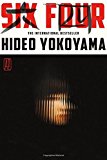
Six Four     Hideo Yokoyama     (2012/2016)  translated by Jonathan Lloyd-Davies

The international bestseller from Japan is finally available in an excellent (British) English translation. The central character of this police procedural murder mystery is Yoshinobu Mikami, a former detective who now heads media relations for the police. The title refers to the year of the emperor’s reign when a notorious child-murder occurred. In addition to solving this cold case, dealing with the press, and fighting police corruption, Mikami is dealing with the disappearance of his teen daughter. The insights into Japanese culture are fascinating, and the extended dialogue is well done. But I just skimmed this one, simply because I don’t care for police procedurals. If you do, Six Four is a winner.

Pregnancy & Pear Trees

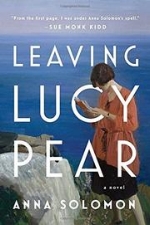
Leaving Lucy Pear     Anna Solomon     (2016)

It seems to me that about half the novels that I read have at the heart of the plot a single woman with an unintended pregnancy. Granted, I read a lot of historical novels, and historically the pregnancy of an unwed woman was a cause of anxiety, grief, distress, secrecy, scheming, and crime.

In the novel Leaving Lucy Pear, Beatrice Haven is the young single woman with an unintended pregnancy. She leaves her newborn daughter in a pear orchard in Cape Ann, Massachusetts, on a night when she expects that pear thieves will be present to find the bundle. All this is revealed in the prologue, set in 1917. The main action of the story occurs a decade later. Unbeknownst to Beatrice, the baby has been named Lucy Pear and has been raised by Emma Murphy, the mother of a large, impoverished Irish American family. Beatrice, who is from a wealthy Jewish family in Boston, continues to be tormented by her act of abandoning her child and spends much of her time at the home of the uncle who owns the pear orchard. The lives of Beatrice and Emma intertwine in complex ways as the plot works toward resolution of some, but not all, of the issues raised about motherhood, womanhood, sexuality, and family ties. 

The setting of the North Shore in Massachusetts is significant. This rocky peninsula between Boston and New Hampshire is rich with literary associations, from Nathaniel Hawthorne to TS Eliot. The time period is also significant, with the political backdrop of the Prohibition era and the controversial 1927 executions of Sacco and Vanzetti, professed anarchists who were accused of robbery and murder. Weaving in and out of the narrative of Leaving Lucy Pear are threads about the temperance movement, liquor smuggling, anarchism, communism, industrialization, labor unions, and social class. 

Anna Solomon’s writing is delicate and introspective. There are many sentences like this: “When she looked at him, her cheeks wrinkled and red from where her sleeves had pressed into them, her eyes pinned him to his chair.” (235) As a reader, I wanted to find out the next component of the plot, but I also wanted to linger on scenes in which character traits are revealed by family members discussing domestic matters. 

Beatrice abandons her baby so that she can move on with her life, go to Radcliffe, and perhaps become a concert pianist. But her plan falters, and that may have been the best outcome for her. Late in the novel, a minor character pronounces, “’Most people want to be extraordinary. Make a mark in the world. But for what? In my experience it’s the extraordinary people what aren’t happy, always expecting something better than they get. Whenever anything at all happens to me, I tell myself it’s happened to everyone else, too. It’s actually very comforting.’” (313-314)


Novels about Paintings, Part 2

The Last Painting of Sara de Vos     Dominic Smith     (2016)

As I read this novel, I assumed that the title painting, the last painting of Sara de Vos, was At the Edge of a Wood. The creation of this fictional work of art is placed in 1636, as de Vos is grieving the death of her only child, a daughter, from the plague. The painting shows a dark-haired girl in the foreground, barefoot in the snow, watching a group of skaters on the frozen river beyond. It’s dusk in winter in the Netherlands, so the quality of light is otherworldly.

According to novelist Dominic Smith’s complex story, At the Edge of a Wood has been owned by the de Groot family for more than three hundred years, and it’s considered by some to have caused bad luck for the owners. Marty de Groot, the owner we meet in Manhattan in 1957, certainly hasn’t suffered financially, but Marty’s law career is stalled, and he and his wife are unable to have children.

Also in 1957 but in Brooklyn, the novelist introduces us to Ellie Shipley, an Australian graduate student in art history at Columbia University. She’s trying to finish her PhD dissertation about female painters of the Dutch Golden Age, and she does art restoration work to support herself. Along comes a commission, not to restore but to copy a painting by (wait for it) a female painter of the Dutch Golden Age: At the Edge of a Wood. Ellie wades in, not so much for the money as for the technical and artistic challenge of reproducing a stunning painting. This is, of course, forgery.

Forty-odd years later, in 2000, Ellie is an esteemed art historian and curator in Sydney, Australia. As she’s gathering paintings on loan from around the world for an exhibit, it becomes apparent that both the original At the Edge of a Wood and the copy she painted will be arriving in Sydney. The forgery will be revealed, and since Ellie is the only person who could have painted the copy, she sees her comfortable life crumbling before her.  

The book moves back and forth effortlessly among three settings:  The Netherlands 1636-1649 (dark, burgher-ruled); New York, 1957-1958 (shiny, jazz-filled); and Sydney, 2000 (sunny, cosmopolitan). The characters of Sara de Vos, Marty de Groot, and Ellie Shipley—all drawn convincingly—move through these settings and through their interconnected lives.  

Novelist Smith does an excellent job of rendering visual art in words, and not only in the passages where he describes paintings. References to the light in a scene come in frequently. For example, here is Ellie on the subway in New York City: “She always has the sensation of being swallowed by the roaring dark of the first tunnel, her ears popping and the sudden appearance of her reflection on the blackened windowpane like some hangdog daguerreotype from another century.“ (208) And here is Marty, in his office at night after committing a terrible deed: “He’s never been up here at night and there’s a sensation of being fortified behind glass, of something solid between him and the mercantile canyons of the city. The office buildings are phosphorescent through the darkness, effulgent with a smoky light that reminds him of dry ice.” (249).

By the end of the novel, you’ll know what the last painting of Sara de Vos actually was. I’ll leave you with this summation of the plot: “You carry grudges and regrets for decades, tend them like graveside vigils, then even after you lay them down they linger on the periphery, waiting to ambush you all over again.” (262)

15th-Century Mysteries: Part 2

The Roger the Chapman Series     Kate Sedley     (1991 to 2013)

Before reading this post, you may want to check out my essay “Reading Medieval Mysteries” in the Portfolio section of this website. It has a sidebar on the Brother Cadfael novels of Ellis Peters, set in the twelfth century. But moving on to the end of the medieval period . . . 

Roger the Chapman is an itinerant purveyor of small household goods and haberdashery in late fifteenth-century England. He tells his tales in first-person narrative, looking back, as an old man, on the adventures of his youthful travelling days. This narrative voice gives an immediacy to the novels, and I find Roger’s voice quite believable. 

The first couple of entries in this series have some weaknesses, with tangents about, for example, how to full cloth, but the series quickly picks up speed, with less didacticism and more challenging convolutions of plot. Roger is an engaging, burly fellow with a large backpack who tramps all around the country—and even to France—to unravel mysteries. His wanderlust allows him to get involved in murders near and far and even to work as an agent for the nobility. Still, he always returns home to Bristol, in southwest England.

Roger has a complicated family history, and the secondary characters such as his wife and his mother-in-law are well developed over the course of the series. If you start with a title later in this series, you’ll still catch on, since author Kate Sedley does a good job of filling in her readers about Roger’s family connections.

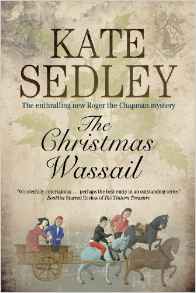
Sedley doesn’t affect fake medievalisms but still conveys a sense of the period. I especially enjoyed The Christmas Wassail, in which the murders are set against the festive late medieval celebrations of the Twelve Days of Christmas.

Kate Sedley is the pen name for Brenda Margaret Lilian Honeyman Clarke, who has written numerous other novels under different names. Here are the twenty-two books in her Roger the Chapman Series:  Death and the Chapman (1991), The Plymouth Cloak (1992), The Hanged Man aka The Weaver’s Tale (1993), The Holy Innocents (1994), The Eve of Saint Hyacinth (1995), The Wicked Winter (1995), The Brothers of Glastonbury (1997), The Weaver’s Inheritance (1998), The Saint John’s Fern (1999), The Goldsmith’s Daughter (2001), The Lammas Feast (2002), Nine Men Dancing (2003), The Midsummer Rose (2004), The Burgundian’s Tale (2005), Prodigal Son (2006), The Three Kings of Cologne (2007), The Green Man (2008), The Dance of Death (2009), The Wheel of Fate (2010), The Midsummer Crown (2011), The Tintern Treasure (2012), The Christmas Wassail (2013).

A Young Adult Romance

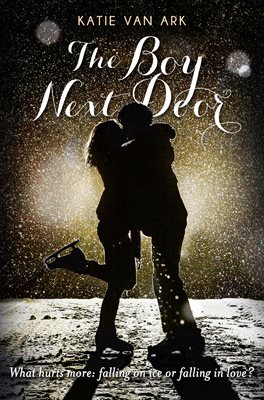
The Boy Next Door     Katie Van Ark     (2016)

Swoon Reads is an online community for readers and writers of Young Adult fiction (swoonreads.com). Writers submit manuscripts for rating and commentary by readers and writers; the very best submissions are published as paperback books by a division of Macmillan. Katie Van Ark’s novel was one of the winners in the romance category, and since she’s a distant relative of mine, I’m stepping out of my usual review zone to tell you about The Boy Next Door.

Lead characters Maddy and Gabe are high school students who’ve known each other since childhood. They’re also competitive figure skating partners, and they’re at the top of the sport, heading toward international events. Maddy has always been in love with Gabe. Gabe, however, has decided to keep things platonic with Maddy, and he dates other young women. When their skating coach picks the theme music from Zeffirelli's Romeo and Juliet for their new routine, Maddy and Gabe have to display attraction toward each other on the ice, and the main plot takes off. As in real life, the path of romance in The Boy Next Door is not straightforward but winding. The chapters alternate first-person narratives from Maddy and Gabe, and several subplots are woven in neatly.

What’s most striking about The Boy Next Door is the figure skating, which unifies the narrative without overpowering the romance theme, even though Maddy and Gabe put in a staggering number of hours at the ice arena. Van Ark knows the sport as an insider, and she describes elaborate skating routines in elegant prose. I know nothing about figure skating, but I was flying along as Maddy executed those triple Axels, cheering for Maddy and Gabe both as skaters and as romantic partners.

Even if you don't usually read romances, pick this one up. As a bonus for Midwesterners, it’s set in Kansas and written by a Michigander!

Reflections, Part 1

Reflections on Six Months of Blogging

At the six-month mark in the history of this book review blog, I’ve posted reviews of 68 books, and that’s counting as one book each book series that I’ve reviewed, such as the Maisie Dobbs mysteries by Jacqueline Winspear, the Sister Frevisse mysteries by Margaret Frazer, and the 44 Scotland Street novels by Alexander McCall Smith.

photo: Lavender Labyrinth in Shelby, Michigan

photo: Lavender Labyrinth in Shelby, Michigan

As I’ve mentioned in my description of this blog, I don’t post star ratings of books but rather seek a more nuanced approach. If I give a book a full review, I recommend that book to blog readers who have tastes similar to mine, though occasionally with caveats.  In the posts called “Books in Brief” I offer short reviews of books that I found less satisfying for some reason, and I state the reason clearly. It might be that the topic was too melancholy or that the writing was too long winded for my tastes. Some of you in my blog audience may still like these books, so I don’t want to discount them totally.

I reject a great many more books than I review. You’ll never see the titles of the hundreds of books each year that I abandon after a couple of chapters. There are so many excellent writers producing fine prose; why spend time on a mediocre book?

I scan the New York Times and my local library’s postings of “Hot New Fiction” for notices of books that I’d like to take a look at, but I try not to read full reviews of a book until I’ve formed my own opinion. Short summaries of a book help me to determine if it fits my general criteria. I eliminate thrillers, horror novels, science fiction, fantasy, and books with excessive violence. I review recent fiction, with an emphasis on historical novels and mysteries, plus a few social histories and biographies. Literary fiction is my mainstay, though I’ve also ventured into chick lit and young adult romance a few times.

One aspect of my reviews that has surprised me is the number of novels about New York that appear on my blog. (I have an entire category for “New York Novels” that you can click on HERE to read these reviews.) I think that this is partly because a lot of New Yorkers write about their city and its 8.5 million inhabitants and partly because the US publishing industry is centered there. In any case, I love those descriptions of snowflakes falling in Central Park or ships passing the Statue of Liberty or high heels clicking on a sidewalk shadowed by the Empire State Building.

If you’re new to the Cedar Park Blog, be sure to check out the Archive of Book Reviews, located in the right-hand column below Latest Posts. The archive’s categories will help you navigate to the books you like best, whether it’s “Road Trip Novels” or “Social Histories” or “Family Sagas” or “Irish Novels.”

What’s coming up on the Cedar Park Blog? I’ll be continuing to review individual books and book series. In addition, I’m planning some posts called “Faves,” in which I’ll talk about my favorite authors, providing an overview of their works and telling you why I love their writing. Watch for these posts among the Friday regulars. And be sure to follow the Cedar Park Blog on Facebook or set your feed reader to ping you when a new post appears. Thanks for reading the Cedar Park Blog!

A Hoot of a Mystery

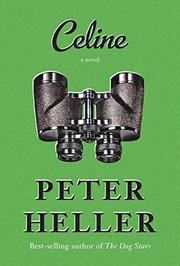
Celine     Peter Heller     (2017)

Peter Heller’s latest is both a mystery novel and a study of his title character. Celine Watkins is still working as a private investigator at age 68, in spite of her emphysema. She specializes in finding missing persons, especially in reuniting adoptees with their birth families. Celine is feisty, mouthy, clever, brave, discerning, blue-blooded, compassionate, stylish. She’s a hoot.

The story line involves a client, Gabriela, who wants to know what happened to her father, a renowned photographer, some twenty years past. He disappeared near Yellowstone National Park, either killed and consumed by a grizzly—or not. Celine and her longsuffering husband and sidekick, Pete, head west from their home base in Brooklyn, stopping in Denver to borrow Celine’s son’s camper and some firearms. And then we’re into the wilderness. Celine and Pete uncover more and more chilling secrets of the case, on their laptop, through phone calls, and in quirky small-town diners along the way. Celine relishes the danger. She seems to have overcome any fear of death, since she can see her health slipping away, and what the hell, she would have died long ago if she hadn’t sworn off the booze. It helps that she’s a crack shot.

The nature writing in Celine is top-notch, which makes sense, since Heller has published four major nonfiction books on adventure travel at the ends of the earth. A sample: “The sun sets behind mountains but the cloudless sky that is more than cloudless, it is lens clear—clear as the clearest water—holds the light entirely, holds it in a bowl of pale blue as if reluctant to let it go. The light refines the edges of the ridges to something honed, and the muted colors of the pines on the slopes, the sage-roughened fields, the houses in the valley—the colors pulse with the pleasure of release, as it they know that within the house they too will rest.” (94) Yup, that’s the golden hour in the American West.

Celine offers up a zany detective, zippy if farfetched dialogue, a serviceable mystery plot, eccentric supporting characters, and gorgeous descriptive passages. Add some flashbacks that fill in Celine’s earlier life, and those pages flip by quickly.

Soul Searching in Spain

Hot Milk     Deborah Levy     (2016)

Sofia Papastergiadis is at loose ends. She hasn’t finished her PhD dissertation in anthropology. She has a dead-end job as a barista. At age 25, she still lives with her mother, Rose, an insufferable hypochondriac whom Sofia waits on constantly. Sofia has long been estranged from her Greek father, who lives in Athens with his new wife and baby.

As the novel Hot Milk opens, Sofia is in southern Spain with Rose, who has taken out a large mortgage on her home in England to buy the services of a renowned doctor, Gómez, who she hopes will diagnose her ailments properly. While Rose undergoes medical testing by the questionable Gómez, Sofia roams rather aimlessly around the scorching beachfront town. She shatters her precious laptop, swims in waters infested with jellyfish, engages in varied sexual encounters—and then makes a quick trip to Athens to confront her father.

Sofia’s inner life and self-searching are at the heart of this tale, which is appropriately cast in first-person narrative. She constantly queries herself: “Am I self-destructive, or pathetically passive, or reckless, or just experimental, or am I a rigorous cultural anthropologist, or am I in love?” (175) It’s significant that Sofia has been trained as an anthropologist, since she often seems to be mentally documenting her own life for an individual ethnography. Novelist Deborah Levy has other characters analyze Sofia, too, as when Gómez tells her, “’You are using your mother like a shield to protect yourself from making a life.’” (111)

Although I found this novel meandering at times, the study of family dynamics is absorbing. And the evocations of the barren landscapes of southern Spain in late summer are excellent: “Cranes from the desalination plant sliced into the sky. Tall undulating dunes of greenish-grey cement powder lay in a depot to the right of the beach, where unfinished hotels and apartments had been hacked into the mountains like a murder.” (23) The wordplay is also amusing. For example, Sofia (whose name in Greek means “wisdom”) is repeatedly stung by jellyfish, called “medusas” in Spanish. When she arrives in Athens, she reflects, “Here I am in the birthplace of Medusa, who left the scars of her venom and rage on my body.” (138)

Bubbling under the surface of the story is commentary on the recent economic problems within the European Union. In Hot Milk as in real life, highly educated people are working in menial jobs, and austerity measures are crippling the Greek economy. Sofia’s father, a wealthy retired businessman, espouses his own form of austerity in refusing to help Sofia financially. One theme in the book is Sofia’s realization of the grim selfishness that is rampant in her world. Echoing her stepmother’s right-wing comments, Sofia asks herself, “Why would my father do anything that was not to his advantage?” (142)

I still don’t get the title Hot Milk. I’m guessing that it’s meant to conjure up images of a comforting drink that a mother might offer a daughter who is sick or distressed. Sofia won’t get any hot milk from her cruel mother, but readers may learn about something about themselves in this story.

Novels about Paintings, Part 1

A Piece of the World     Christina Baker Kline     (2017)

Baker Kline.jpg

Novels that prominently feature a painting (fictional or real) are not a new idea. In 1891, Oscar Wilde published The Picture of Dorian Gray, a horror story about a portrait that ages while the subject of the portrait remains youthful—but gets nastier. More recently, Tracy Chevalier’s Girl with a Pearl Earring takes a different tack. In her 1999 novel, Chevalier imagines a life story from the actual portrait of an anonymous young woman. In this case, the art work, by the seventeenth-century Dutch artist Johannes Vermeer, is real, hanging in the Mauritshuis in The Hague. The fictional story by Chevalier evokes the period of the painting’s creation beautifully. (See the Vermeer portrait here.)

Christina Baker Kline’s A Piece of the World has an approach similar to that of Chevalier. Baker Kline conjures up a fictional memoir by the subject of Christina’s World, a 1948 painting by the American artist Andrew Wyeth that hangs in the Museum of Modern Art in New York City. In this case, some facts about the actual subject, Christina Olson, are known. Olson really was descended from one of the judges at the Salem Witch Trials of the late seventeenth century. She was born in 1893 and lived on a farm near Cushing, Maine, suffering all her life from a disability that affected her ability to move her limbs. In 1939, she became friends with Andrew Wyeth, who summered in Maine and frequently painted her, her brother, and scenes from their farm. As Olson grew older, she became more disabled and moved from place to place by crawling. In his painting Christina’s World, Wyeth places Olson on the ground, with her back to the viewer, clawing the soil as she twists to look at her farmhouse, which is up a hill from her. (See the Wyeth painting here.)

Beyond the historical facts, Baker Kline weaves a fictional life, narrated by a fictional Christina Olson but quite believable. (The only parts of the narrative that I found somewhat strained were the dialogues between Wyeth and Olson.) Baker Kline invents a full life for Olson, from her birth until the unveiling of Wyeth’s expressive painting of her. The onus of disability for those in rural areas and without access to current medical treatments is clear. (For another novel about disability, see my review here.)

Christina Olson and her family live a life of austerity, particularly during the Great Depression, without electricity or running water in their house. Their daily existence is like that of a pioneer family in the nineteenth century. Baker Kline describes their chores in detail:  the stoking of the wood burning stove, the lighting of the kerosene lamps, the hand harvesting of the blueberries. These activities, and the grim farmhouse, attracted the eye of Wyeth, who painted a vanishing way of life with its surrounding stark landscapes. It strikes me that A Piece of the World has many characteristics of a Laura Ingalls Wilder novel, albeit set in Maine and written for adults.

As I was reading A Piece of the World, I turned frequently to the reproduction of the painting Christina’s World bound into the back of the book. This tender novel about a woman’s simple life complements Wyeth’s haunting work of art.

Rodeo for Russian Americans

Don’t Let My Baby Do Rodeo     Boris Fishman     (2016)

Despite the title, this novel is not primarily about rodeo, but it does have something to do with babies—specifically babies who are adopted. It’s also about the experience of Russian and Ukrainian émigrés in the United States and about a road trip through the American West. Novelist Boris Fishman assembles all these pieces skillfully.

Maya Shulman, a Ukrainian exchange student, and Alex Rubin, the only son of Russian immigrants, meet in New York in 1992. They marry and settle in New Jersey but are unable to have children. Over the objections of Alex and his parents, Maya pushes for adoption. The baby they adopt is the biological son of teenagers in Montana; the baby’s father is a rodeo cowboy. The one request of the biological mother to the adoptive parents is “Don’t let my baby do rodeo.”

By the year 2012, Maya and Alex begin to interpret some of the actions of their eight-year-old adoptive son, Max, as a reversion to his genetic origins. Maya especially becomes alarmed when Max runs away from home and when he “consorts with wild animals.” She worries that he’s becoming “feral” and insists on a car trip to Montana to seek out Max’s biological parents, hoping that they can shed light on Max’s “wildness.”

Readers may not see Max’s habits as particularly unusual for an inquisitive child. Max likes to sleep in a tent in the back yard, chew on various wild grasses, and put his face in river water to look at the pebbles and fish. One scene, in which Max cavorts with some deer in his back yard, could be taken as a bit of magic realism or could simply reflect the ubiquity and tameness of urban deer in New Jersey.

Around the main plot of the trip to Montana Fishman weaves subplots, particularly related to the influence of Alex’s parents on the marriage of Maya and Alex. Fishman pokes fun at his own Russian heritage in his portrayal of Alex’s immigrant parents. The elder Rubins have built a successful business and assimilated into American culture in many ways, but they eat traditional Russian foods, quote Russian proverbs, and oppose the adoption of Max for patriarchal cultural reasons. Maya struggles with her identity as an American wife and mother, always seeking to add new words to her English vocabulary, for example, yet chafing under some of the Old World attitudes of her husband and in-laws. In the end, she rebels against her family in a startling way.

Fishman’s writing is dense with words that are often crammed into tight sentences. This style can be rich, as when he is describing the dawn in South Dakota: “. . .the subfusc prologue of the morning was pushing up the black sky with impatience.” (249) And here is a vista in Montana: “First, there were hills, patchy and tentative, then, all of a sudden, mountains upon mountains. Maya eyed them with gratitude; she willed them to keep rising. Even Max stirred at their sight, leaning into his window. Emerald firs rose off the flanks in neat rows like heads in a choir, the cottonwoods among them so gold they looked like bullion bars.” (260)

My eye did catch occasionally on oddities of English word choice—“custom” instead of “habit, “unexisting” instead of “nonexistent,” “self-made” instead of “homemade,” and so forth. I expected these choices in the dialogue of characters whose native language was not English, but they cropped up in non-dialogue. This is a minor quibble about a book that forthrightly tackles such fraught issues as infertility, parenting an adopted child, and adapting to a new culture.

Two Books by Strout

Anything Is Possible     Elizabeth Strout     (2017)

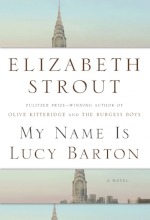
My Name is Lucy Barton     Elizabeth Strout     (2016)

Before you read Elizabeth Strout’s 2017 short story collection, Anything Is Possible, you might want to check out her 2016 novel, My Name Is Lucy Barton. The two books are interconnected and can be read as a cohesive whole.

In My Name Is Lucy Barton, Lucy is a writer in New York City in the 1980s, with a husband and two young daughters. When Lucy is hospitalized for many weeks with a mysterious illness that arises after an appendectomy, her estranged mother travels from rural Illinois to her bedside. The two women reach an uneasy peace with each other, especially as they tell stories about the folks back home, in the (fictional) Amgash, Illinois, a depressed rural area that’s a two-hour drive from Chicago.

In Anything is Possible, set in a recent time period, we meet many of the characters mentioned in My Name is Lucy Barton, both in Amgash and in other locales:

  • Pete Barton, Lucy’s reclusive and oddly childlike brother, who still lives in the old Barton house.
  • Tommy Guptill, the friendly janitor from Lucy’s elementary school, who is now in his eighties and who keeps an eye on Pete.
  • Charlie Macauley, a Vietnam veteran with PTSD, who gets himself into a bind over a prostitute.
  • Patty Nicely, a contemporary of Lucy’s and now a high school guidance counselor, who tries to help Lucy’s difficult niece, Lila Lane.
  • Mary Mumford, the neighbor woman who left her husband of 51 years to run off to Italy with a younger man.
  • Vicky Lane, Lucy’s sister, who reminds Lucy about some of the horrors the siblings endured in their childhood.
  • Abel Blaine, Lucy’s cousin, who has built a successful business in Chicago.

Lucy herself enters the linked stories of Anything Is Possible in many ways. She’s become an acclaimed writer and has published a book that the people of Amgash can buy at the local bookstore. Chicago is one of the stops on Lucy’s tour to promote her book, so she stops in Amgash to see her siblings, Pete and Vicky, in one of the stories. Take note that the fictional Lucy’s fictional “memoir” seems to be very much like Elizabeth Strout’s novel My Name is Lucy Barton.

Strout toys with the vagaries of memory in both these books. In Anything Is Possible, we get much more detail about the childhood suffering of the Barton kids—details that were glossed over and somewhat sanitized in My Name is Lucy Barton. The other residents of Amgash are also revealed to have their share of specific miseries, including sexual abuse, mental illness, and crushing poverty. The power of money emerges as another theme. Lucy Barton, who had to scrounge in dumpsters for food as a child, lives the up-by-her-bootstraps version of the American dream when she gets into college and becomes a successful writer. Others in her small town remain impoverished. Sometimes people are poor simply because of bad luck, and money certainly does not buy happiness or stability for the characters in Anything Is Possible.

The prose in these two books is spare, with every word well chosen. The emotions are raw but presented with subtle empathy. Strout’s previous books include the Pulitzer-winning Olive Kitteridge (2008), which is, like Anything Is Possible, set up as linked short stories, and the novel The Burgess Boys (2013). Basically, read anything by Elizabeth Strout that you can get. You won’t be disappointed.

An Unlikely Marriage

This Must Be the Place     Maggie O’Farrell     (2016)

Maggie O’Farrell trusts her readers to catch on to what’s she’s doing with her oblique plot lines. She trusts that readers won’t jump ship when she suddenly shifts the setting to another hemisphere. She especially trusts that readers will take note of her chapter titles, which include the name of the person whose point of view is adopted for that chapter, as well as the city and year in which that chapter takes place. It’s dizzying at first, but once you get used to it, there’s a bit of a reader buzz at the beginning of each chapter. Oh, now you’re in Donegal, Ireland, in 2010, with Daniel narrating in first person. Then, hello, Brooklyn 1944! It’s a third-person narrative about Teresa, who turns out to be Daniel’s mother. And welcome to Goa, India, in 1996, with a third-person narrative about Claudette, Daniel’s second wife. Decades and continents whizz past as you put the pieces of the plot together.

This Must Be the Place ends up being a character study of two people who both have immense talents and big hearts but also serious flaws. Their lives are messy, peopled by previous lovers and by children with problems of their own. Daniel Sullivan is an American linguistics professor who has lost custody of his children in a contentious divorce from his first wife. On a trip to Ireland to retrieve his grandfather’s ashes, Daniel comes across a young boy on the roadside in Donegal. This is how he meets Claudette Wells, the boy’s mother, who is a recluse in the mountains, having fled a life of international stardom and infernal paparazzi. Daniel and Claudette fall in love.

Readers get the life histories of both Daniel and Claudette through those chapters that flash back and forth in time. Some of the chapters border on gimmicky, especially the one that’s a catalog of Claudette’s personal objects that are put up for auction, complete with inset photos. Some of the plot assumptions are wobbly. I doubt that Claudette could really have kept her presence in Ireland a secret for years—in rural Africa or South America, perhaps, but not in Ireland. And I can’t see how Daniel could get work permits for whatever country he was in. None of that matters, however, as O’Farrell reveals more and more about Daniel and Claudette, drawing readers into their struggles.

Along the way, O’Farrell’s descriptive passages work well. Here is Daniel narrating: “Winter is the best season to see Paris, I’ve always thought, when the pavements are sheer with frost, when the sun in low in the sky, when the Seine is swollen and brown, twisting fibrously beneath the bridges.” (266)

And here is Daniel being described when he is in a depressive state: “He is watching the red digital numbers of his alarm clock mutate into their successors: 5 gains an extra descender on its lower-left corner to become 6; to become 7, the 6 must lose almost all of itself, all its left-hand side, all its lower and middle strokes; the only consolation, he tells the 6-soon-to-be-7, is that you’ll get them all back for the full house that is 8. He watches the numbers tot themselves up, then spill over into another hour . . .” (295)

This Must Be the Place offers particularly excellent insights into the interdependence of partners in a marriage, and the portrayals of Daniel's and Claudette’s children are moving and believable. Overall, it’s a satisfying read. I plan to watch for future offerings from O’Farrell.