Those New York Novels

The Ramblers     Aidan Donnelley Rowley (2016)

(plus brief notes on novels by Adelle Waldman and Cynthia D'Aprix Sweeney)

First, a sidebar.

Maybe I should stop reading these inbred New York City novels. Maybe only New Yorkers can sense where the satire starts. But I read a lot of fiction, and I’ve taught fiction to a lot of college students, so I should be able to discern satire, right? Even if I’m a Midwesterner?

I look back at a couple of other New York novels. I’m pretty certain that Adelle Waldman’s The Love Affairs of Nathaniel P. (2013) is sardonically mocking the callous, self-satisfied male New Yorkers who wreak havoc on the psyches of brilliant, sensitive female New Yorkers. Waldman’s view into this world is morbidly fascinating but morbid nonetheless.
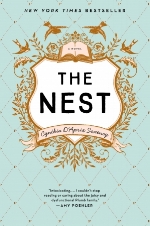
Cynthia D’Aprix Sweeney’s The Nest (2016) is less clear on the satire front. Four siblings fight over their inheritance, which has been greatly depleted by a payout to cover up a crime by one of the brothers. Should I care about the quarrels of these disagreeable, money-grubbing characters, even if the plot is a tight one? Am I supposed to care, or am I supposed to recoil in horror?

This issue is not settled, but let’s move on to the main review.

The Ramblers, by Aidan Donnelley Rowley (2016), brings us three more New Yorkers who have too much money and too many drinks. Admittedly, Clio Marsh was born middle class, but she’s pulled herself up by the proverbial bootstraps to earn a PhD in ornithology. And she lives nearly rent-free as roommate to Smith Anderson, a daughter of the 1% who declutters the Manhattan apartments of her private clients. The third profiled character is Tate Pennington, who has accidentally made a fortune in the tech world and retired to New York to take street photographs and escape his estranged wife in California.

All three are in their mid-30s, yet they prate endlessly about their undergraduate days together at Yale and enter into petty squabbles about the relative advantages of Princeton. Really? So you’ve read Foucault. I’m not impressed, though I think that the author, herself a Yalie, expects her readers to be.

Because the three protagonists are in their mid-thirties, they all long to be in committed relationships. This is a standard feature of the modern New York novel, though it’s usually only the women or the gay men who crave a long-lasting, monogamous marriage. The entire plot of The Ramblers revolves around the achievement of perfect domestic partnerships, but I couldn’t feel much sympathy for these three privileged strivers. They’re stock characters in a flat drama. Clio worries that the revelation of her mother’s mental illness and suicide will derail her affair with a wealthy bachelor fifteen years her senior. Smith won’t distance herself from her malicious father, even though this creepy father browbeat her fiancé into breaking up with her. And Tate salves the wounds made by his unfaithful wife with excessive amounts of alcohol, but he still shoots stunning photos.

The dialogue of the thirty-something women in The Ramblers does have sparkle, but when I hit some scenes with older women or with men (older or not), I found myself stopped mid-page by the inaptness of tone and the cliché-ridden sentences. Wait, I thought, is the author satirizing this character? We’re back to that issue of inadvertent satire again.

If I’m so irritated by these self-aggrandizing characters and their $30 bottles of organic hair conditioner, why do I keep reading New York novels? Why did I ever get past page 50 of The Ramblers? Simple: I have a weakness for the New York part.

For instance, the title of The Ramblers refers to an area in Central Park called The Ramble, a semi-wild nature area in the middle of Manhattan, popular for those seeking outdoor gay sex, which has also become a favored site for birdwatchers. The character Clio leads public birding tours through The Ramble on Sunday mornings and gets written up in the local press. Tate, meanwhile, is a walking guide book to the poetic and architectural history of the city, seeking out the haunts of Stanley Kunitz and Dylan Thomas. Smith’s sister gets married in the cavernous, barrel-vaulted St. Bart’s Episcopal Church, with the reception at the ultra-glamorous Waldorf. The action of the novel takes place during the week of Thanksgiving, so the author can call up glorious late autumn days as well as the edge of silver-bell cheeriness for the upcoming Christmas season. In sum, the NYC of The Ramblers is more vividly portrayed than its inhabitants.

True, for heavy New York atmosphere, you can’t beat author Jay McInerney, and I’ve acknowledged this in a recent blog post reviewing his 2016 novel Bright, Precious Days. I detect satire in some of McInerney’s characters, but he fleshes them out so well and surrounds them with so much New York detail that I tumble right into their lives nonetheless.

And for a weekly dose of New York, I turn to the New Yorker. I can imagine myself at the openings of art exhibits and plays listed at the front and then settle in for some serious journalism, not necessarily about New York, by writers like Adam Gopnik, Joan Acocella, Jill Lepore, Hilton Als, Larissa MacFarquhar, Elizabeth Kolbert, Kalefa Sanneh, Jane Mayer, and Ryan Lizza. Gotta love it.

Gentle Swedish Novels

Although the international taste for Nordic Noir is strong, not all the books coming out of Sweden are dark thrillers. The novels reviewed below may not suit you if your taste runs to authors Stieg Larsson (with sleuths Mikael Blomkvist and Lisbeth Salander) and Henning Mankell (with detective Kurt Wallander). I harbor a fascination with Scandinavian culture, so I embrace a wide range of titles from the land of Volvos, fjords, aurora borealis, and IKEA. Here are two gentle offerings from the Swedes.  

Review #1

The Readers of Broken Wheel Recommend     Katarina Bivald     (2016)

Translated from Swedish by Alice Menzies

A stranger comes to town:  it’s an ancient and oft-used storyline, maybe because it has built-in plot development potential. The stranger learns the ways of the town. The town learns the ways of the stranger. The author can add to this mix some conflict, some romance, or some comical misunderstanding. Debut novelist Katarina Bivald takes advantage of all the plot possibilities in The Readers of Broken Wheel Recommend.

Bivald.gif

Sara Lindqvist arrives in Broken Wheel, Iowa, one August day in 2011 to visit her pen pal, Amy Harris. Sara and Amy have in common that they’re voracious readers.  Over a couple of years, Sara has gotten Amy to read Swedish bestsellers like The Girl with the Dragon Tattoo, and Amy has introduced Sara to American classics like To Kill a Mockingbird.  Sara, who’s in her late 20s, has never traveled outside her native Sweden, but when she gets laid off from her job as a bookstore clerk, she decides to use her savings to take an extended trip to Iowa. Sara’s fluent in English, but she’s not prepared for small-town America still in the grips of a major recession. Not to mention that she arrives on the very day of the elderly Amy’s funeral.

The residents of Broken Wheel include all the stock characters. A gay couple owns the saloon, and an unemployed schoolteacher is the local busybody. A semi-reformed alcoholic with a sad family history serves as Sara’s chauffeur. The loud-mouthed, overweight proprietor of the diner keeps Sara fed. Amy’s handsome nephew Tom becomes Sara’s love interest.

Sara has a talent for finding just the right book, from Amy’s extensive collection, for each resident of Broken Wheel. As the Iowans embrace their European waif, the story plays out with the involvement of befuddled US immigration officials. The premise of Bivald’s novel has become more far-fetched since the 2016 American election, when anti-immigrant sentiment in the United States elected Trump, who is especially popular in Iowa. Bivald not only romanticizes rural America but also hits on many clichés.

Still, I don’t want to disparage this book. Bivald’s character Sara has wide-ranging literary tastes. She adores Helen Fielding’s Bridget Jones novels, but she also knows her Jane Austen backward and forward. She’d just as soon pick up a book by Goethe or Annie Proulx as one by Fannie Flagg. I’m more of a book snob than Sara—I draw the line at The Bridges of Madison County. But Sara’s encounter with the Americans of Broken Wheel cheered my heart for a while.

Review #2

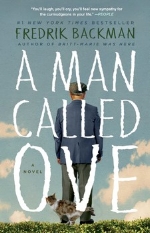
A Man Called Ove     Fredrik Backman (2014)

Translated from Swedish by Henning Koch

Good luck with finding a definitive pronunciation for “Ove.” I pronounce it something like “oo-vuh,” but I don’t speak Swedish.

No matter how the name sounds in your head, Ove is a Swedish curmudgeon in late middle age, and he’s not an endearing one. We meet him making his rounds as self-appointed, and unwelcome, policing agent for his neighborhood. He’s also figuring out how to commit suicide, which is perhaps a nod to that Nordic Noir tradition. The other characters in this novel are pretty much stereotypes: the saintly wife, the vivacious neighbor, the unfeeling government official, the malicious cat.

Backmann.jpg

Over the course of the novel, we gradually get Ove’s life story, and we come to be more sympathetic to him. The ending is not exactly happily-ever-after, but there’s satisfying plot resolution for a number of the characters.

A Man Called Ove and The Readers of Broken Wheel Recommend are not "literary fiction," true. However, they present optimism in the face of difficult circumstances, which many readers may welcome in this troubled world. There’s also in each novel a refreshing societal acceptance of cultural outsiders. I think that both books have some affinity with the work of that prolific Scot Alexander McCall Smith. I read McCall Smith’s books in one sitting, and I always arise feeling a bit better about life.

McInerney's Manhattan Excess

Bright, Precious Days     Jay McInerney     (2016)

O, Russell! O, Corrine! O, pet ferret!  Bright, Precious Days, the third installment of the Russell-and-Corrine-story (readable as a standalone), finds them hitting age 50, with a TriBeCa loft that’s too expensive and too small for a family with school-age twins and a pet ferret. And note that TriBeCa always has those internal capital letters, so that you’re looking to the etymology and the map, knowing that Russell and Corrine, having consumed another absurdly extravagant and exotic restaurant meal, are heading home to the Triangle Below Canal Street.

The landmarks of Manhattan are as much characters in McInerney’s novels as the human actors. His New York City dazzles with all the expected urbanity and glitz and pop culture references. His descriptions of the turning of the seasons are particularly striking in their tropes of nostalgia. I’m there, at the top of the Empire State Building, wind in my hair, taking in the view.

I do need my regular dose of Manhattan hauteur and pomposity, if only to reassure myself that I’m content as a boring Midwesterner. McInerney delivers Manhattan full throttle: the wine snobs, the gourmands, the anorexics, the cab drivers, the gala attendees, the trophy wives, the crazed artists, the cocaine snorters. Good Lord, how do people ingest that much cocaine and live to tell the story? Well, some of them don’t live, that’s true.

From the beginning, the reader cringes with the knowledge that Russell’s publishing business is not thriving. Print books were in decline even in the mid-aughts, when the book opens, and although Russell may be the Max Perkins of the twenty-first century, his editing skills don’t translate to business savvy. The reader also has the advantage of knowing that the recession of 2008 is looming.

Corrine—who saw the light, sort of, after 9/11—has taken a job in the nonprofit sector, gleaning discarded vegetables to distribute to the poor, so she doesn’t contribute much income to the family. Corrine’s job does allow McInerney to give us a brief view of the 99% in New York City, with descriptions of the long lines of hungry people waiting to receive a dole of carrots or cabbages.

You don’t have to be an avid reader of mystery novels to guess how the storyline involving Russell’s business will play out in Bright Precious Days. The marital storyline is another matter. R-and-C have been married for twenty-five years, during which time they’ve both repeatedly cheated on and lied to each other. I want to shake them and tell them how selfish they are, how superficial and cliché-ridden their conversations are. I want to tell Corrine that to keep her weight down she should reduce her consumption of alcoholic beverages, not diet on lettuce and canned salmon. R-and-C live up to their surname, “Calloway,” in their adolescent ingenuousness and self-centeredness. The coincidences in the marital storyline strain belief, and the characters are on the edge of becoming caricatures. But I understand many of their flaws and want to know their next steps. I love to despise them.

And I love gazing on that Manhattan excess from afar.